| |
|
 | |
| MaltaWildPlants.com by Stephen Mifsud |
|
| |
|
|
 |  |  |  |
| External Links: |
|
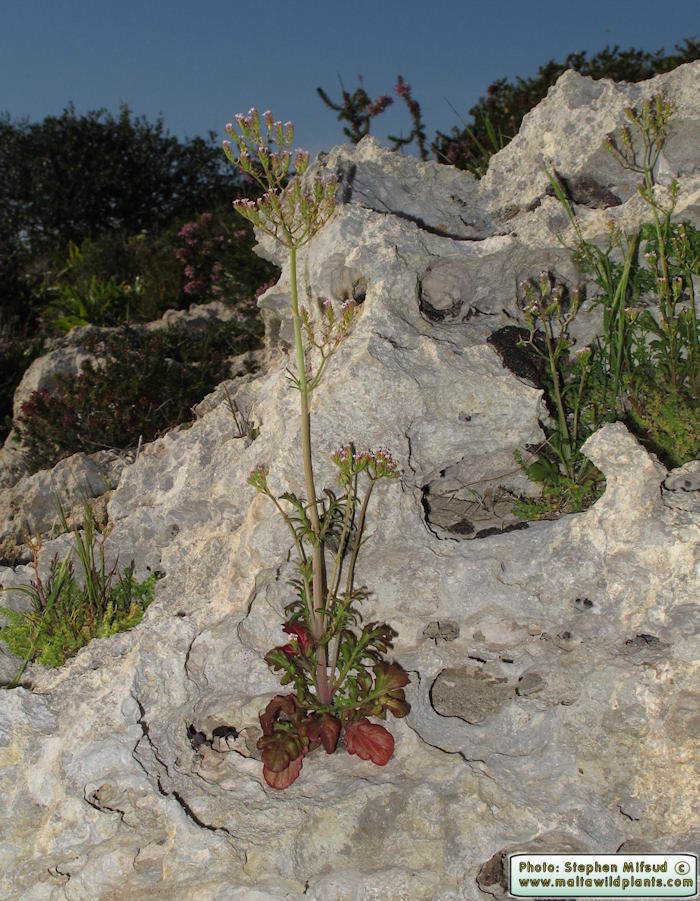
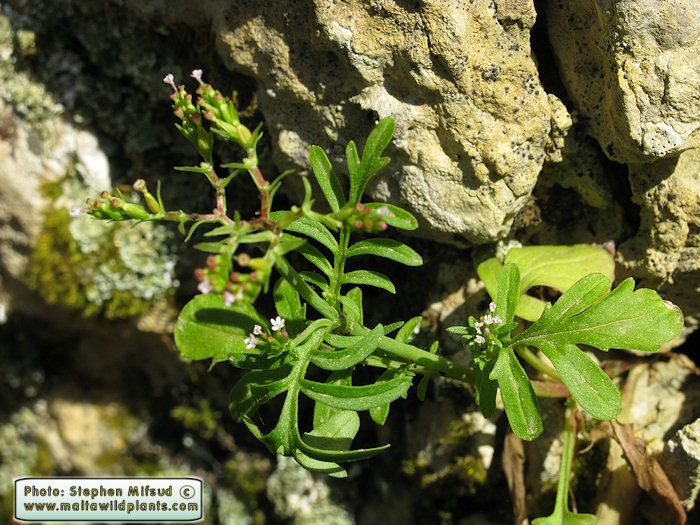
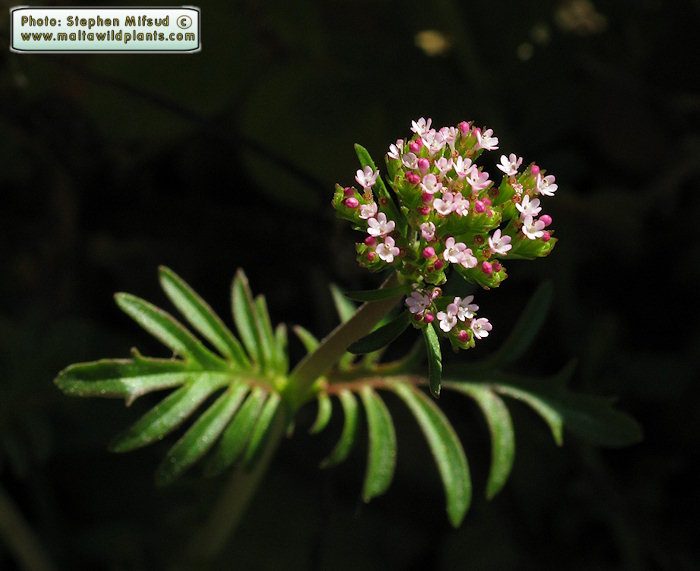
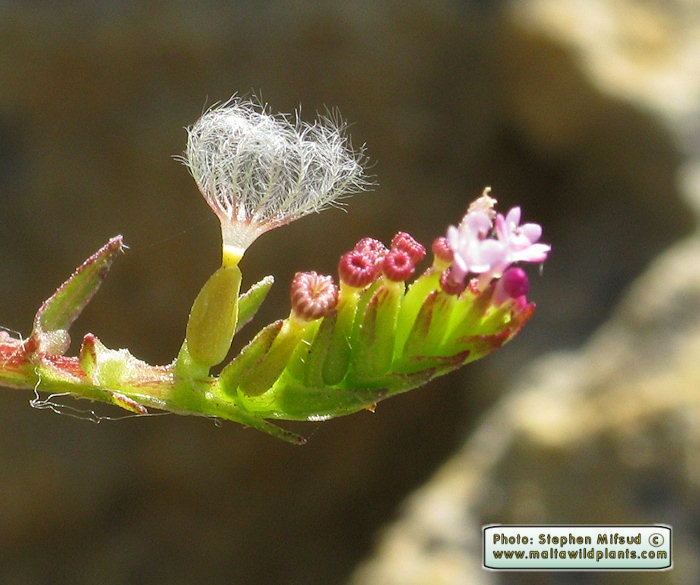
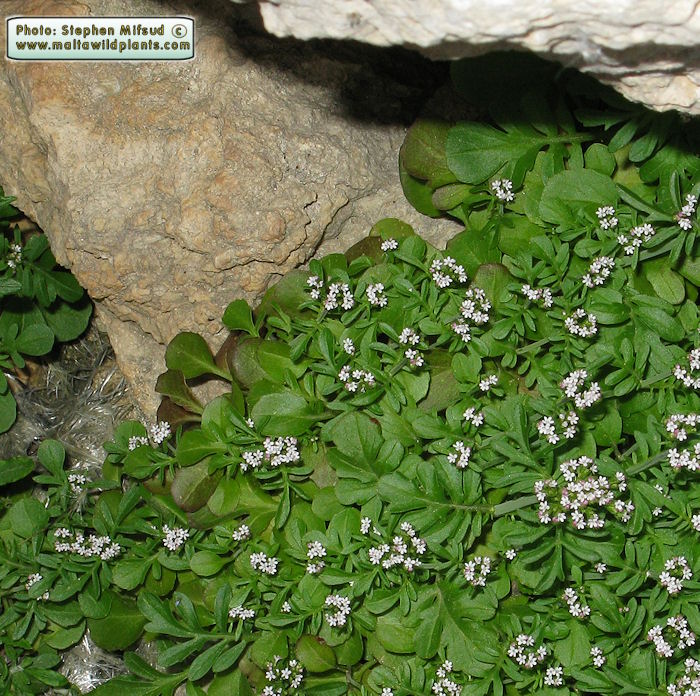
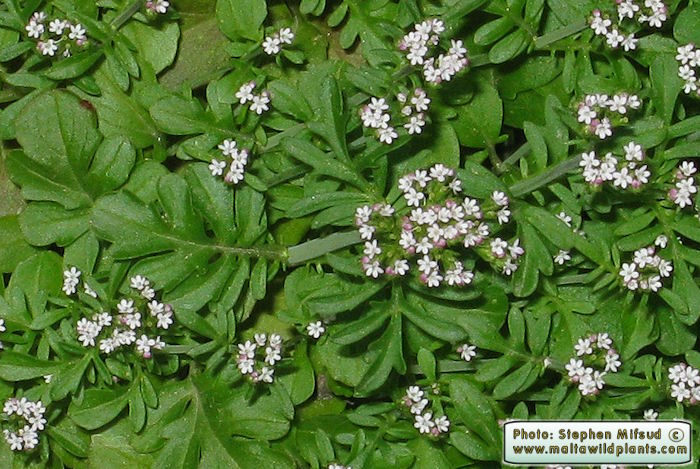
Centranthus calcitrapae (Annual Valerian) |
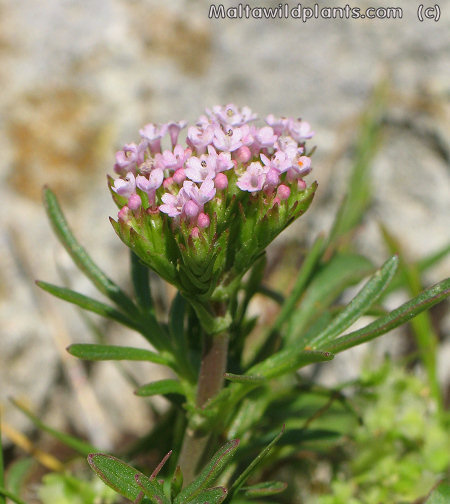
Centranthus calcitrapae (CAPRIFOLIACEAE.)
Images for this profile are taken from the Maltese Islands after year 2000. |
|
| Nomenclature and Basic Information |
Species name : |
Centranthus calcitrapaeL.
Published in Hist. Nat. Méd. Fam. Valér. 39 (1811) |
Synonyms :
(basionym or principal syn.) |
|
Plant Family : |
Caprifoliaceae
Juss. (The Honeysuckle Family)
11 species from the Caprifoliaceae family are recorded from the Maltese Islands. | English name(s) : | Annual Valerian, Pink Valerian, Cut-leaved Valerian |
Maltese name(s) : |
Valeriana Roża |
Status for Malta : |
Indigenous. Present on the Maltese islands before man |
Frequency : |
Very Common Common Frequent Scarce Rare Very rare Extinct |
Growth form : |
Raunkiaer lifeform [info]: THEROPHYTE ( annual plants, herbaceous )
Germination [info]: Dicotyledon |
Legal Protection : |
Not legally protected till the last update of this website (2/Mar/2022) |
Red List (1989) : |
Not listed in the Red Data Book of the Maltese Islands |
Flowering Time : |
March – May |
Colour of Flowers: |
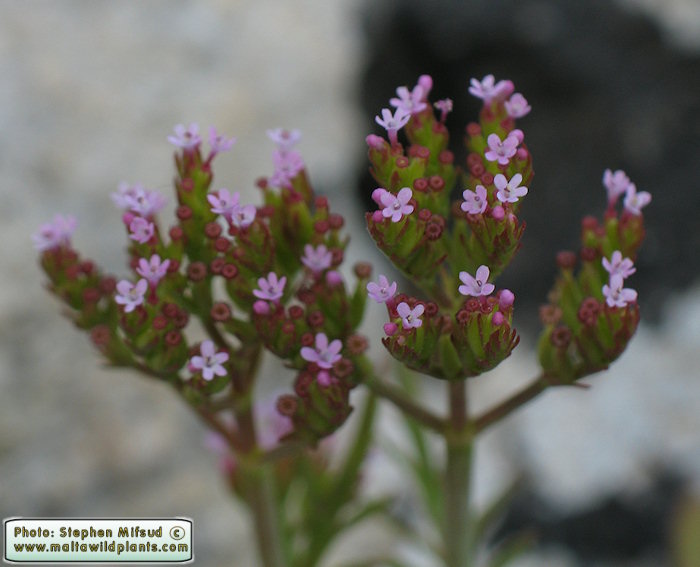
Pink |
Toxicity: |
Not particularly toxic |
Name Derivation : |
Centranthus: From the Greek \'kentron\' meaning a spur and \'anthos\' meaning a flower and hence referring to the flowers of this Genus having a spur-like base. (Greek origin )
calcitrapae: From the Latin caltrop (='/foot-trap'/) which is a four-pointed weapon usually positioned on the ground to impede enemy movements. (Latin origin ) 2 = Further info: [1] [2].
|
Planting in rural areas : |
Can be planted in rural areas according to ERA Guidelines |
|
|
Description, Habitat and Distribution | |
Habitat in Europe: |
Waste places. | |
Preferred habitat in Malta: |
Rocky places especially near valleys. | |
Botanical Description: |
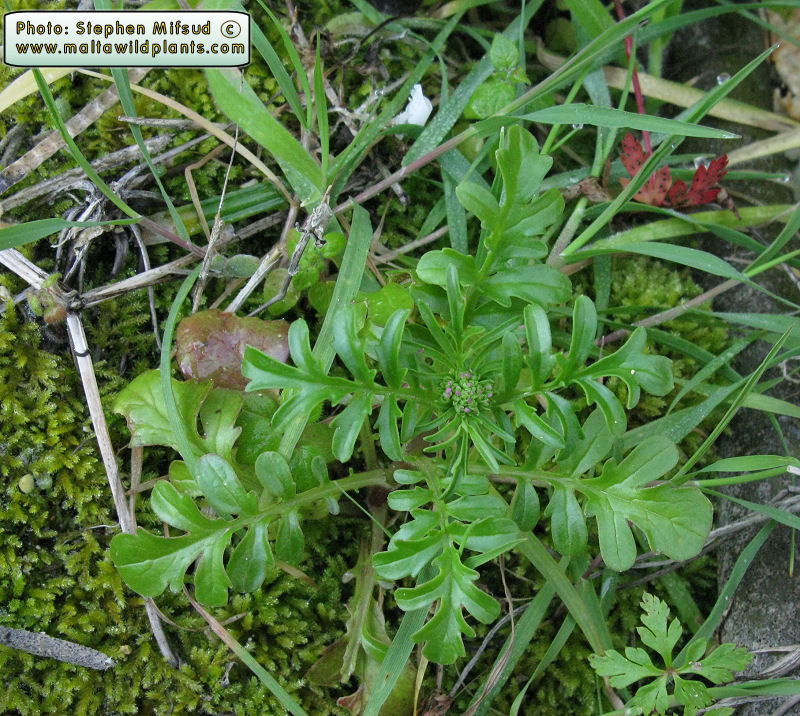
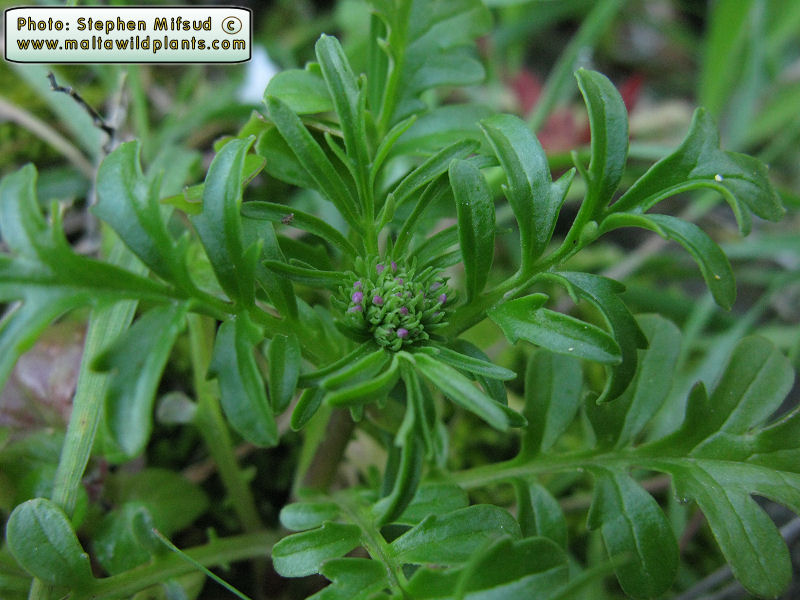
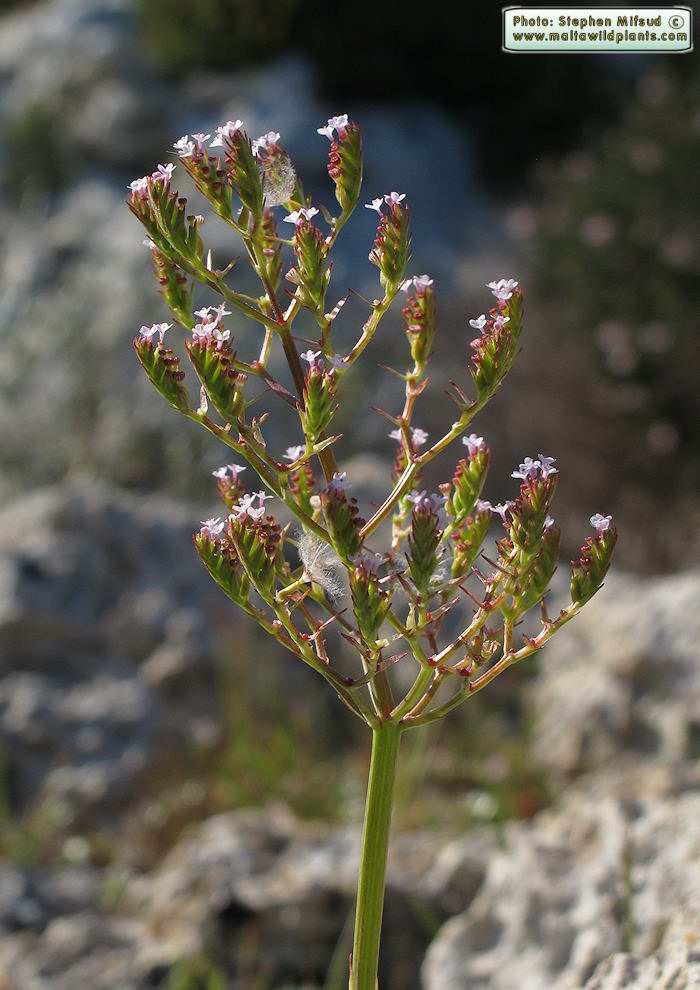
Stems 4-40(-75) cm, simple or branched. Leaves 10-90 x 6-40 mm, orbicular to obovate in outline, the lobes entire to incise-serrate. Partial inflorescences several, capitate. Corolla pink or white, gibbous or shortly spurred with the spur not exceeding the base of the tube; tube 1-2(-3) mm. | |
Chromosome number: |
2n=32 | |
Distributional range: |
S. Europe. |
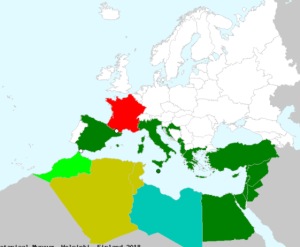
Distributional map in Europe
and the Mediterranean region (2018): |
|
Occurrences in Europe.
(from Flora Europaea pre year 1993): |
the Azores, the Balaeric Islands, Corse, Crete, France (incl. Monaco and Channel Islands but excluding Corse), Greece, Spain (incl. Andorra but excl. the Balaerics), Italy (excl. Sicily and Sardignia), ex-Jugoslavia, Portugal, Russia and former USSR, Sardinia, Sicily and/or Malta |
Occurrences in Europe and the Mediterranean region.
(from Euro+Med Checklist, 2019)
Country codes
|
? AE(G) Ag Al Az Bl(M) Ca dCa(C G H P T) Co Cr Ct Ga(F) Gr Hs(G S) It Li Lu Ma Md(M) Sa Si(S) Tn Tu(A) Uk(K) [nAz(F J P S) nBr aGe] |
|
| | |








 Atlas Flora Europaea
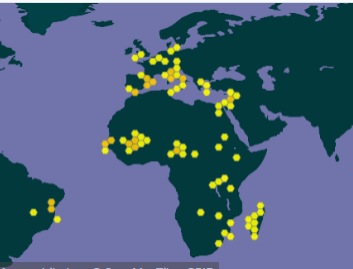 GBIF Distribution map