| |
|
 | |
| MaltaWildPlants.com by Stephen Mifsud |
|
| |
|
|
 |  |  |  |
| External Links: |
|
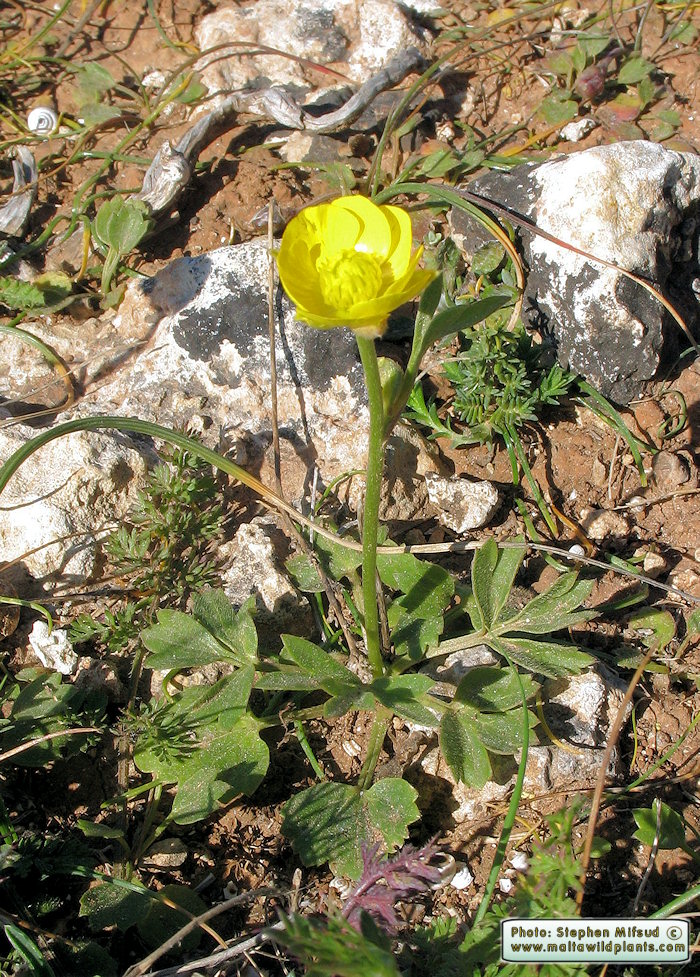
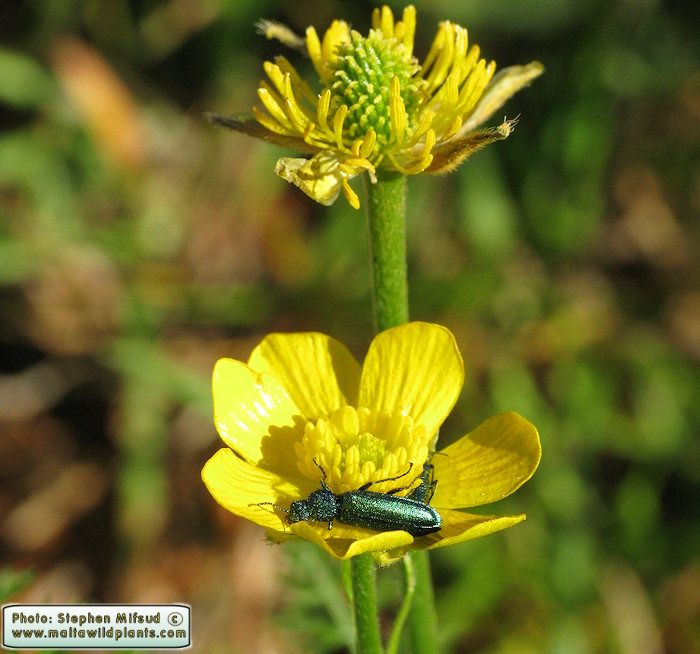
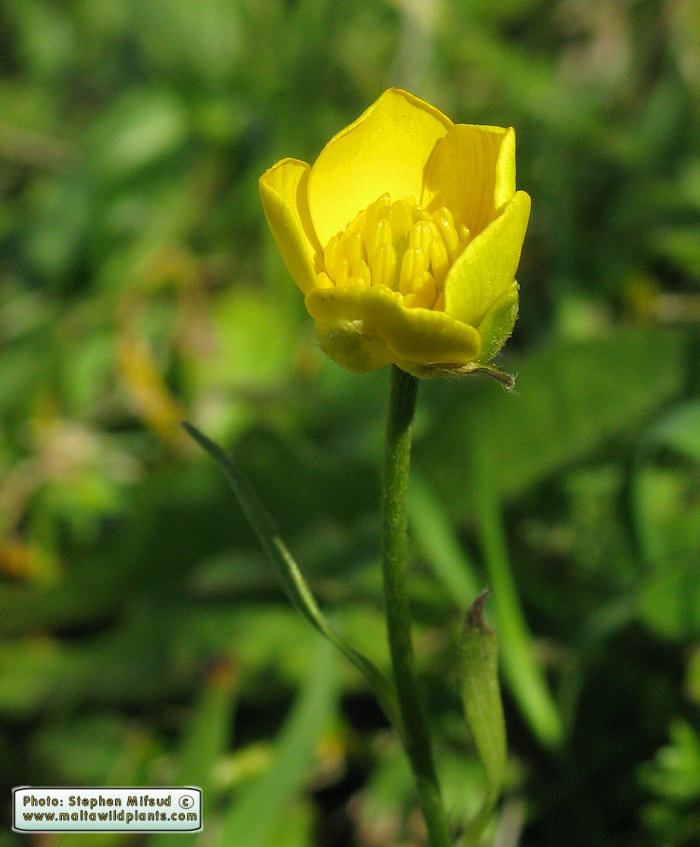
Ranunculus paludosus (Fan-Leaved Buttercup) |
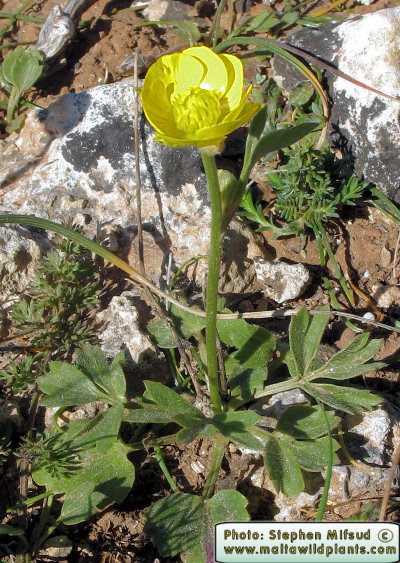
Ranunculus paludosus (RANUNCULACEAE.)
Images for this profile are taken from the Maltese Islands after year 2000. |
|
| Nomenclature and Basic Information |
Species name : |
Ranunculus paludosusPoir.
Published in Voy. Barb. 2: 184 (1789) |
Synonyms :
(basionym or principal syn.) |
|
Plant Family : |
Ranunculaceae
Juss. (The Buttercup Family)
23 species from the Ranunculaceae family are recorded from the Maltese Islands. | English name(s) : | Fan-Leaved Buttercup, Jersey Buttercup |
Maltese name(s) : |
Ċfolloq tax-xagħri |
Status for Malta : |
Indigenous. Present on the Maltese islands before man |
Frequency : |
Very Common Common Frequent Scarce Rare Very rare Extinct |
Growth form : |
Raunkiaer lifeform [info]: HEMICRYPTOPHYTE ( prostate plants with flowers close to the ground )
Germination [info]: Dicotyledon |
Legal Protection : |
Not legally protected till the last update of this website (2/Mar/2022) |
Red List (1989) : |
Not listed in the Red Data Book of the Maltese Islands |
Flowering Time : |
March – May |
Colour of Flowers: |
Yellow |
Toxicity: |
Toxic, and may lead to irreversible damage or death if consumed in large quantities |
Name Derivation : |
Ranunculus: from rana which means a small frog given because many species tend to grow in moist, wet or marshy places where frogs are found. (Latin origin )
paludosus: belonging to or growing in marshes or swamps. (Latin origin ) 2 = However in Malta this species is found growing in semi-arid rocky garigue or steppe.
|
Planting in rural areas : |
Can be planted in rural areas according to ERA Guidelines |
|
|
Description, Habitat and Distribution | |
Habitat in Europe: |
 Data will be available in the next update of this website.
 | |
Preferred habitat in Malta: |
Garigue and rocky place. | |
Botanical Description: |
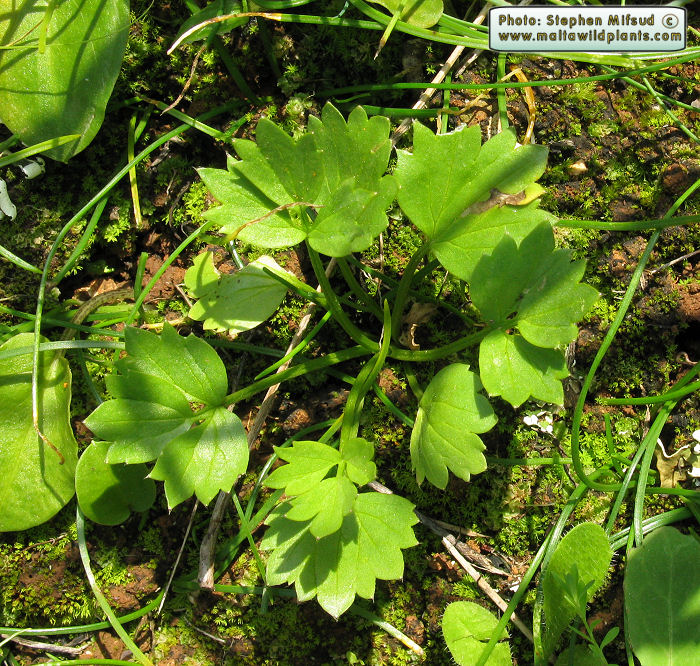
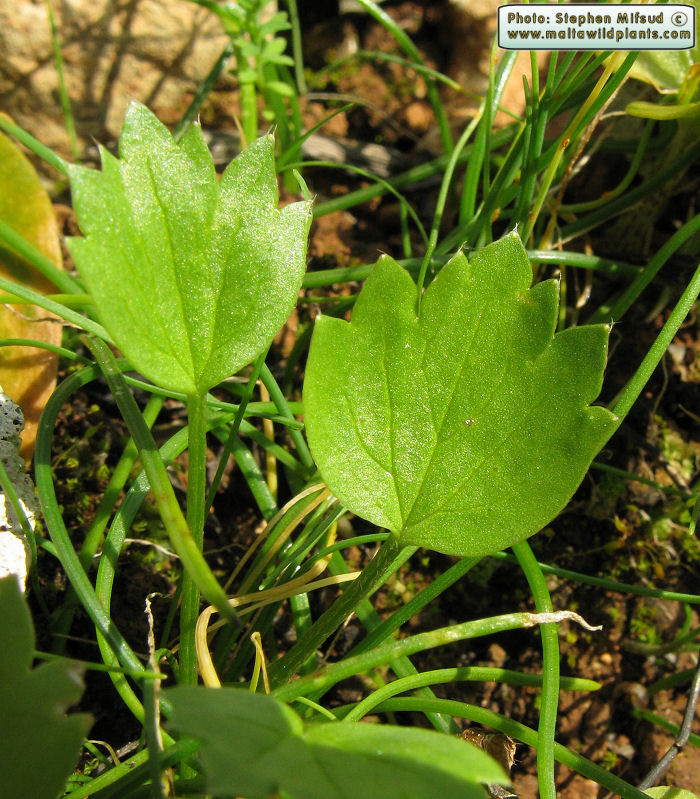
Perennial 10-50 cm, with fusiform tubers. Stock usually short, with persistent fibres. Outer basal leaves shallowly 3-lobed; inner 3-fid; middle segment long-stipitate; all divided into narrow, dentate segments. Flowers 1-8. Receptacle glabrous. Achenes c. 2 mm, minutely punctate, sparsely pubescent, strongly keeled on back, tapering into a nearly straight beak about as long as the achene and hooked at tip. | |
Chromosome number: |
2n=16, 32 | |
Distributional range: |
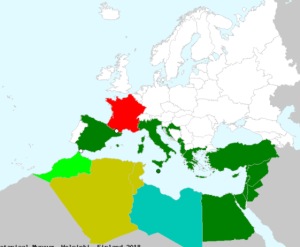
Mediterranean region and W. Europe, northwards to the Channel Islands. |
Distributional map in Europe
and the Mediterranean region (2018): |
|
Occurrences in Europe.
(from Flora Europaea pre year 1993): |
Corse, Crete, France (incl. Monaco and Channel Islands but excluding Corse), Greece, Spain (incl. Andorra but excl. the Balaerics), Italy (excl. Sicily and Sardignia), ex-Jugoslavia, Portugal, Sardinia, Sicily and/or Malta, Turkey (European part) |
Occurrences in Europe and the Mediterranean region.
(from Euro+Med Checklist, 2019)
Country codes
|
? AE(G) Ag Bl(I M N) Cg Co Cr Ct Cy Ga(C F) Gr Hs(A G S) Ir It Jo Le Li Lu Ma Sa Si(M S) SM Sr Sy Tn Tu(A E) |
|
| | |







 Atlas Flora Europaea
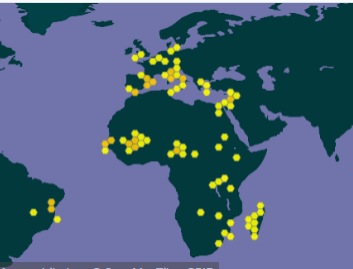 GBIF Distribution map