Wild Plants of Malta & Gozo - Plant: Papaver hybridum (Rough poppy)

Rough poppy

Papaver hybridum / Rough poppy / Peprin tal-Lanzit
This plant is brought to you by one of the project's sponsors:
HSBC Cares for the Environment Fund
More sponsors are needed for this project [ click here ]

Contents Links


Nomenclature

Botanical Data

Description

General Information

Photo Gallery

Further Info & Links

Buy Seeds and Docs

Submit own info
about this plant

Give a small Donation Online

FORUM

Copyright Info


Main Index

 
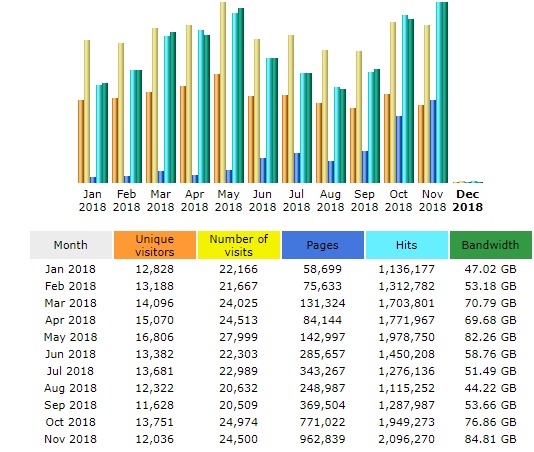
Visitor hits (Mar-2003)

Nomenclature

Species name:

Papaver hybridum   L.

Author(s):

Carl von Linné;
   Sweden, 1707-1778

General names:

Rough Poppy

Maltese name:

Peprin tal-Lanzit

Plant Family:

Papaveraceae   (Poppy Family)

Name Derivation:

Papaver = Latin name for poppy, also "pappa" is the Latin for food or milk, referring to the milky sap of the plant (Latin)

hybridum = hybrid form, genetically mixed species (Latin)

Synonyms:

None

Remarks:

-


Botanical Data

PLANT STRUCTURE:

Characteristic

Growth Form

Branching

Surface

Description

Erect :

Upright, vertically straight up well clear off the ground.

Basal Branching :

Branches are mostly present at the basal part of the stem.

Hispid :

Having stiff, bristly hairs but not spiny.

General
Picture

Wild Plants of the Mediterranean Islands of Malta  - Copyright Stephen Mifsud / Maltawildplants.com / Malta (2002-2007) Wild Plants of the Mediterranean Islands of Malta  - Copyright Stephen Mifsud / Maltawildplants.com / Malta (2002-2007) Wild Plants of the Mediterranean Islands of Malta  - Copyright Stephen Mifsud / Maltawildplants.com / Malta (2002-2007)

LEAVES:

Characteristic

Arrangement

Attachment

Venation

Description

Alternate :

Growing at different positions along the stem axis.

Stalked / Petiolate :

Hanging out by a slender leaf-stalk.

None :

No prominent venation visible.

General
Picture

Wild Plants of the Mediterranean Islands of Malta  - Copyright Stephen Mifsud / Maltawildplants.com / Malta (2002-2007) Wild Plants of the Mediterranean Islands of Malta  - Copyright Stephen Mifsud / Maltawildplants.com / Malta (2002-2007) Wild Plants of the Mediterranean Islands of Malta  - Copyright Stephen Mifsud / Maltawildplants.com / Malta (2002-2007)
 

Characteristic

Leaf Shape

Leaf Margin

Remarks

Description

Multi Pinnate / Pinnatifid :

Compound arrangement of many small, narrow branching and sub-branching leaflets or leaf-lobes which however are not separated into distinct leaflets.

Entire :

Smooth margin without indentations, lobes or any projections.

General
Picture

Wild Plants of the Mediterranean Islands of Malta  - Copyright Stephen Mifsud / Maltawildplants.com / Malta (2002-2007) Wild Plants of the Mediterranean Islands of Malta  - Copyright Stephen Mifsud / Maltawildplants.com / Malta (2002-2007) Wild Plants of the Mediterranean Islands of Malta  - Copyright Stephen Mifsud / Maltawildplants.com / Malta (2002-2007)

FLOWERS:

Characteristic

Colour

Basic Flower Type

No. of Petals

No. of Sepals

Description

Crimson Red

Polypetalous to Bowl-shaped:

Having separate, free petals. Sometimes petals are half erect to form a flower with a bowl-like structure.

4

2

General
Picture

  Wild Plants of the Mediterranean Islands of Malta  - Copyright Stephen Mifsud / Maltawildplants.com / Malta (2002-2007) Wild Plants of the Mediterranean Islands of Malta  - Copyright Stephen Mifsud / Maltawildplants.com / Malta (2002-2007) Wild Plants of the Mediterranean Islands of Malta  - Copyright Stephen Mifsud / Maltawildplants.com / Malta (2002-2007)
 

Characteristic

Inflorescence

Description

Ovary

Stamens

Description

Single and Terminal :

Single, solitary flower at the apex of the stem or flower branch.

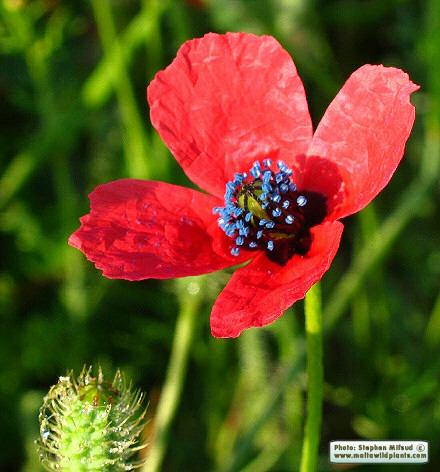
Flower is made up of 4 crimson-red, petals with a black spot at its base. The petals do not overlap each other. There is a central globular ovary with numerous indigo or pale blue stamens at its periphery. The 2 hairy sepals fall off when flower opens up.

Superior :

Ovary situated above the flower parts (the calyx, corolla, and androecium). In other words, these are attached below the ovary.

50-100+, Annular Cluster :

A cluster of stamens in the form of a ring, often encircling the gynoecium.

General
Picture

Wild Plants of the Mediterranean Islands of Malta  - Copyright Stephen Mifsud / Maltawildplants.com / Malta (2002-2007) Wild Plants of the Mediterranean Islands of Malta  - Copyright Stephen Mifsud / Maltawildplants.com / Malta (2002-2007) Wild Plants of the Mediterranean Islands of Malta  - Copyright Stephen Mifsud / Maltawildplants.com / Malta (2002-2007) Wild Plants of the Mediterranean Islands of Malta  - Copyright Stephen Mifsud / Maltawildplants.com / Malta (2002-2007)
 

Characteristic

Scent

Average Flower Size

Pollen Colour

Other Notes

Description

None

18-30mm

Indigo to Pale Blue

Pollen colour is very contrasting with the flower.

-


SEEDS:

Characteristic

No. Per Fruit

Shape

Size

Colour

Description

>200

Numerous tiny seeds which ther quantity varies according to the fruit size.

Reniform

Small, kidney-shaped seeds; rather swollen.

Not more from 1mm

Dark gray

General
Picture

Wild Plants of the Mediterranean Islands of Malta  - Copyright Stephen Mifsud / Maltawildplants.com / Malta (2002-2007) Wild Plants of the Mediterranean Islands of Malta  - Copyright Stephen Mifsud / Maltawildplants.com / Malta (2002-2007) Wild Plants of the Mediterranean Islands of Malta  - Copyright Stephen Mifsud / Maltawildplants.com / Malta (2002-2007) Wild Plants of the Mediterranean Islands of Malta  - Copyright Stephen Mifsud / Maltawildplants.com / Malta (2002-2007)

FRUIT AND OTHER BOTANICAL DATA:

Characteristic

Fruit Type

Colour of Fruit

Subterranean Parts

Other Notes

Description

Indehiscent Operculate Poricidal Capsule :

A fruit having the shape of a pot with a lid (operculum). It stores large number of seeds that escapes from small pores or slits in the lid (at the upper part of the fruit).

Dark Green

(turns brown when fully ripe).

Taproot :

A rooting system where there is the main descending root of a plant having a single dominant large structure from which a network of smaller and long roots emerge.

-

General
Picture

Wild Plants of the Mediterranean Islands of Malta  - Copyright Stephen Mifsud / Maltawildplants.com / Malta (2002-2007) Wild Plants of the Mediterranean Islands of Malta  - Copyright Stephen Mifsud / Maltawildplants.com / Malta (2002-2007) Wild Plants of the Mediterranean Islands of Malta  - Copyright Stephen Mifsud / Maltawildplants.com / Malta (2002-2007) Wild Plants of the Mediterranean Islands of Malta  - Copyright Stephen Mifsud / Maltawildplants.com / Malta (2002-2007)

Plant Description

Life Cycle:

Annual

Habitat:

Fields, waysides, weedy waste-ground.

Frequency:

Common

Sources in Malta:

Found in few scattered numbers in several fields such as in Mistra, Pieta', Qormi and Bahrija.

Plant Height:

10-50cm.

Flowering Time:

Mar - May

Poison:

Not known.

Like most poppies, the rough poppy is an erect annual plant with large bright coloured, single, terminal flowers. The name rough comes from the fact that the seed capsule possess white stiff bristles. Those of the calyx are not so stiff, while those of the stem and leaves further more soft. The main stem branches into few stems at the lower part of the plant and give rise to one single flower.

The leaves are mulit pinnately lobed (pinnatifid) and can reach up to 10cm in length, but normally they are about 6-7 cm. Leaves grow alternately along stem and have have little hair.

The flower bud has an upside-down peduncle and made up of 2 bristly sepals. On blossoming, the flower takes an erect position and the sepals falls. The corolla is rather small (2-5cm) in comparison to other wild poppy flowers and consists of 4 crimson-red petals with a dark purple-black blob at the base. The petals are relatively narrow and rarely overlap when fully mature. A distinctive feature of this poppy is the indigo or pale blue colour of the numerous anthers around the central ovary (carpel). The ovary have about 6 to 8 radiating striped stigmas at the top usually coloured in indigo or violet.

The seed-pod is globular or slightly oval in shape and is covered with stiff bristles. When it dries it forms a indehisicate operculate (having a lid structure) capsule which holds many tiny kidney-shaped seeds which escape out through tiny slits in the upper part of the capsule (at the 'lid') when the stem sways with wind.


Additional Information


Personal Observations

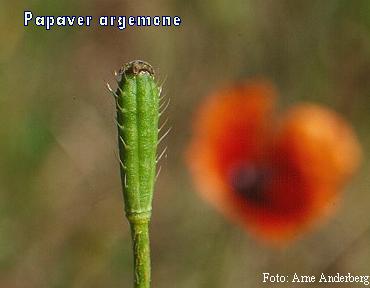
The plant can be mistaken with a similar poppy species - the Papaver argemone. It also have hair and forms a rather small flower. The main differences is that P. argemone

have a scarlet red flowers (instead crimson) and more important, the see photoseed capsule is well elongated (rather than spherical) and less bristly .[SM]

The petals of the plant are very fragile, and they drop off with little stress such as by wind or light shaking of the stem. It is more successful to find the flowers in the morning, just after blossoming, rather in the afternoon since the wind currents during the day may cause the petals to fall. In fact it is useless to cut these flowers to study them at the Lab or studio, because the petals will drop off during cutting or while transporting . [SM]

This poppy is not common in Malta and is rarely found growing on its own. However there is a good chance to be found amongst other common poppies (namely P. rhoeas ) since usually it will be present in mixed communities of poppies. [SM]

Not much more information (such as uses) has been found about this plant both on books and on the internet. If you can supply further info please email me and I will included it in, and give you full credits.

Photo Gallery

Papaver hybridum (Rough poppy) - CLICK TO ENLARGE PHOTO Papaver hybridum (Rough poppy) - CLICK TO ENLARGE PHOTO Papaver hybridum (Rough poppy) - CLICK TO ENLARGE PHOTO Papaver hybridum (Rough poppy) - CLICK TO ENLARGE PHOTO
Photo of flower having non overlapping crimson/red petals.
Close up photo of flower showing the anthers striped white and light blue and held by upright by purple/black filaments.
Photo of flower showing cluster of blue stamens around a central pot-shaped ovary with dark purple stigma on top.
Photo of a typical young flower.
Papaver hybridum (Rough poppy) - CLICK TO ENLARGE PHOTO Papaver hybridum (Rough poppy) - CLICK TO ENLARGE PHOTO Papaver hybridum (Rough poppy) - CLICK TO ENLARGE PHOTO Papaver hybridum (Rough poppy) - CLICK TO ENLARGE PHOTO
Photo of flower and the spherical capsule and bud, both covered with bristles.
Photo of a young flower with petals still overlapping at their lower half.
Photo of adult flower with nearly non overlapping petals.
Photo of flower, this one being more crimson in colour.
Papaver hybridum (Rough poppy) - CLICK TO ENLARGE PHOTO Papaver hybridum (Rough poppy) - CLICK TO ENLARGE PHOTO Papaver hybridum (Rough poppy) - CLICK TO ENLARGE PHOTO Papaver hybridum (Rough poppy) - CLICK TO ENLARGE PHOTO
Close up photo of the cluster of stamens with their characteristicalpale blue anthers.
Scanned image of a dissected flower showing the pale blue/indigo anthers on dark purple filaments. Bristles also present on ovary during the flower stage.
Crimson red petals (21mm length) with a black, rather small spot at the base of the petal.
Photo of whole plant in situ.
Papaver hybridum (Rough poppy) - CLICK TO ENLARGE PHOTO Papaver hybridum (Rough poppy) - CLICK TO ENLARGE PHOTO Papaver hybridum (Rough poppy) - CLICK TO ENLARGE PHOTO Papaver hybridum (Rough poppy) - CLICK TO ENLARGE PHOTO
Photo of plant in situ showing the bristly bud and seed capsule.
Photo of a solitary plant in situ showing leaves, stem and a flower.
Scanned image of plant.
Scanned image of multi-pinnate leaf.
Papaver hybridum (Rough poppy) - CLICK TO ENLARGE PHOTO Papaver hybridum (Rough poppy) - CLICK TO ENLARGE PHOTO Papaver hybridum (Rough poppy) - CLICK TO ENLARGE PHOTO Papaver hybridum (Rough poppy) - CLICK TO ENLARGE PHOTO
Scanned image of a seed capsule and a bud. The seed-pod bristles are more stiff and slightly larger.
Close up photo of fruit which is an operculate poricidal capsule. Unlike the common poppy (Papaver rhoeas), the fruit is covered with stiff pointed bristles.
Close up photo of fruit capsule in situ. This have an interesting violet stigma.
Close up photo of the pinnatifid leaves in situ. Leaves are often found at the branching of the stem.
Papaver hybridum (Rough poppy) - CLICK TO ENLARGE PHOTO Papaver hybridum (Rough poppy) - CLICK TO ENLARGE PHOTO    
Close up photo of leaves and buds in situ. Note the black tips of the leaf lobes.
Photo of image of seeds under microscope. Note the texture of the seed coat.
-
-

Further Information and Links

Please submit an internet link about any info on the Papaver hybridum  
Search for Papaver hybridum on the FORUM of MaltaWildPlants.com


Buy from and support MaltaWildPlants.com

Buy Seeds from Maltawildplants.com Buy samples of seeds of certain wild plants for your studies, trials, research, etc. Not all species' seeds can be exported (depending on Maltese regulations), and availability depends on season of species. So, before any payment, you are kindly asked to fill in the online quotation/order form by which I can contact you back for availability and charges. Buy Seeds from Maltawildplants.com   Online Quotation

Buy Seeds from Maltawildplants.com   Online Payment
Buy Documents from Maltawildplants.com Buy documents related to Maltese Wild Plants such as the list of references, full profile, or other docs you request. Buy Documents from Maltawildplants.com   Online Payment
Buy Images  from Maltawildplants.com Buy any of my own copyright images found in this large collection of Maltese flora. You should first select the image you want to buy and input its corresponding code (found beneath each individual photo) in the online ordering form. Buy Seeds from Maltawildplants.com   Online Payment
Buy Seeds from Maltawildplants.com Kindly donate any sum of money (from 2USD / 2Euro) to help us covering some expenses needed to maintain Maltawildplants.com. Please bear in mind how much hard work such a large and up-to-date website needs to arrive directly to you home, office or library. Your kind donations are both greatly appreciated and recorded for future reference. Donors asking help will have first que preference for assistance and special attention. Buy Seeds from Maltawildplants.com   Online Donation


Submit More Information

Use the form below to submit more information about this plant or a related species. If the data is taken from a book, journal, website, etc, please provide the corresponding reference / website address as indicated in the form. If it is your own observation, then your name will be cited. Your Email address will never be displayed online, it is just for internal communication.


For plant species that are marked as rare, you can also report other locations in Malta where you have seen this species.

Finally you can report any mistakes or errors found on the plant profile for necessary corrections. This will help to improve the website's acuracy.


To have more details about each particular field, just move your mouse on it and wait for the help message to pop up

* = required fields.
Plant Species:  *
Your name:   *
Your Email:   *
Fill any of the following 3 sections below (A, B or/and C) and send the form. - Thank you.
 
A:  Additional Information about this plant species
Own observations:
Info from published material (books, jounals, website):

Reference of published material:

 
B:   Where have you seen this plant on the Maltese Islands?
Locations in Malta or Gozo where you have encountered this plant.
Mostly applies for rare plants.


1:        2:   
3:       4:   
5:       6:   

Try to be as concise as possible. Examples: Dingli Cliffs (near chapel), Wied Incita (Zebbug side), Triq il-Kbira (Qormi), Barriera ta\' Abdul (Xlendi), Fields near Salib tal-gholja (Siggiewi). GPS bearings are also welcomed!
 
C:  Corrections for mistakes and errors in this plant profile.
Section of this plant Profile page where you found an error (select one)

What is the error/mistake
What should be its correction


All material and data on this webpage is under the copyright of the author of this site - Stephen Mifsud / www.MaltaWildPlants.com / Malta. (2002-2008)
This research project about the flora of Malta is sponsored by:
Middlesea Insurance p.l.c. A Fund established to help in the amelioration and enhancement of the environment in Malta and to take initiatives that enhance awareness on environmental issues amongst the public Empty space for sponsor Empty space for sponsor Benefit companies get by sponsoring this project