Ornithogalum narbonense   MaltaWildPlants.com - A website dedicated to the flora of Malta  
        
   Sat 4 Feb 2012           Google PR= 5
HOME  - Index of Plant FamiliesA to Z INDEX - Species list aided with query filter toolsNEWS - Lateset news from the author & web updatesCOMMUNICATE ( Emails, Comments, Donations, etc)


Bermuda Buttercup
Oxalis pes-caprae  L. (OXALIDACEAE)
Oxalis pes-caprae  / Bermuda Buttercup / Ħaxixa Ingliża
This plant is brought to you by one of the project's sponsors:
Malta Nature Tours
More sponsors are needed for this project [ click here ]

Contents Links  (Detailed Profile)


Nomenclature

Morphology

Description & Specifications

Plant Information

Photo Gallery

Links & further info

Sales & Support

Submit your asster info

Give a small Donation Online

Website FORUM

Copyright Notes


Oxalidaceae Index

Main Family Index

 
Visitors (Mar-2003):
Profile created on Mar-2003. / Last Update 29 Jun 2011.

Nomenclature

Species name:

Oxalis pes-caprae   L.

Author(s):

Carl von Linné;
   Sweden, 1707-1778

Common names:

Bermuda Buttercup, Cape Sorrel, African Wood-Sorrel, Soursob, Sour Grass

Maltese name:

ħaxixa IngliŻa, Qarsu

Plant Family:

Oxalidaceae   (WoodSorrel Family)

Name Derivation:

Oxalis = derived from "sour", due to oxalic acid in leaves and roots (Greek);
pes-caprae = looking like the foot of a goat; "pes" = foot, "capra" = goat (Latin).

Synonyms:

Oxalis cernua, Bolboxalis cernua

Remarks:

-


Morphology

PLANT STRUCTURE:

Character

Growth Form

Branching

Surface

Description

Erect but without a true aerial stem :

Erect flower stalk(s) and leaves grow directly from the true underground stem such as rhizomes, tubers, corms or bulbs.

Unbranched Multiple stalks :

Leaf or flower stalks grow randomly and close to each other from a single underground stem (eg. rhizome).

Puberulous :

Covered with minute hairs or very fine down; finely pubescent.

General
Picture

Wild Plants of the Mediterranean Islands of Malta  - Copyright Stephen Mifsud / Maltawildplants.com / Malta (2002-2010) Wild Plants of the Mediterranean Islands of Malta  - Copyright Stephen Mifsud / Maltawildplants.com / Malta (2002-2010) Wild Plants of the Mediterranean Islands of Malta  - Copyright Stephen Mifsud / Maltawildplants.com / Malta (2002-2010)

LEAVES:

Character

Arrangement

Attachment

Venation

Description

Single, terminal leaf :

Long leaf stalks each holding a single, terminal leaf and come out from a rhizome, bulb or other underground stem. The plant forms many stalked leaves emerging at ground level.

Stalked / Petiolate :

Hanging out by a slender leaf-stalk.

None :

No prominent venation visible.

General
Picture

Wild Plants of the Mediterranean Islands of Malta  - Copyright Stephen Mifsud / Maltawildplants.com / Malta (2002-2010) Wild Plants of the Mediterranean Islands of Malta  - Copyright Stephen Mifsud / Maltawildplants.com / Malta (2002-2010) Wild Plants of the Mediterranean Islands of Malta  - Copyright Stephen Mifsud / Maltawildplants.com / Malta (2002-2010)
 

Character

Leaf Shape

Leaf Margin

Remarks

Description

Invert Cordiform and trefoil:

Tapering at base, with rounded indent at top part of leaf. There are 3 such leaflets per leaf.

Entire :

Smooth margin without indentations, lobes or any projections.

Leaf Pigmentation

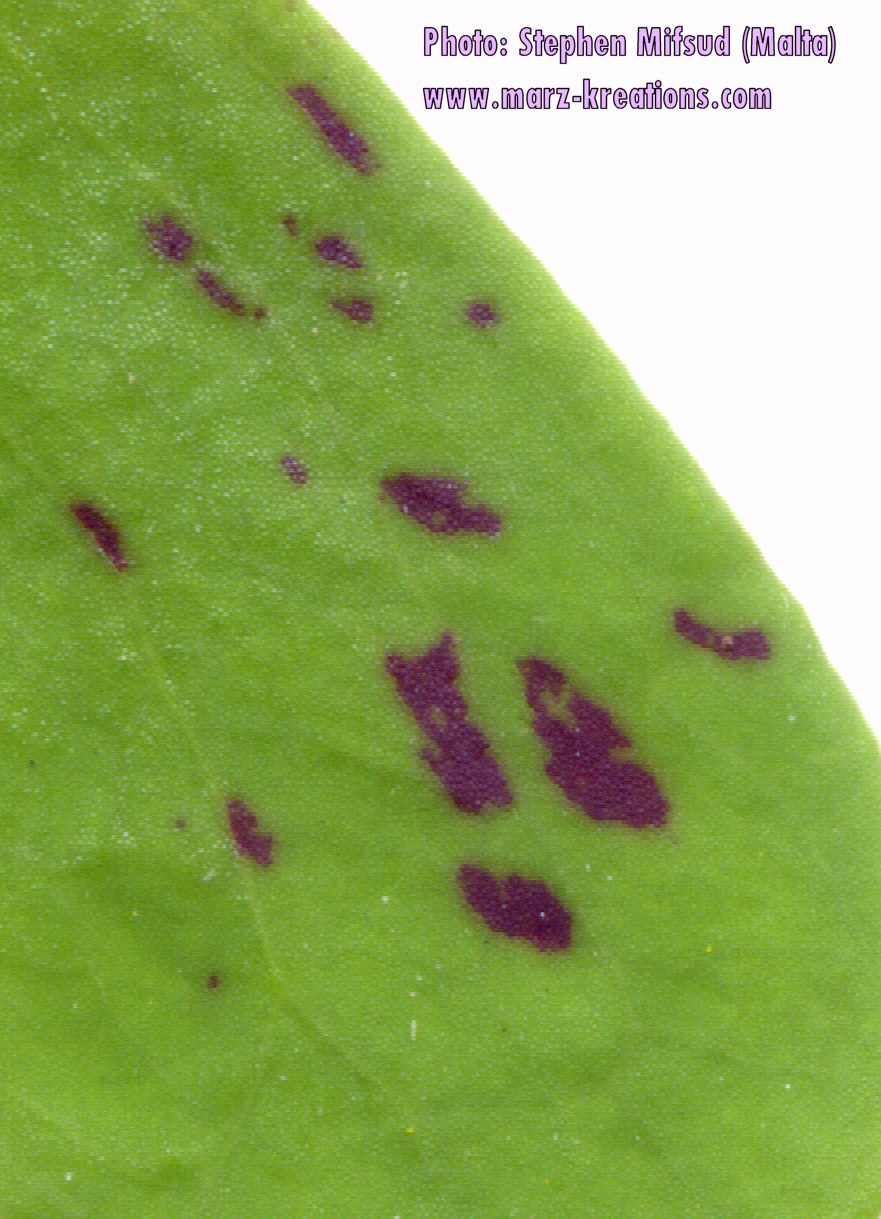
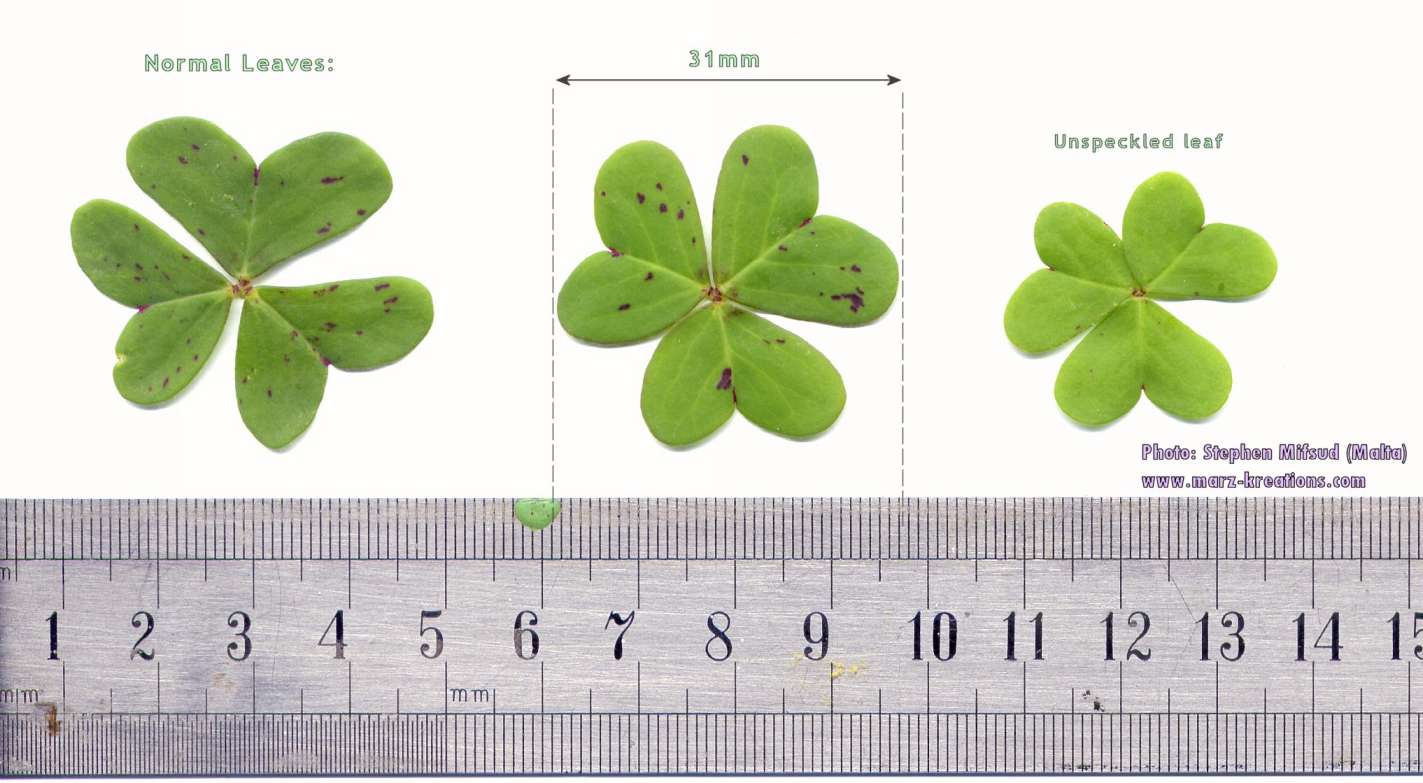
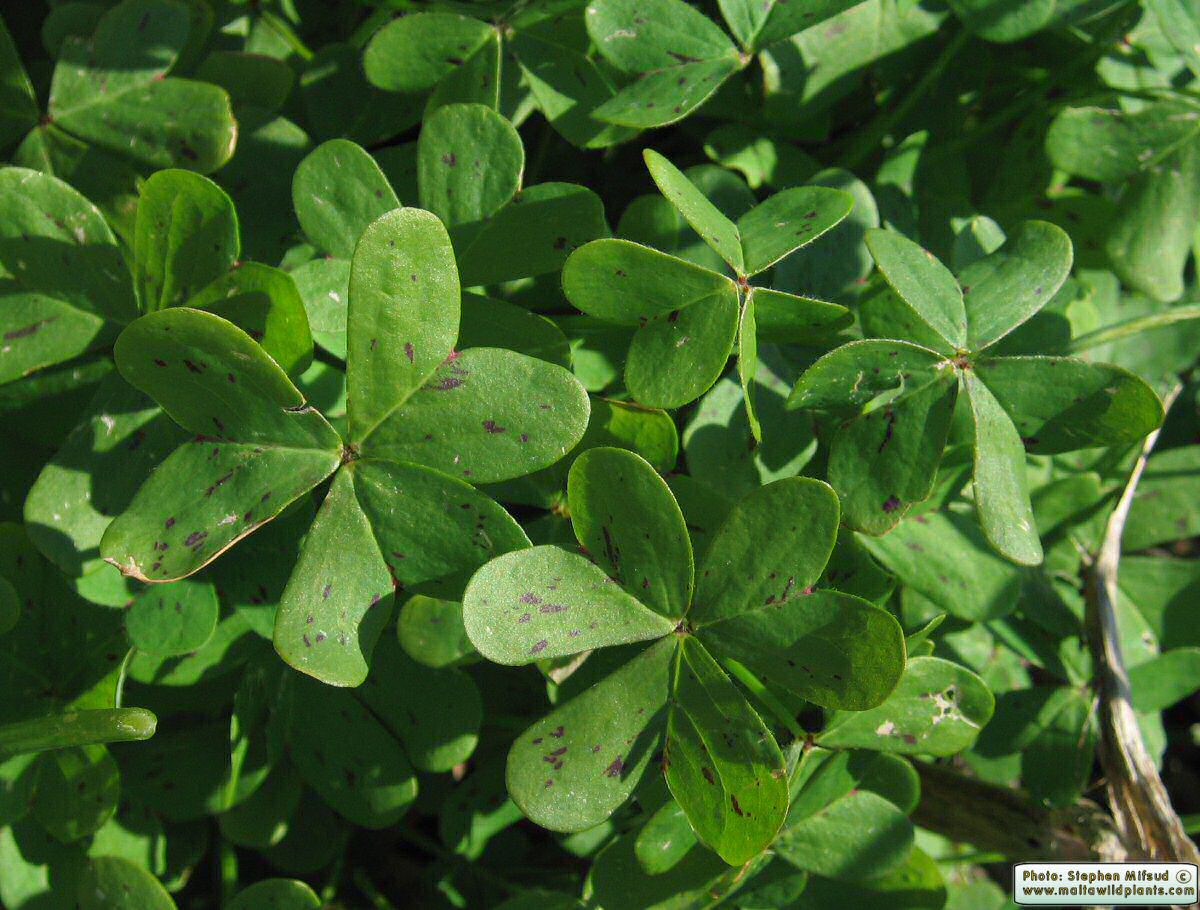
Leaves are green with few to several dark purple blobs randomly scattered across the leaf blade.

General
Picture

Wild Plants of the Mediterranean Islands of Malta  - Copyright Stephen Mifsud / Maltawildplants.com / Malta (2002-2010) Wild Plants of the Mediterranean Islands of Malta  - Copyright Stephen Mifsud / Maltawildplants.com / Malta (2002-2010) Wild Plants of the Mediterranean Islands of Malta  - Copyright Stephen Mifsud / Maltawildplants.com / Malta (2002-2010)

FLOWERS:

Character

Colour

Basic Flower Type

No. of Petals

No. of Sepals

Description

Bright yellow

Trumpet Shape :

Petals fused together to form a flower having the shape of a trumpet, hence starting as a narrow tube but widens into a flared mouth where the petals often turn slightly back.

5

5

General
Picture

  Wild Plants of the Mediterranean Islands of Malta  - Copyright Stephen Mifsud / Maltawildplants.com / Malta (2002-2010) Wild Plants of the Mediterranean Islands of Malta  - Copyright Stephen Mifsud / Maltawildplants.com / Malta (2002-2010) Wild Plants of the Mediterranean Islands of Malta  - Copyright Stephen Mifsud / Maltawildplants.com / Malta (2002-2010)
 

Character

Inflorescence

Description

Ovary

Stamens

Description

Umbel :

A cluster of flowers whose spreading stalks (pedicels) arise from a common point on the stem (often at the apex).

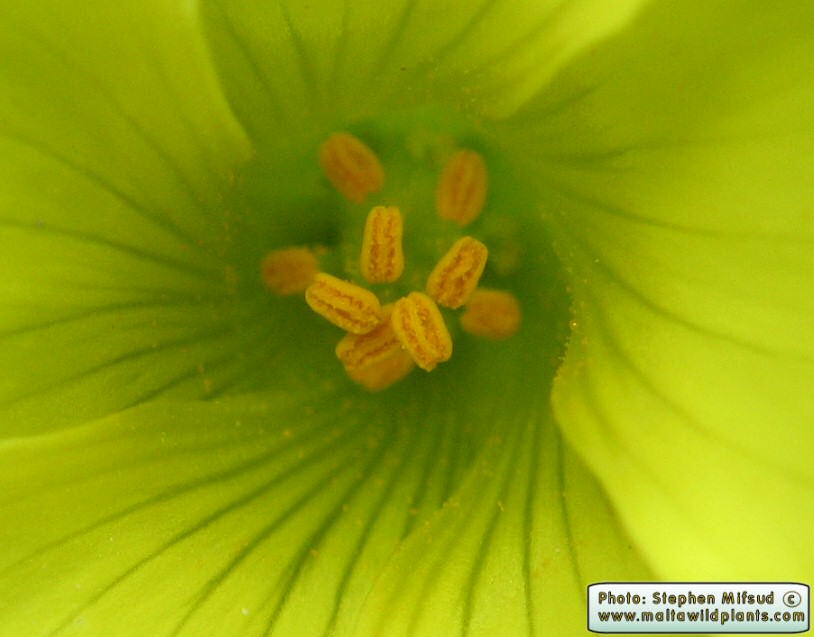
Flower made up of 5 petals fused at the base forming the shape of a trumpet or funnel. It possesses 10 stamens (arranged in two rows of different levels) 5 stigmas further down the flower neck very close to the receptacle.

Superior :

Ovary situated above the flower parts (the calyx, corolla, and androecium). In other words, these are attached below the ovary.

10, Obdiplostemonous (alternisepalous) :

Flowers which has twice as many stamens as petals. Stamens are arranged in two separate whorls; the outer whorl with stamens over the petals (between sepals), the inner one alternatiung between the petals.

General
Picture

Wild Plants of the Mediterranean Islands of Malta  - Copyright Stephen Mifsud / Maltawildplants.com / Malta (2002-2010) Wild Plants of the Mediterranean Islands of Malta  - Copyright Stephen Mifsud / Maltawildplants.com / Malta (2002-2010) Wild Plants of the Mediterranean Islands of Malta  - Copyright Stephen Mifsud / Maltawildplants.com / Malta (2002-2010) Wild Plants of the Mediterranean Islands of Malta  - Copyright Stephen Mifsud / Maltawildplants.com / Malta (2002-2010)
 

Character

Scent

Average Flower Size

Pollen Colour

Other Notes

Description

YES

Very sweet delicate fragrance.

30-32mm

(unstretched).

Yellow

-


SEEDS:

Character

No. Per Fruit

Shape

Size

Colour

Description

nil

(Seed formation is extemely rare in Malta, plant spread vegetatively by underground bulbils).

n/a

n/a

n/a

General
Picture

Wild Plants of the Mediterranean Islands of Malta  - Copyright Stephen Mifsud / Maltawildplants.com / Malta (2002-2010) Wild Plants of the Mediterranean Islands of Malta  - Copyright Stephen Mifsud / Maltawildplants.com / Malta (2002-2010) Wild Plants of the Mediterranean Islands of Malta  - Copyright Stephen Mifsud / Maltawildplants.com / Malta (2002-2010) Wild Plants of the Mediterranean Islands of Malta  - Copyright Stephen Mifsud / Maltawildplants.com / Malta (2002-2010)

FRUIT AND OTHER BOTANICAL DATA:

Character

Fruit Type

Colour of Fruit

Subterranean Parts

Other Notes

Description

Indehiscent Poricidal Capsule :

A non-splitting fruit capsule which usually stores a large number of tiny seeds which escape through small pores or slits in the walls of the fruit. Fruit formation is extemely rare in Malta - one could even say never observed.

n/a

Bulbil :

A small bulb or bulb-shaped body, especially one borne upon the stem, and usually produced for asexual reproduction without the need of flowers and seeds.

-

General
Picture

Wild Plants of the Mediterranean Islands of Malta  - Copyright Stephen Mifsud / Maltawildplants.com / Malta (2002-2010) Wild Plants of the Mediterranean Islands of Malta  - Copyright Stephen Mifsud / Maltawildplants.com / Malta (2002-2010) Wild Plants of the Mediterranean Islands of Malta  - Copyright Stephen Mifsud / Maltawildplants.com / Malta (2002-2010) Wild Plants of the Mediterranean Islands of Malta  - Copyright Stephen Mifsud / Maltawildplants.com / Malta (2002-2010)

Specifications & Description

Life Cycle:

Perennial.

Growth Form:

GEOPHYTE (Bulbous/Rhizomous plants)

Habitat:

Waysides, Wasteland, damp places, valleys, field tracks, stony walls, garigue and several other habitats.

Frequency:

Very Common

Localities in Malta:

Very Common throughout the Maltese Islands. Could be considered as the most abundant wild plant in Malta during January and February.

Plant Height:

10-30cm.

Flowering Period:

Dec - Apr

Protection in Malta:

Not Protected by Law (LN200/2011 or LN311/2006)

Red List 1989:

Not listed in the Flora section of the National Red Data Book (Lanfranco, 1989)

Poison:

Yes: contains high levels of the soluble Oxalates in leaves, roots and to a lesser extent in the stalks.

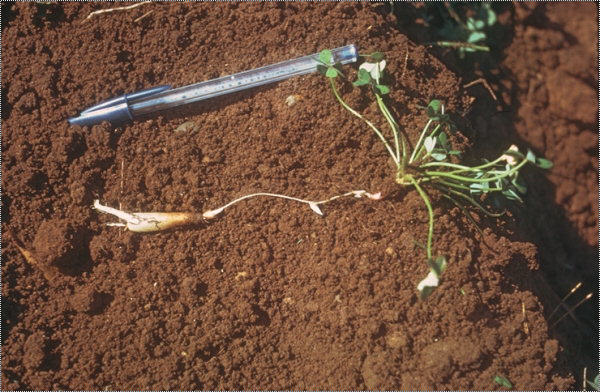
A very common perennial plant of about 10-30cm height that flowers in Malta during early Winter till April. The plant is seen on our islands for about 6 months from when it set up leaves in Oct/Nov till May, but has perennial bulbous roots which remain alive all year round. Roots are buried underground (ocassionally in cavities of rubble walls) and produce many small peanut-sized, brown bulbs called bulbils each giving rise to a plant.

A stem lying just udergroung or at soil level is formed from the bulbil which in turn develops a cluster of unbranched stalks holding leaves or flowers. Leaf stalks bear a single compound trifoliate leaf (made of 3 leaflets) at its apex. Each of the 3 leaflets has the shape of an inverted heart. Few to many dark purple speckles are often observed on the leaves.

Flower stalks form an umbellate cymes of about 6 to 12 (-18) flowers. Each flower consists of 5 small, lance-shaped, green sepals and 5 bright yellow petals (20-25mm length) which collectively form a funnel or trumpet shaped corolla. The male reproductive organs consist of 2 whorls of 5 stamens each, the upper whorl having fertile stamens with long filaments and the other row below consists of non-fertile stamens. The female organs are located at the bottom of the flower and consist of five small pistils united at the base.

The fruit is a poricidal capsule, rather cylindrical in shape with slits at the walls from which the tiny seeds escape, such as by mechanical swaying indiced by wind. The plant rarely produce fruits, and never observed in our islands. One of the most common wild plants in Malta which is believed to have spread out by translocation of underground bulbils in a relatively short period of 200 years from the introduction of 1-2 dozen of plants in the beginning of the 19th century.


Information and Details


Nativity and distribution

Plant originates from Cape Town in South Africa which have a similar Mediterrenean climate. [WWW-21, WWW-160]. The common name 'Bermuda Buttercup' is hence a double misnomer! (double becasue it is neither a Buttercup but a Wood-sorrel).

Notes about Oxalis (from freedictionary.com)

Oxalis is the largest genus in the wood sorrel family known as the Oxalidaceae. Of the approximately 900 known species in the Oxalidaceae, 800 belong to Oxalis. Many of the species are known as Wood Sorrel or Woodsorrel. The genus occurs throughout most of the world, except for the polar areas; species diversity is particularly rich in tropical Brazil and Mexico and in South Africa. [WWW-70]

These plants are annual or perennial. The leaves are divided into three to ten or more round, heart-shaped or lanceolate leaflets, arranged in a whorl with all the leaflets of roughly equal size. The majority of species have three leaflets; in these species, the leaves are superficially similar to those of some clovers, though clovers differ in having the leaflets not in a whorl, and of unequal size with two smaller side leaflets and one larger central leaflet. The flowers have five petals, usually fused at the base, and ten stamens; the petal colour varies from white to pink, red or yellow. The fruit is a small capsule containing several seeds. The roots are often tuberous, and several species also reproduce vegetatively by production of bulbils, which detach to produce new plants. [WWW-70]

Notes about Oxalis (from quattrofolium.com)

The main genus of the Wood Sorrel family is Oxalis, which has some 800 sorts. The genus owes its name to the embedded calciumoxalate-crystals (oxalic acid). The plants of this genus really grow everywhere on our planet. Especially rich in genera are the Andes, the tropical regions of Brazil, Mexico and South Africa. [WWW-160]

In this group are both annual plants and perennial shrubs. The oxalis plants are not of any economic significance. In former times, oxalis acetosella was used in the Black Forest to produce out of a weight of 75 kg leaves and amount of 500 g oxalic acid for technical purposes. [WWW-160]

The cloverleaf is also born as the heraldic emblem on the Irish coat of arms. It used to be eaten as salad or side dish due to its somewhat sour taste. People living in the Andes eat the root tubercules and the oxalis tuberosa's stems which are above ground. These large tubercules which are rich in starch are a called "oca" and still represent a very important basic food of the population there. We mistakenly call oxalis deppei "four-leaved clover" as it actually has four leaves like ours. This sort, originating from Mexico, was imported in 1822 and belongs to the sorts which are not hardy. Those bulbs that have been propagated by means of a complicated procedure are designed for being sold in October. 95% of these ornamental plants sold are put up to sale during the weeks before Christmas and the days before New Year. [WWW-160]

Notes about Oxalis (from wikipedia.com)

Oxalis is the largest genus in the wood sorrel family Oxalidaceae. Of the approximately 900 known species in the Oxalidaceae, 800 belong to Oxalis. Many of the species are known as Wood Sorrel or Woodsorrel. The genus occurs throughout most of the world, except for the polar areas; species diversity is particularly rich in tropical Brazil and Mexico and in South Africa. [WWW-60]

These plants are annual or perennial. The leaves are divided into three to ten or more round, heart-shaped or lanceolate leaflets, arranged in a whorl with all the leaflets of roughly equal size. The majority of species have three leaflets; in these species, the leaves are superficially similar to those of some clovers, though clovers differ in having the leaflets not in a whorl, and of unequal size with two smaller side leaflets and one larger central leaflet. Some species exhibit rapid changes in leaf angle in response to temporarily high light intensity. The flowers have five petals, usually fused at the base, and ten stamens; the petal colour varies from white to pink, red or yellow. The fruit is a small capsule containing several seeds. The roots are often tuberous, and several species also reproduce vegetatively by production of bulbils, which detach to produce new plants. [WWW-60]

Toxic Hazards

The leaves contain oxalic acid, which gives them their sharp sour flavour. Perfectly all right in small quantities, but the leaves should not be eaten in large amounts since oxalic acid can bind up the body's supply of calcium leading to nutritional deficiency. The quantity of oxalic acid will be reduced if the leaves are cooked. People with a tendency to rheumatism, arthritis, gout, kidney stones or hyperacidity should take special caution if including this plant in their diet since it can aggravate their condition. [238]

Reports of livestock animals and pets have been reported to die due to Oxalic acid / oxalate poisoning [WWW-12]. Read these documents regarding oxalic acid poisoning:

Doc 1: Oxalate Poisoning by Kimberly Page
Doc 2: Oxalate Poisoning by Mary C. Smith
Doc 3: Lethal Blood concentration of oxalate in humans (pdf file).

Other ecological Impacts:

O. pes-caprae is a garden weed in many regions, and can easily spread throughout a garden into nearby lawn and turfgrass areas. It can form dense mats on the ground, out-competing native plant species for light and space, and also works to inhibit the germination of native species. Additionally, it may cause oxalate poisoning in livestock if eaten in large quantities. [WWW-11]

Growing conditions:

Easily grown in a sandy soil in a warm dry position [1], but it also grows well in clayey soil here in Malta. Preferred habitat is however abandoned fields with loamy, fertile and suitably deep soil.[SM] Plant tolerates temperatures down to about -5°C [90].

Reproduction:

Plants spread rapidly when in a suitable environment and can quite easily become a weed in virtually frost-free environments [200, 260]. Plants seldom produce seed in Europe but they spread by means of asexually produced bulbils [200]. Each mother bulb is capable of producing more than 20 bulbils (smaller bulbs) per year, which are then spread by the transport of contaminated soils or garden refuse. Heavy earth-moving equipment and cultivation techniques may also disperse bulbils So it seems that the flowering is a waste of energy and useless since seeds are not produced. But despite of that, this plant produce so many flowers that it can form yellow carpets in certain conditions and habitats. [WWW-11]

The underground movement and development of roots and bulbs:

The underground movement of Oxalis pes-caprae L. is a combination of shoot elongation and root contraction. Its function is the dispersal of renewal bulbs located in the axils of the scale leaves. At the beginning of root contraction the bulb leaves become detached from the bulb bottom and remain at their initial position. Bulb bottom and contractile root form a turnip-shaped unit. Its proximal end becomes displaced by shortening of the root. While contracting, the root develops a pulling force, which is quantified by using the lifting method. Connection between the over-ground shoot and the contractile root is maintained by a few short basal internodes of the new shoot, which elongate to form a thin underground "thread". Elongation of the thread and shortening of the root reach 20-30 cm and obviously occur synchronously, whereby the thread remains taut during movement. Along the thread several lateral buds emerge. These develop into renewal bulbs usually reaching the size of the mother bulb. [276]

Origin:

The plant is native to Cape, South-West of South Africa. It was introduced as an ornamental plant to the Mediterranean Basin in the beginning of the 19th century and to Australia circa in 1839 [WWW-12]. The plant liked the Maltese environment and dispersed rapidly throughout within th first 50-100 years. (Read further down for more info about introduction of the plant in Malta)

Personal Observations:

Light sensitivity:
The plant is particularly sensitive to light. The flowers need full sunlight to open, otherwise their petals roll on each other and remain closed. Slightly cloudy weather or shade can cause the flower to close. The leaves are also able fold and 'close', but they do this only during night. [SM]

Abundance in Malta
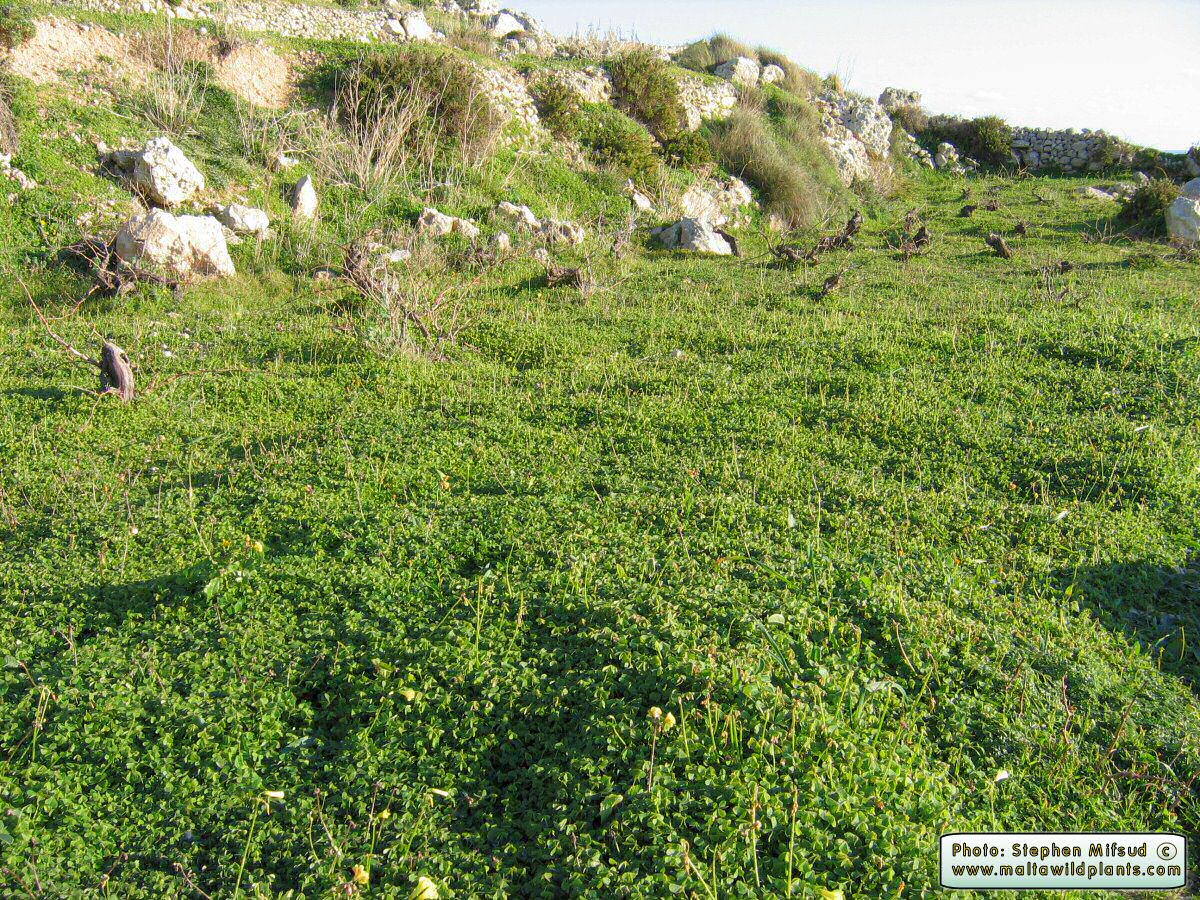
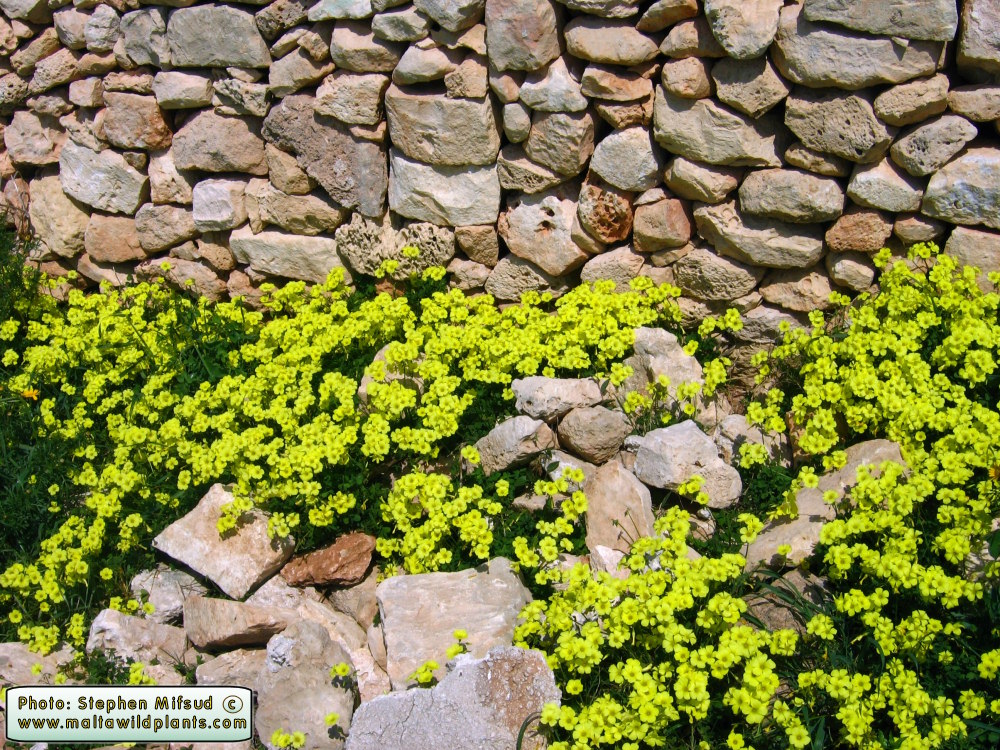
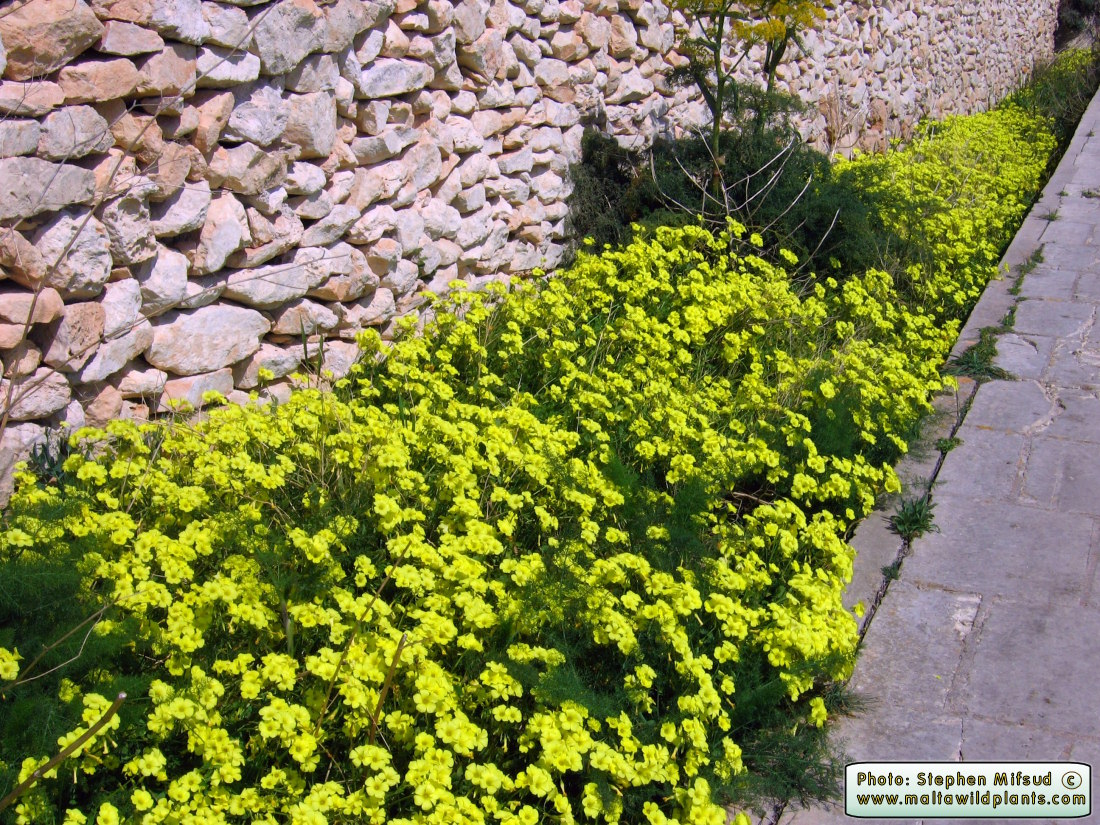
This is undoubtfully the most common plant in Malta during the months of January and February (sometimes even March), next to the other common plant, the Crown Daisy (Glebionis coronaria) which flowers a bit later. It can form carpets of yellow flowers in abandoned fields, vineyards, waysides, countrylanes or any soily wasteland. The preferred habitat of O. pes-caprae in Malta is certainly abandoned fields, along waysides, low rubble walls and disturbed areas in the countryside. [SM]

Origin of the plant and its Maltese name 'Ingliza'
The origin of the Maltese name "Haxixa Ingliza" which literally means English grass (=plant), is probably derived due to the fact that the plant was introduced in Malta circa 1806 [279] not long after when the English colony ruled Malta (1800-1974). The Bermuda Buttercup was introduced by an english taveller lady who donated some plants to Carlo Giacinto. Giacinto was a Carmelite monk from Genoa and also the curator of the botanical gardens at Floriana [278]. This plant escaped and within few decades it spread through whole Malta, but amazingly, it also had escaped the island and became naturalised throughout the whole Mediterranean coast [279]. and subsequently along the Atlantic coast as far North as South Devon. [278]

Invasiveness of the plant in Malta
The plant has evolved so much that it contributes heavily for the reduction and perhaps extinction of certain local species. Strangely enough, this contrasts well with the fact that a parasite - endemic variant of a small broom-rape (Orobanche muteli f.melitensis) - switched from its usual previous host (a number of legume species), to the roots of the Bermuda buttercup and now grows exclusively on its roots. [278]

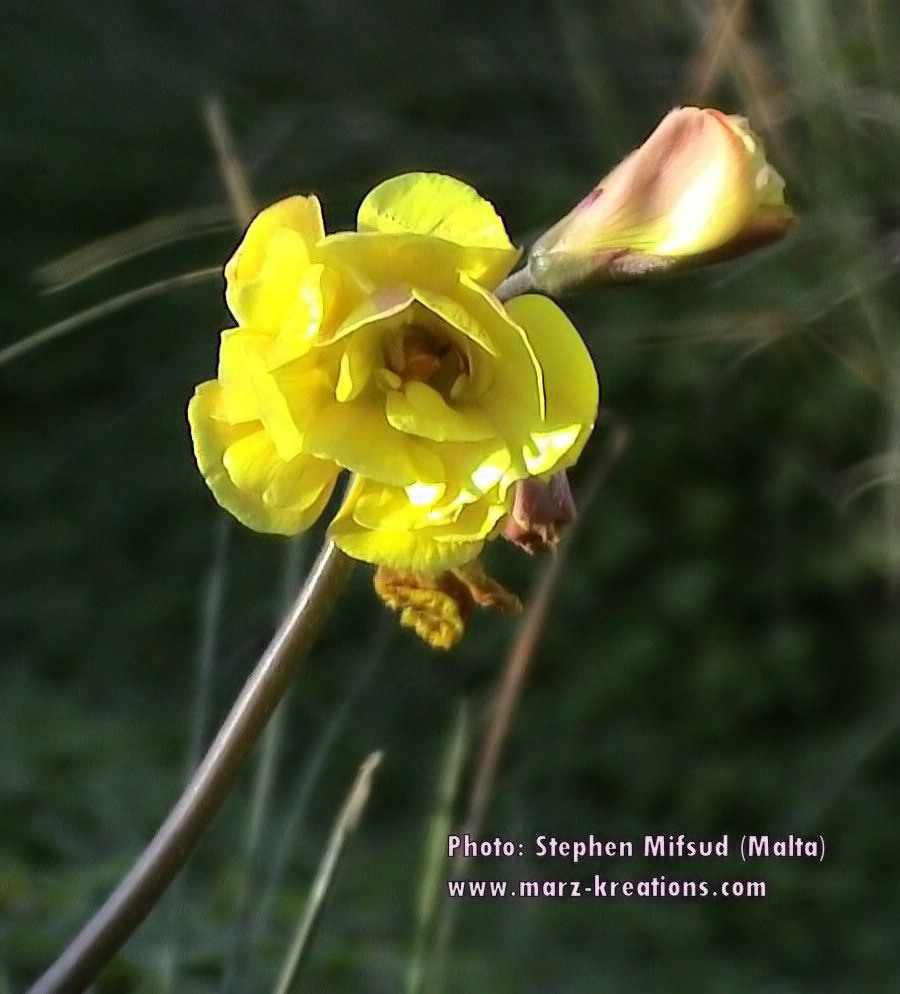
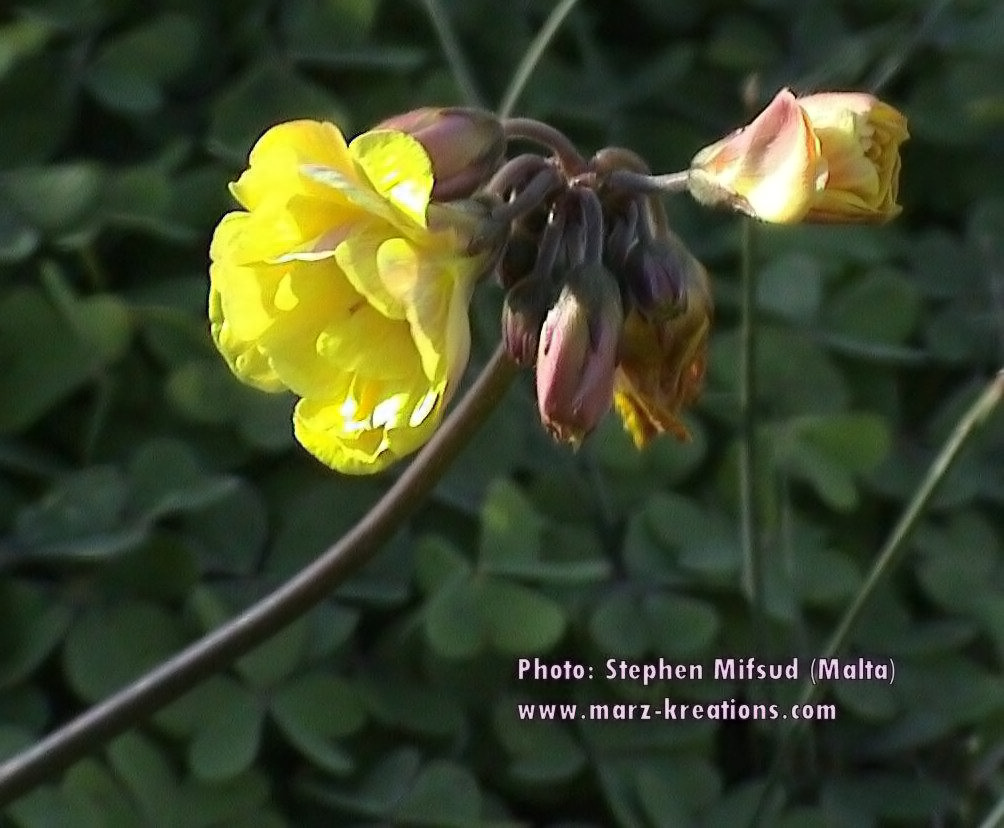
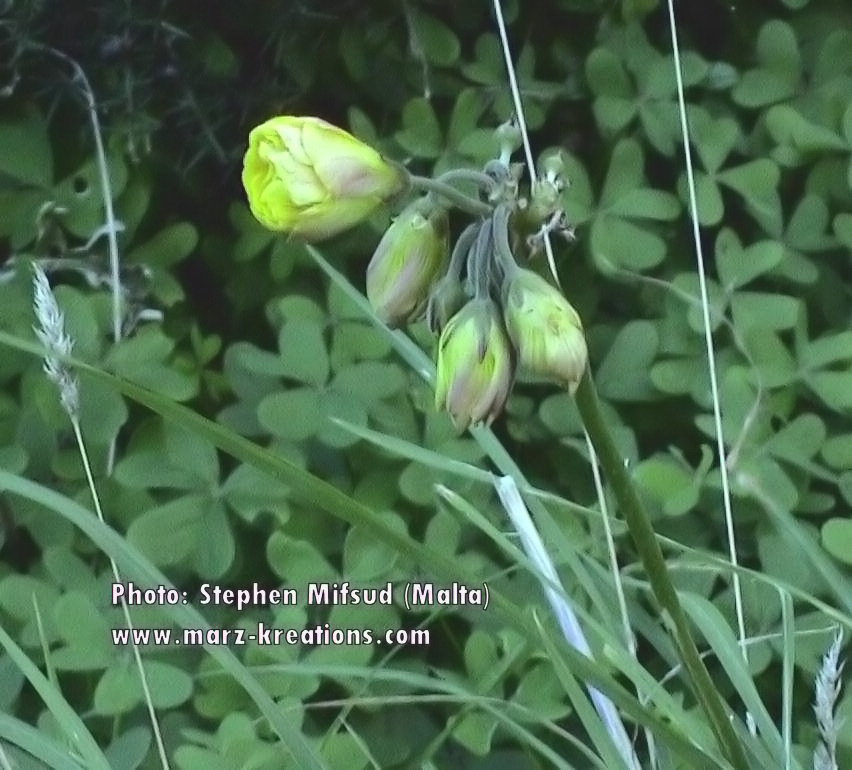
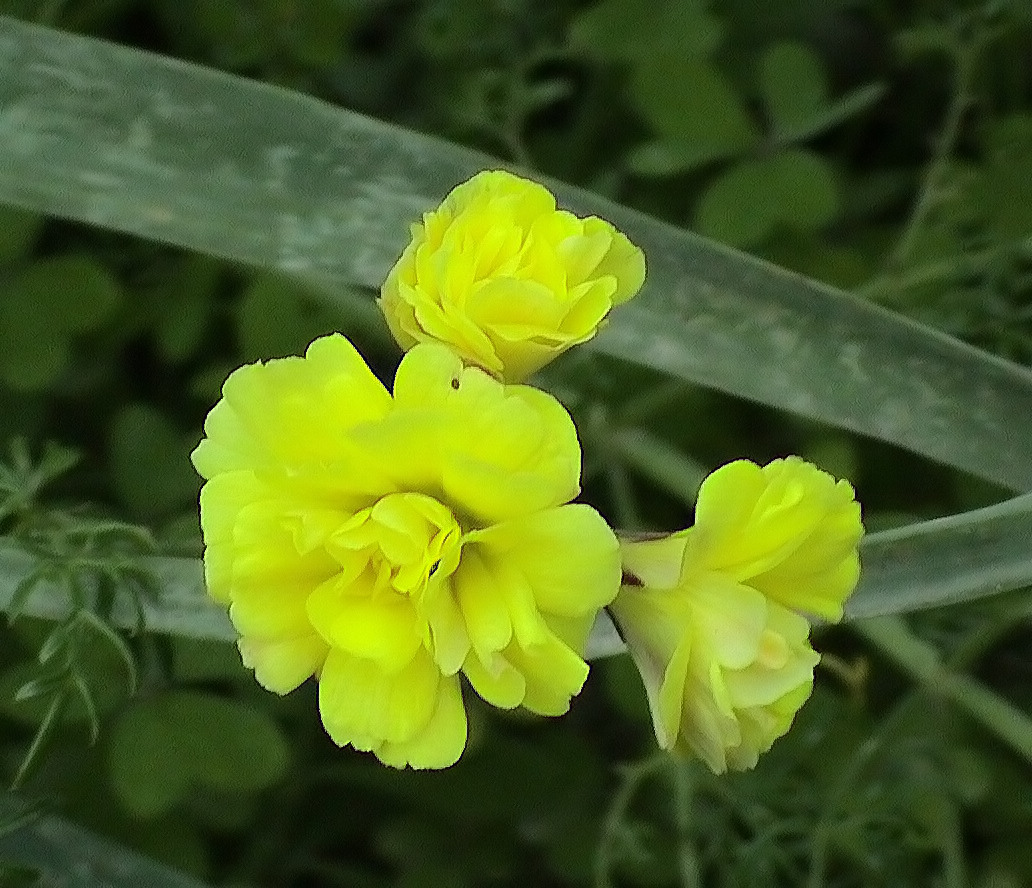
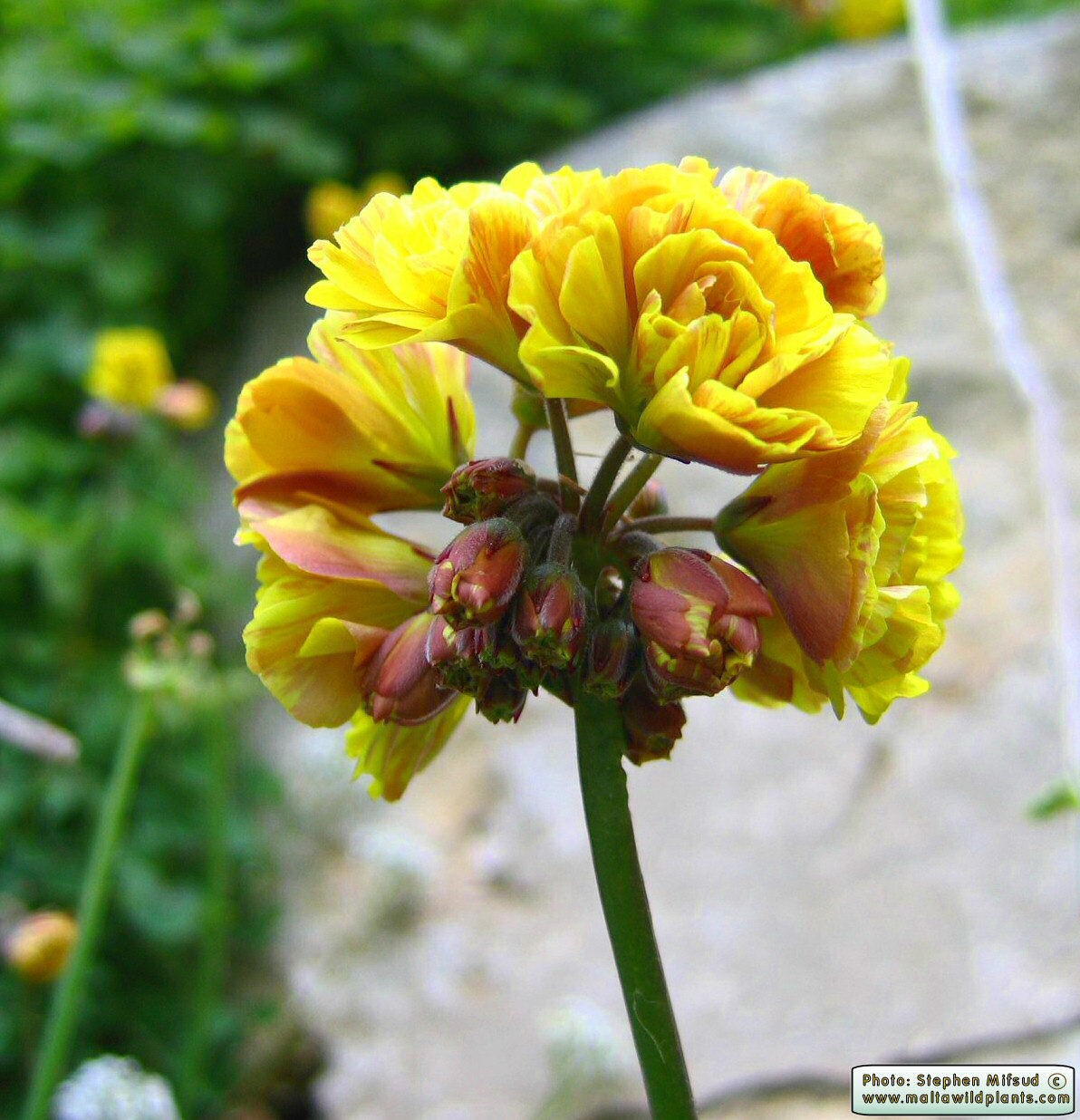
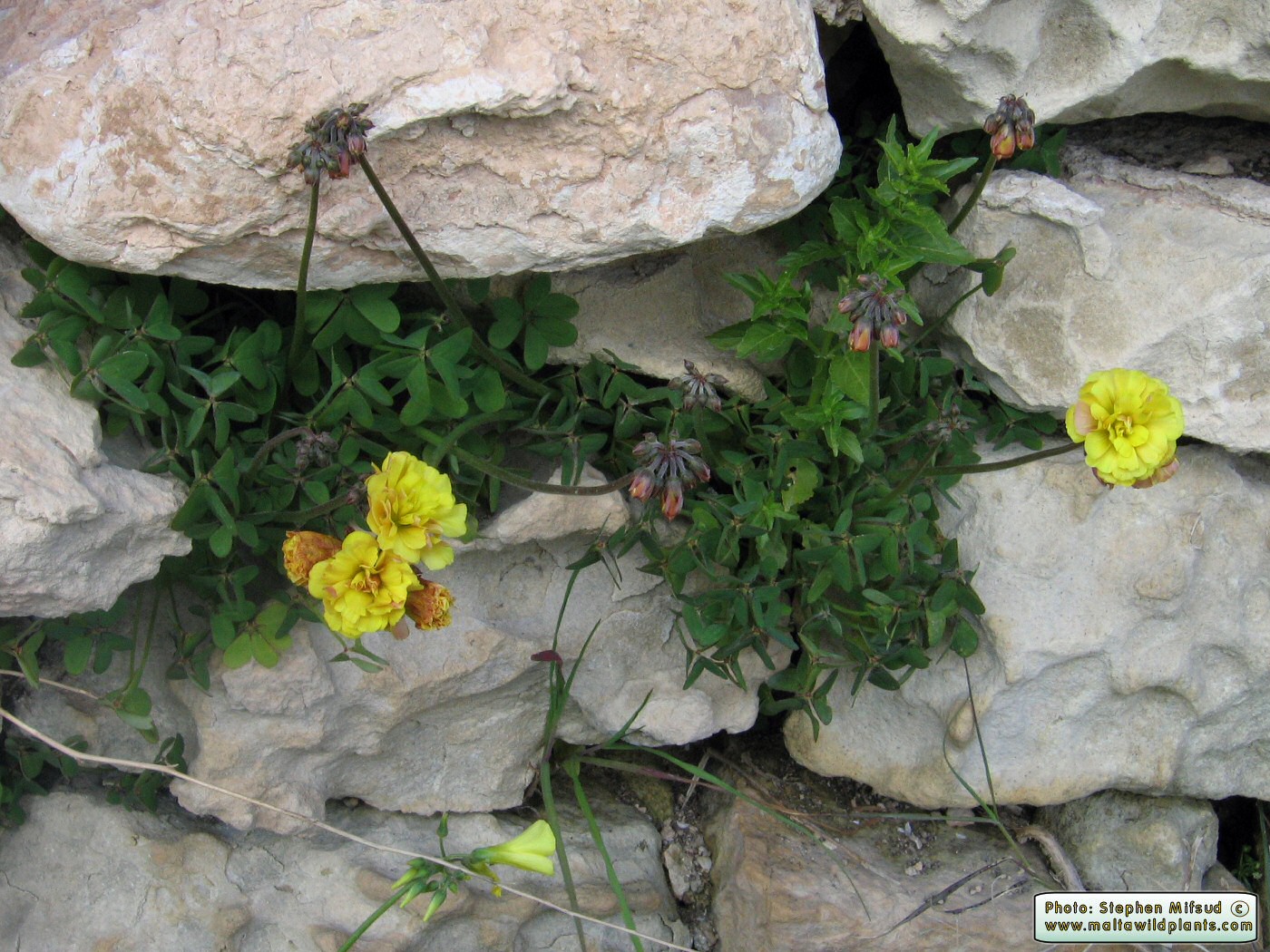
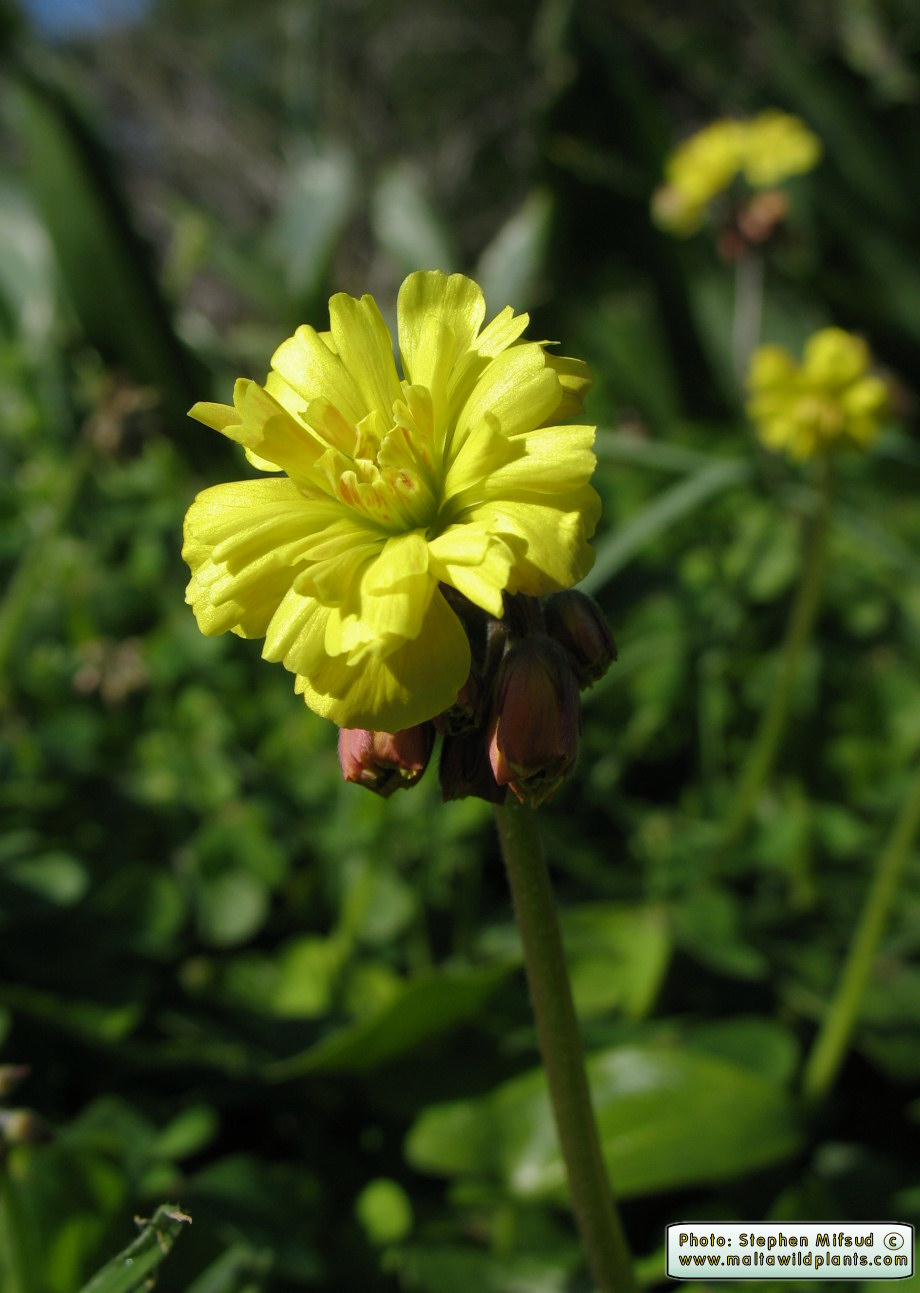
Double flower variant of O. pes-caprae
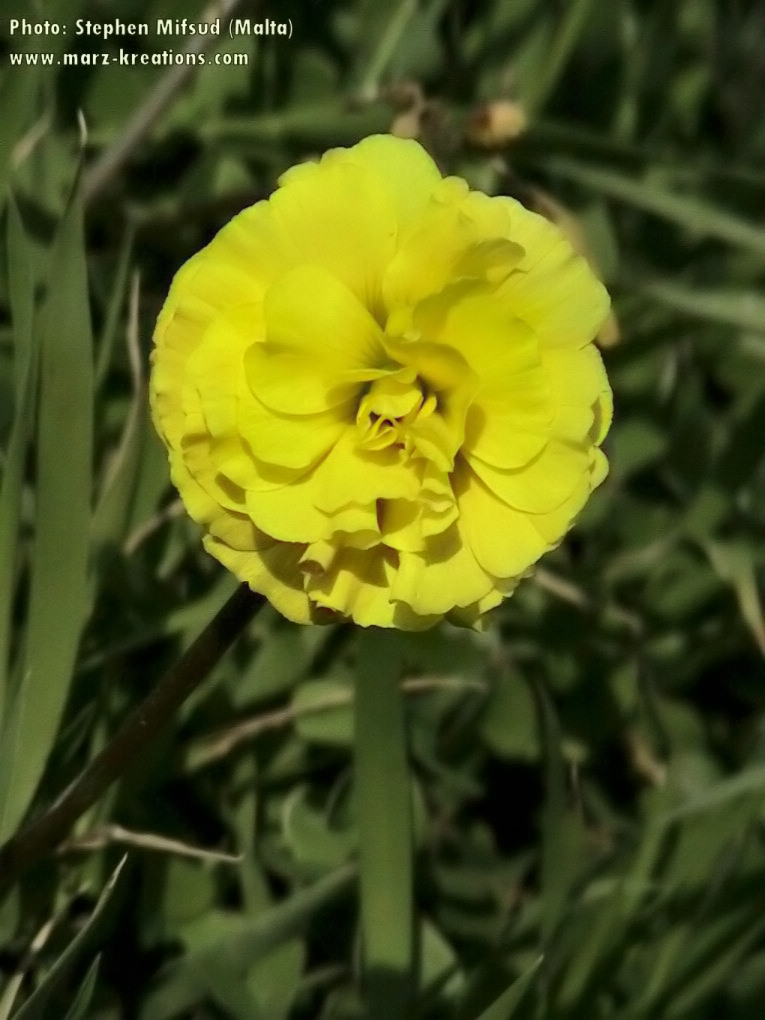
There is also a variation of the plant which has more beautiful rich yellow double-flowers. Additionally, the upper part of the flowering stalks has a copper brown colour. This variation is found in much less quantity in Malta then the normal variant. There is a good source of these variants at the countryside near Ghajn Tuffieha bay / Qarraba point. They are quite plenty here, esp in February, and in some areas their population is more abundant than the common variant. The botanical (scientific) name of this variant is Oxalis pes-caprae var. pleniflora and in Maltese it is called "Haxixa Ingliza Sewda" [SM]

Misc. notes
This plant is particularly resistant to most modern herbicides [279]

The petals have a type of fluorescent green dye which fluoresces better in the longer wavelength of uv light that is UV-A . [SM]

Photo Gallery   (36 Images)

Oxalis pes-caprae  (Bermuda Buttercup) - CLICK TO ENLARGE PHOTO Oxalis pes-caprae  (Bermuda Buttercup) - CLICK TO ENLARGE PHOTO Oxalis pes-caprae  (Bermuda Buttercup) - CLICK TO ENLARGE PHOTO Oxalis pes-caprae  (Bermuda Buttercup) - CLICK TO ENLARGE PHOTO
IMAGE: OXLPC-01
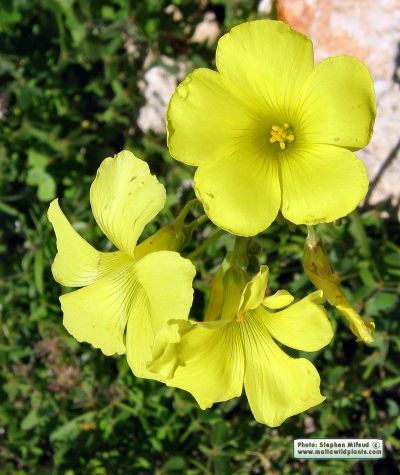
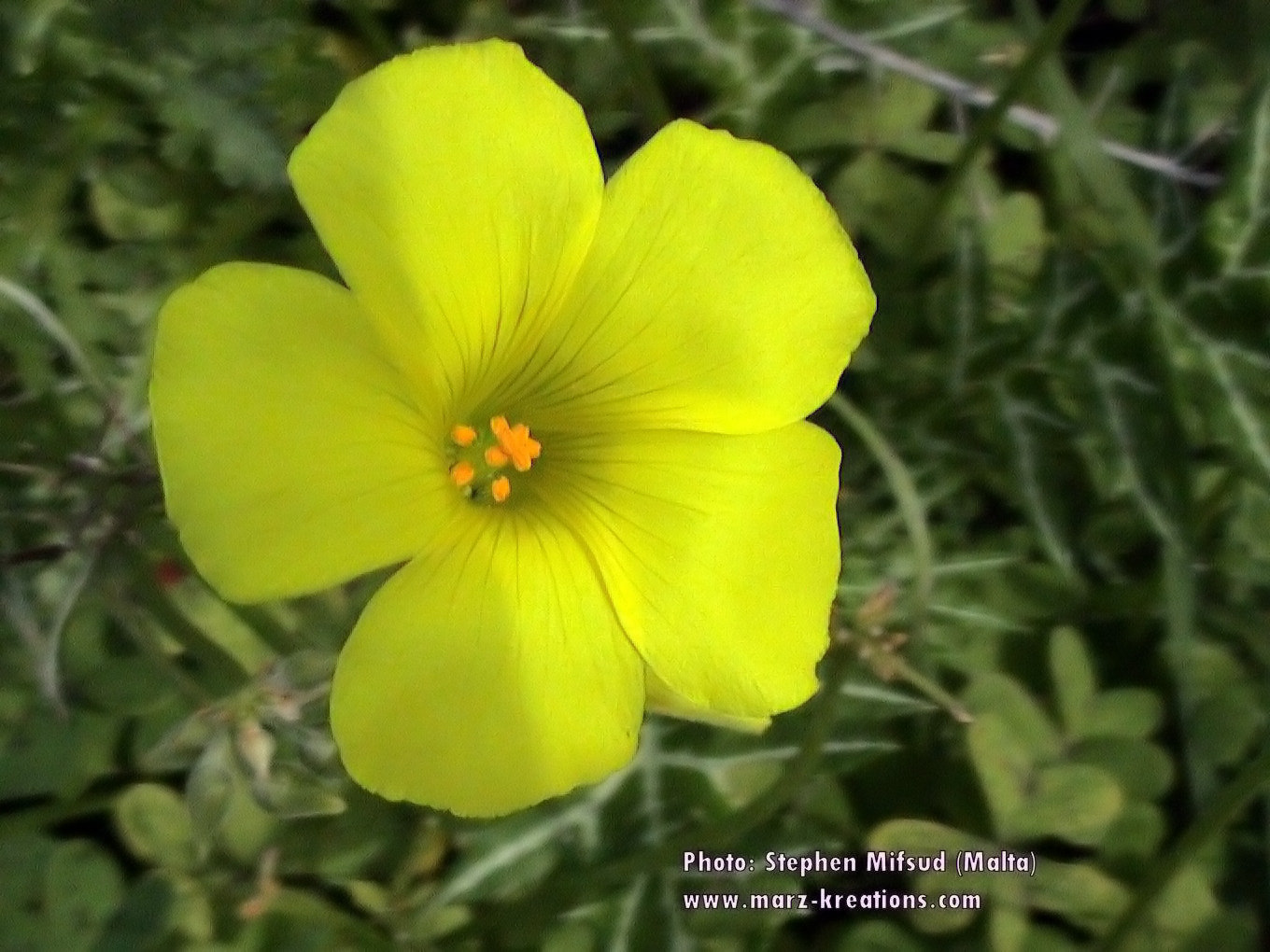
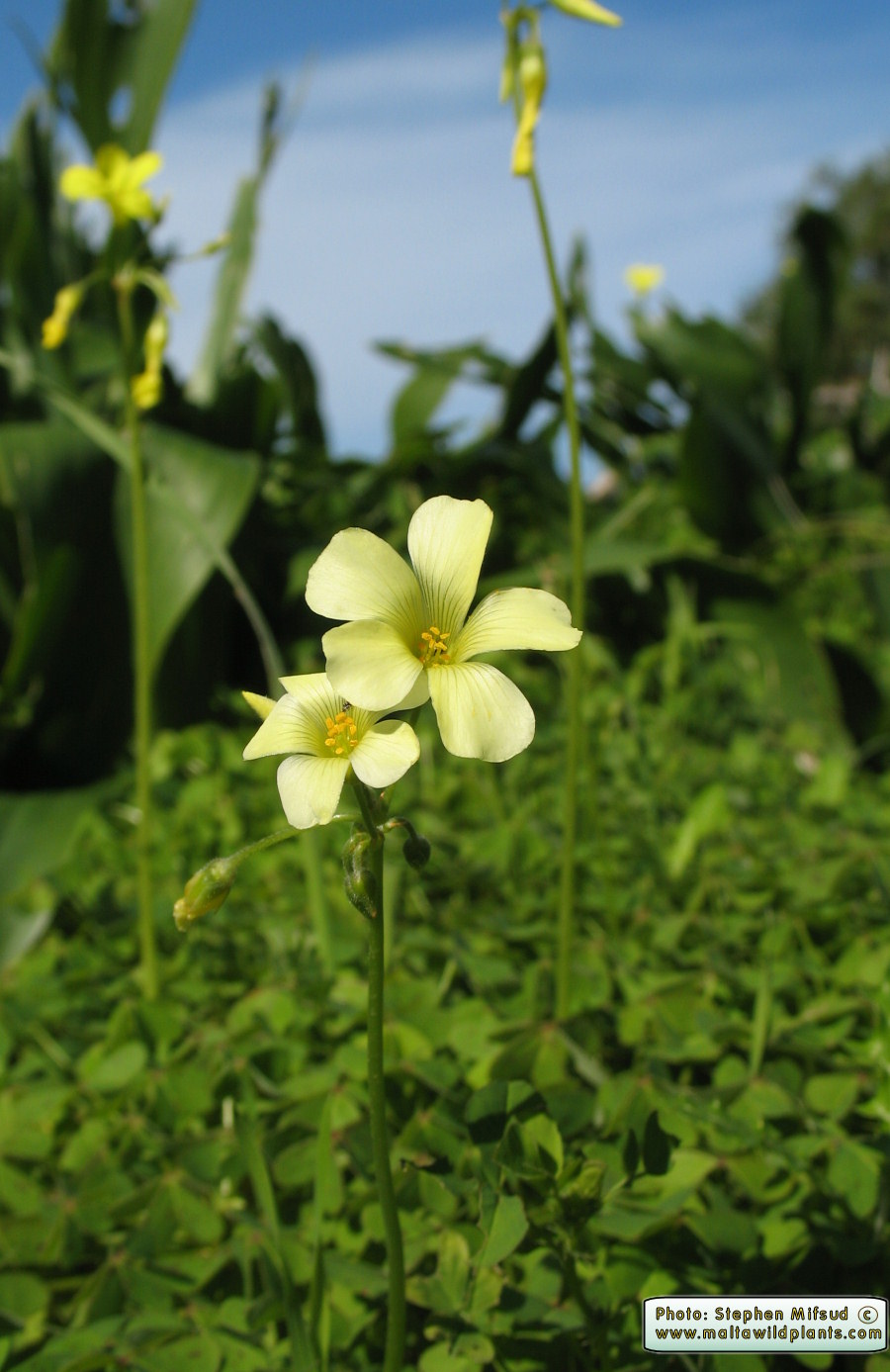
Photo of the bright yellow, trumpet-shaped flower.
IMAGE: OXLPC-02
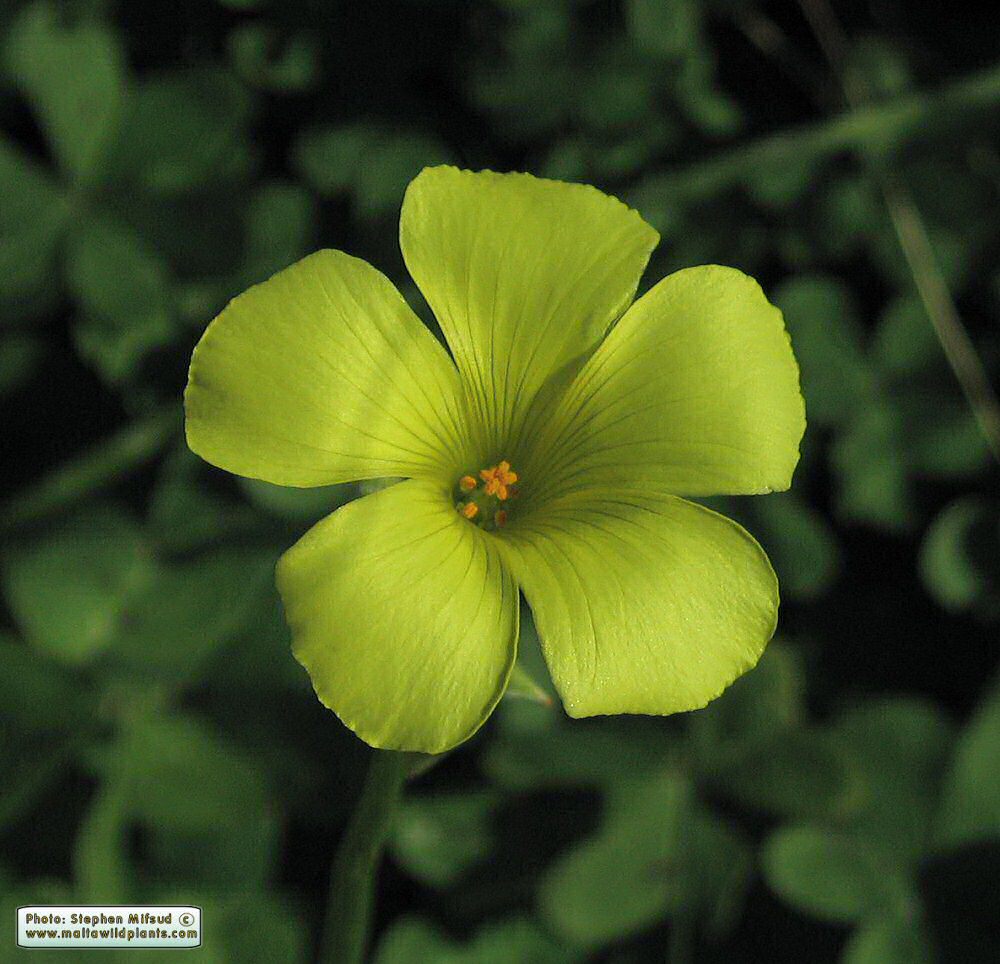
Close up photo of flower consisting of 5 petals that are partially fused at their base, and a cluster of 10 stamens (5 upper + 5 lower) in the centre.
IMAGE: OXLPC-03
Photo of flower. It has a pleasant sweet scent, particularly noted when there are plenty of flowers.
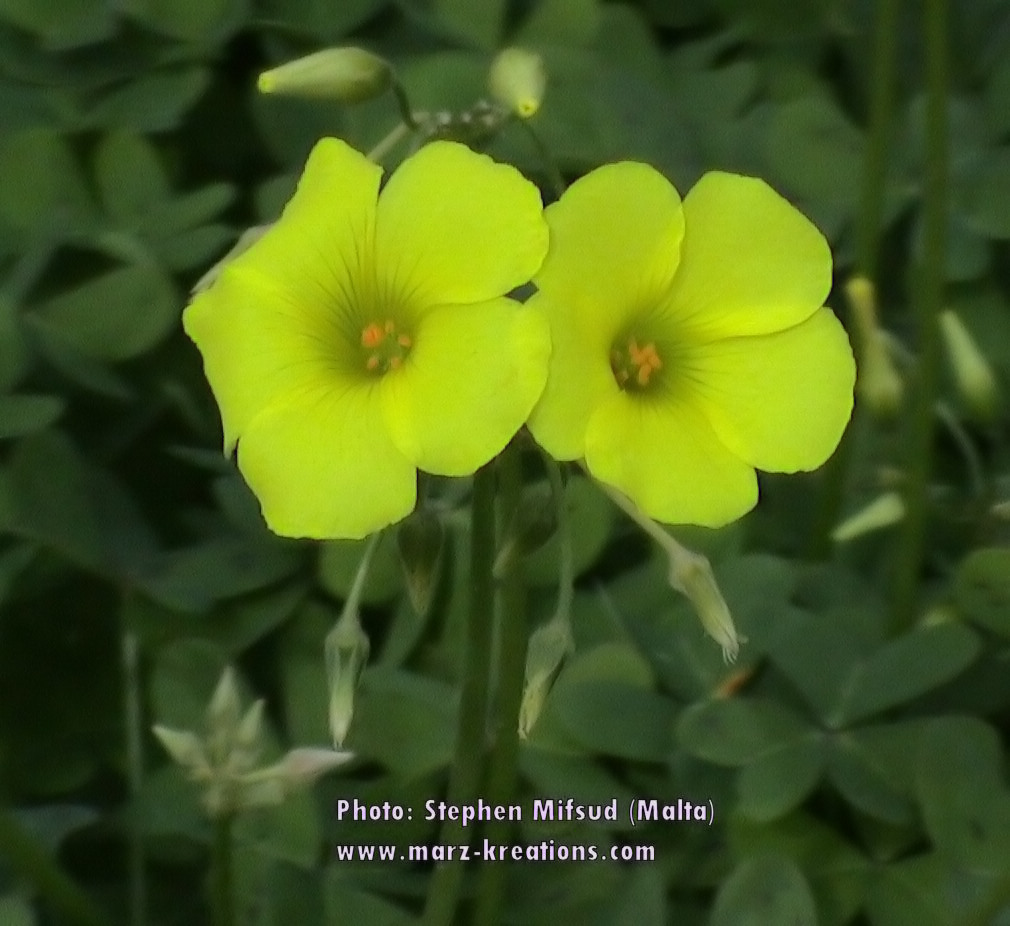
IMAGE: OXLPC-04
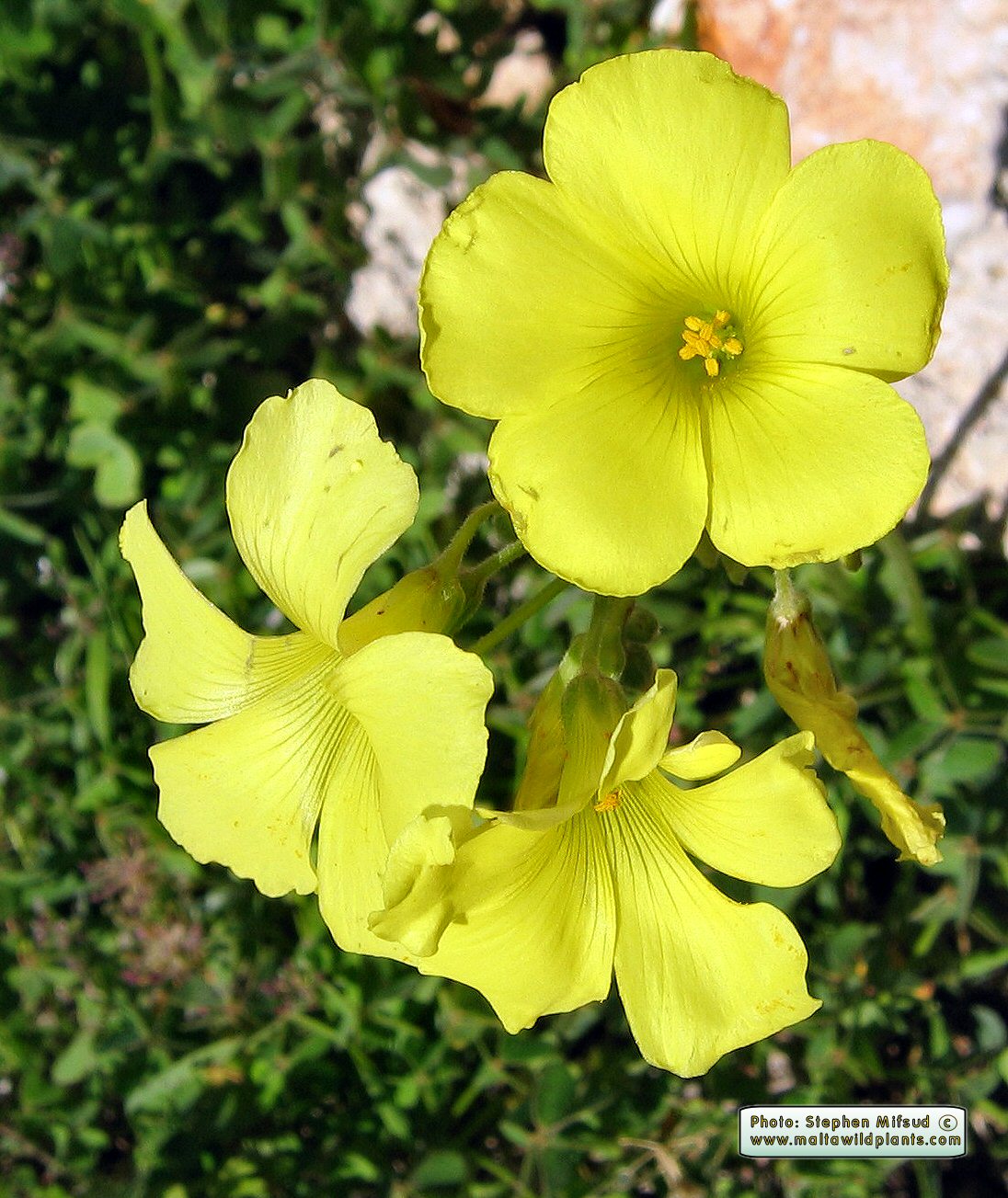
Close up image of a small cluster of flowers.
Oxalis pes-caprae  (Bermuda Buttercup) - CLICK TO ENLARGE PHOTO Oxalis pes-caprae  (Bermuda Buttercup) - CLICK TO ENLARGE PHOTO Oxalis pes-caprae  (Bermuda Buttercup) - CLICK TO ENLARGE PHOTO Oxalis pes-caprae  (Bermuda Buttercup) - CLICK TO ENLARGE PHOTO
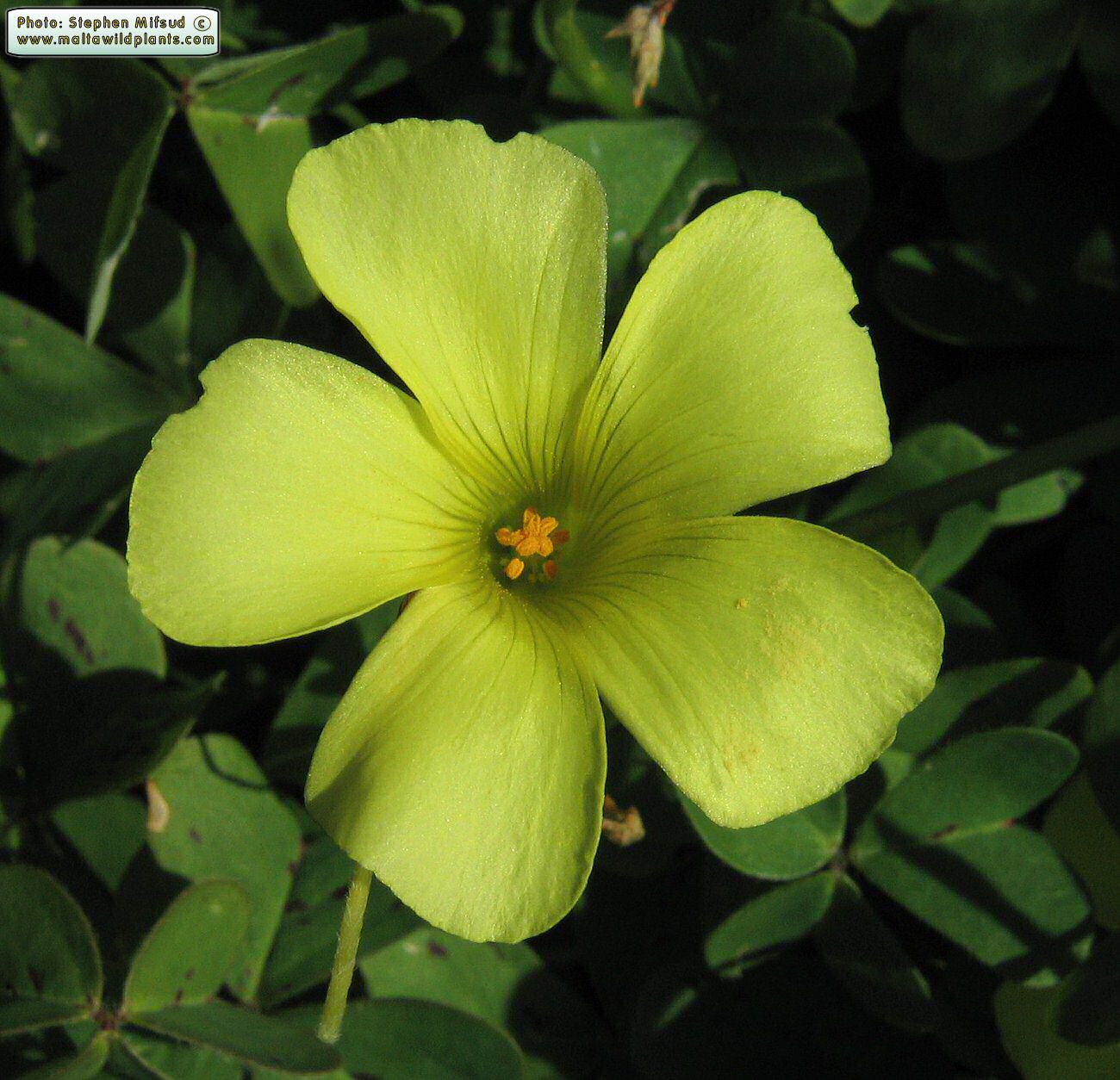
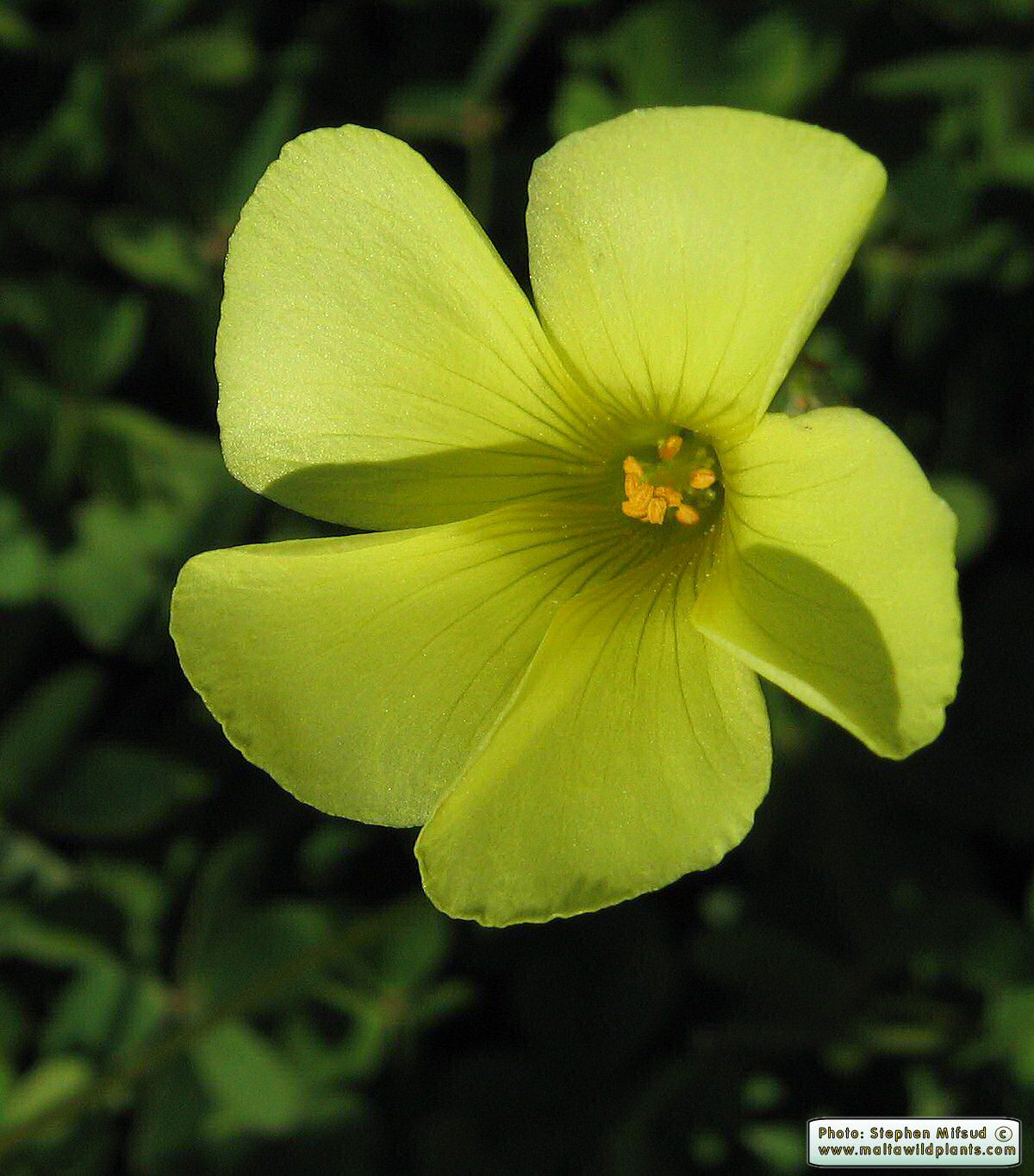
IMAGE: OXLPC-05
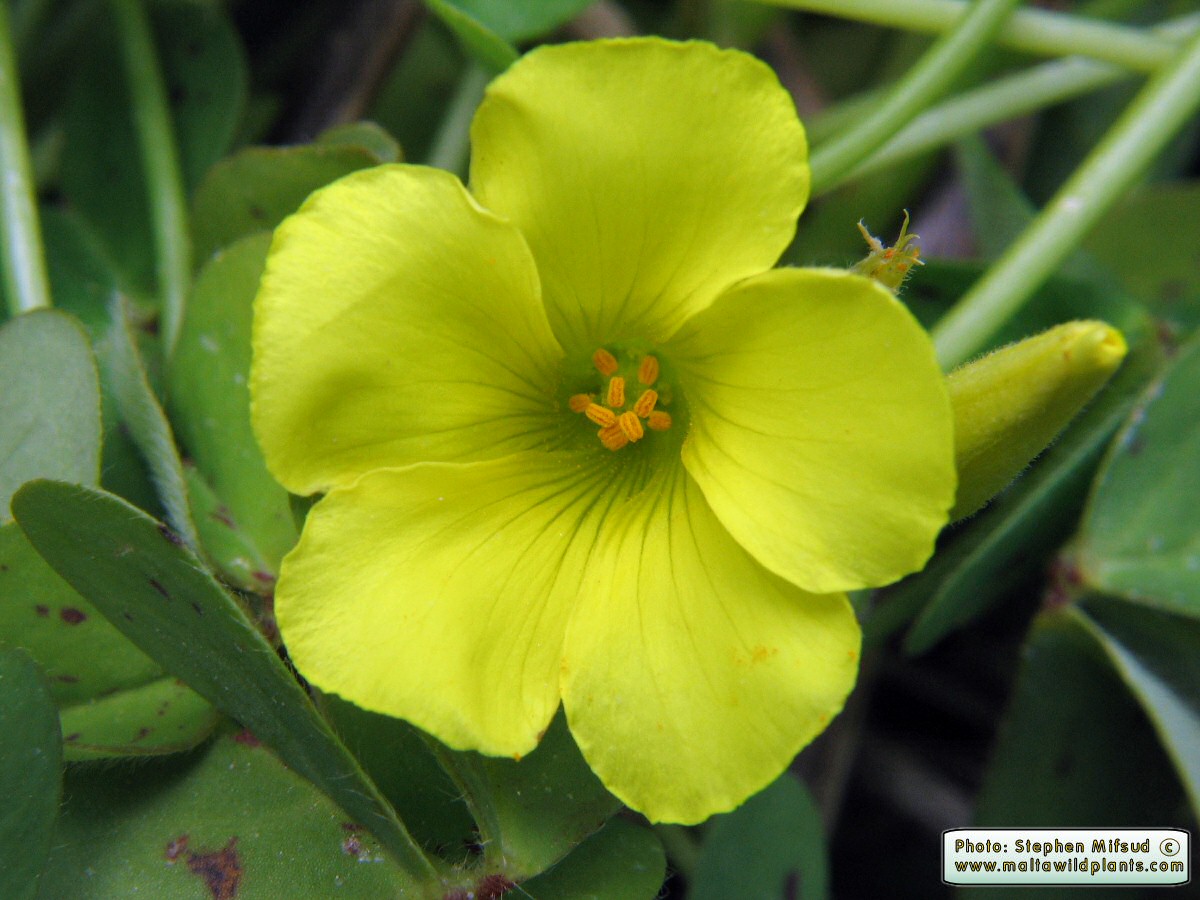
Close up photo of the bright yellow flower made up of 5 partially fused petals that possess 4-6 longitudinal greenish veins. At the centre of the flower reside the 10 stamens.
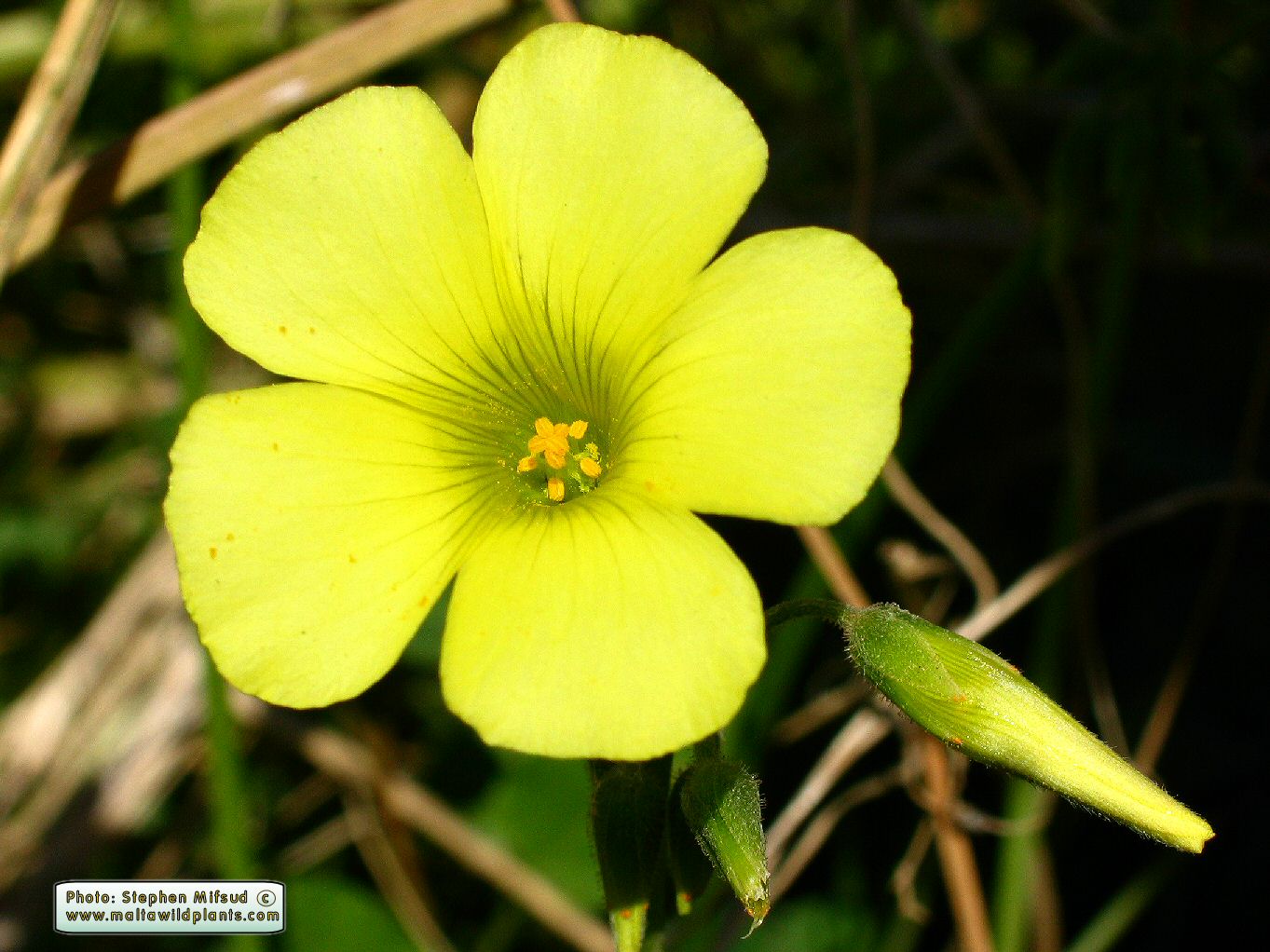
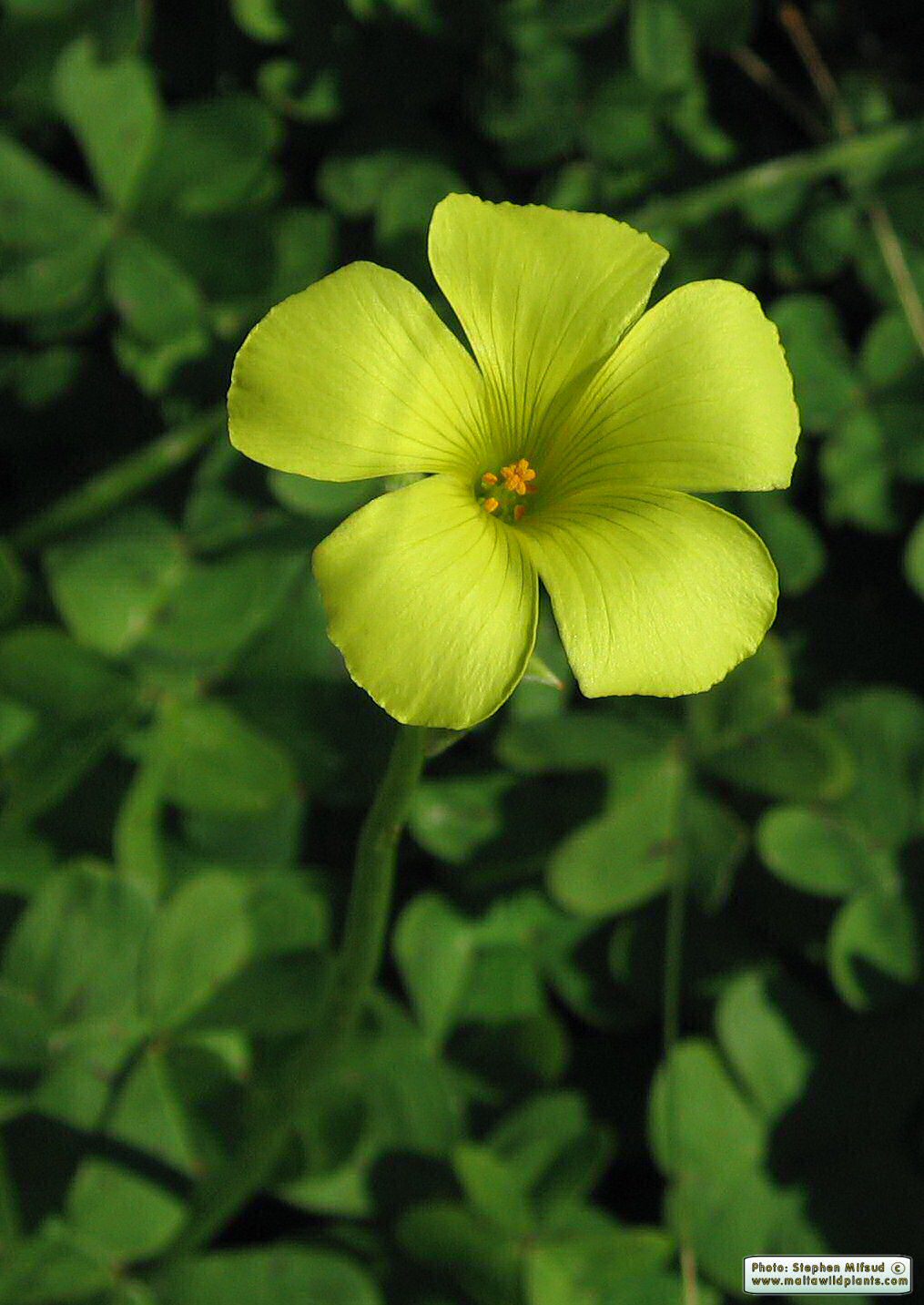
IMAGE: OXLPC-06
Photo of flower in situ.
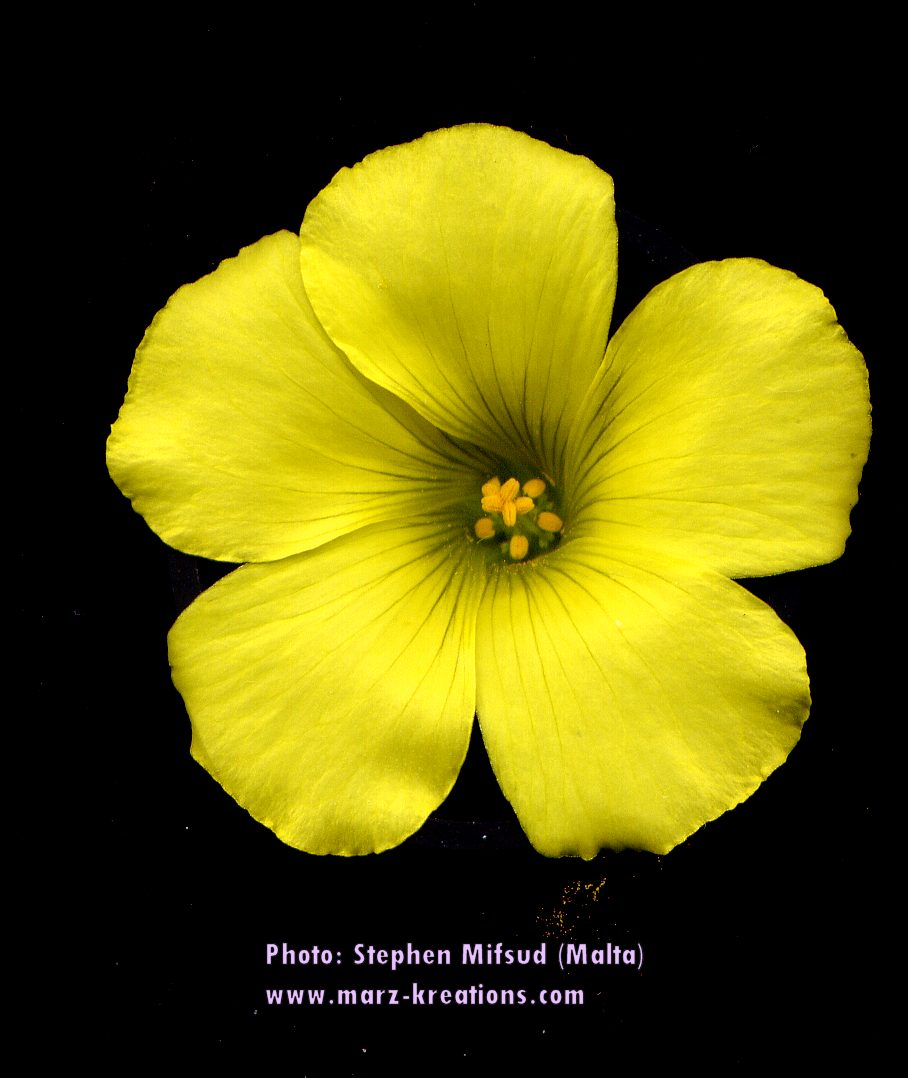
IMAGE: OXLPC-07
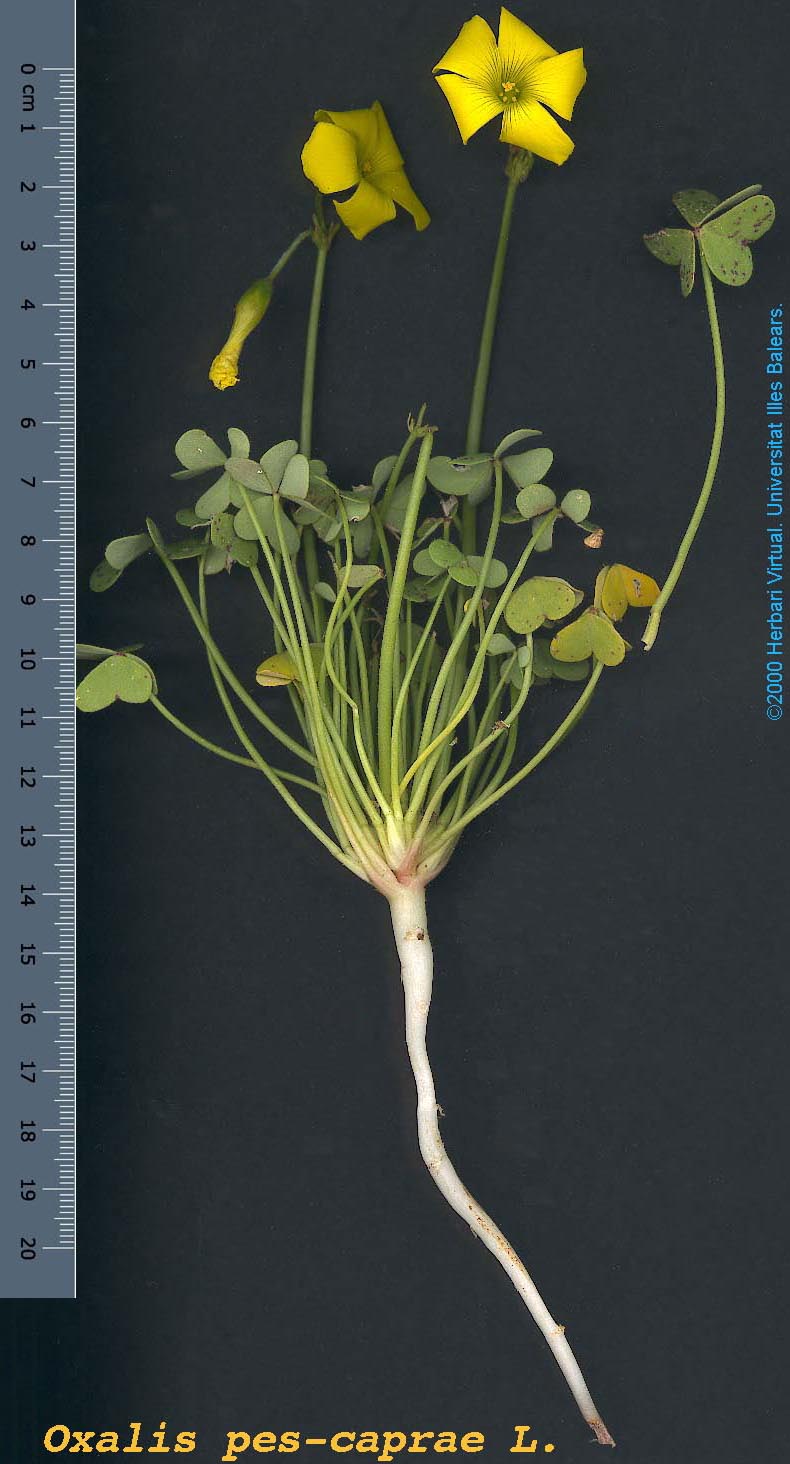
Scanned image of flower against a dark background.
IMAGE: OXLPC-08
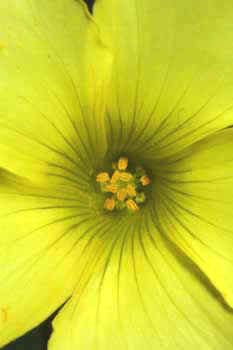
Macro photo of central part of flower showing in detail the arrangement of the 10 stamens in two rows of 5 stamens each (one upper row and one lower).
Oxalis pes-caprae  (Bermuda Buttercup) - CLICK TO ENLARGE PHOTO Oxalis pes-caprae  (Bermuda Buttercup) - CLICK TO ENLARGE PHOTO Oxalis pes-caprae  (Bermuda Buttercup) - CLICK TO ENLARGE PHOTO Oxalis pes-caprae  (Bermuda Buttercup) - CLICK TO ENLARGE PHOTO
IMAGE: OXLPC-09
Photo of the flower of the rare plant variant - Oxalis pes-caprae var. pleniflora - which is a 'double-form' of the normal species. Not as common as the normal form.
IMAGE: OXLPC-10
Photo of Oxalis pes-caprae var. pleniflora. Apart from the flower having numerous and pleated petals, it also differs from the normal flower by having copper brown buds, sepals and lower petals. Some petals are also tinged with this reddish brown colour.
IMAGE: OXLPC-11
Photo of Oxalis pes-caprae var. pleniflora . Found in Malta at Ghajn Tuffieha Bay and Qarraba region amongst other places throughout the whole islands with rich soil.
IMAGE: OXLPC-12
Close up photo of Oxalis pes-caprae var. pleniflora.
Oxalis pes-caprae  (Bermuda Buttercup) - CLICK TO ENLARGE PHOTO Oxalis pes-caprae  (Bermuda Buttercup) - CLICK TO ENLARGE PHOTO Oxalis pes-caprae  (Bermuda Buttercup) - CLICK TO ENLARGE PHOTO Oxalis pes-caprae  (Bermuda Buttercup) - CLICK TO ENLARGE PHOTO
IMAGE: OXLPC-13
Photo of the typical habitat of the plant, hence along waysides or walls.
IMAGE: OXLPC-14
Photo of flowers closed up due to insufficient daylight. Even when it is hazy or partially cloudy with several hours of sunlight, The flowers remain closed. They usually open on full sunshine.
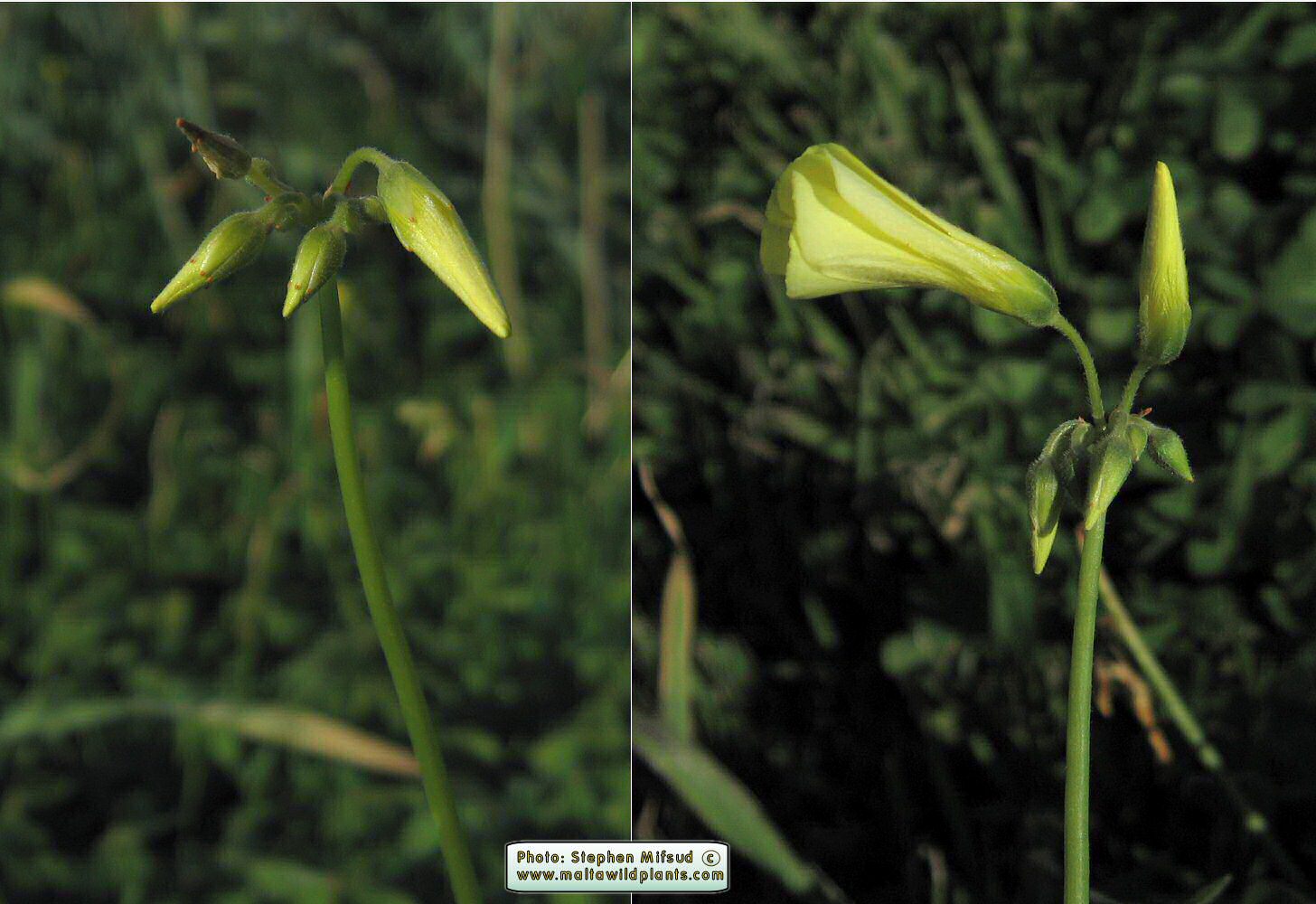
IMAGE: OXLPC-15
Photo of buds and the inflorescence. A small cluster of stalked flowers growing from the same apical pont of the flowering stalk.
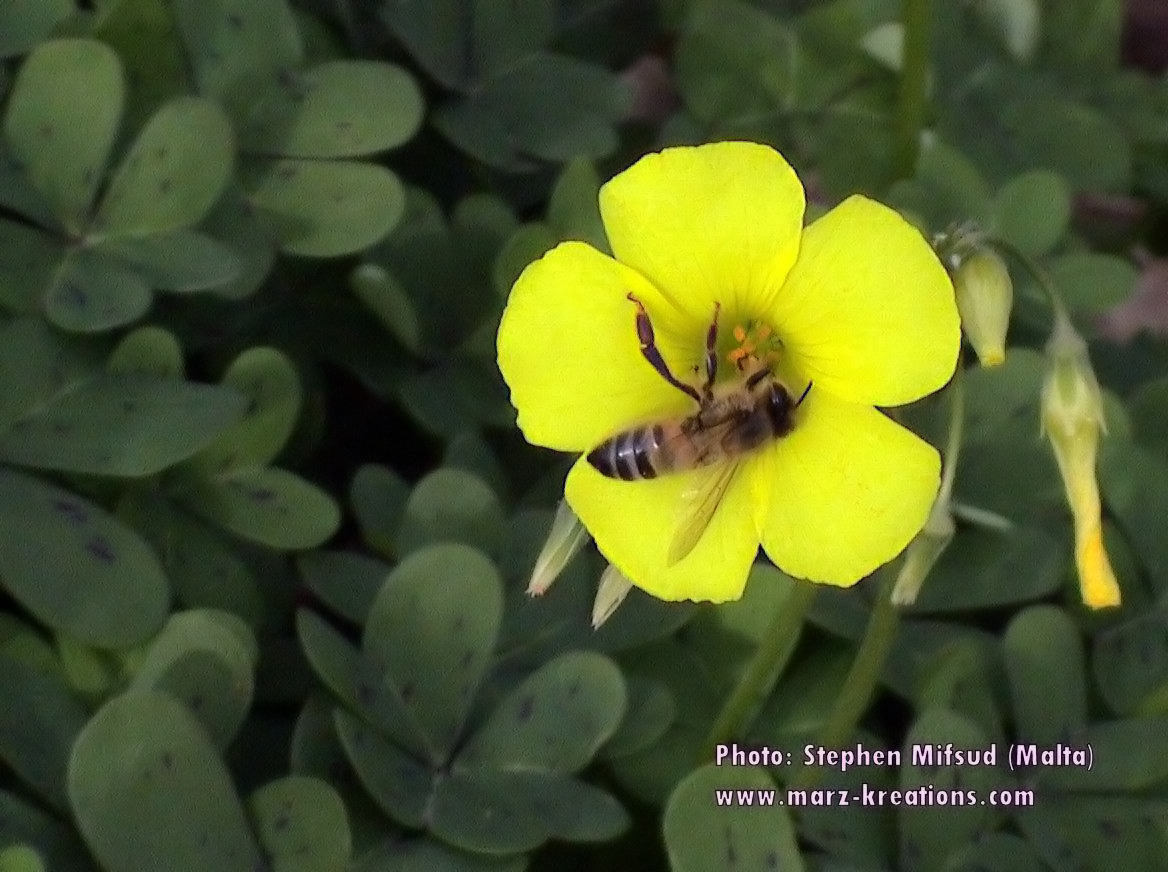
IMAGE: OXLPC-16
Photo of a flower visited by a bee. Bees are very attracted by the bright yellow flowers and the sweet scent.
Oxalis pes-caprae  (Bermuda Buttercup) - CLICK TO ENLARGE PHOTO Oxalis pes-caprae  (Bermuda Buttercup) - CLICK TO ENLARGE PHOTO Oxalis pes-caprae  (Bermuda Buttercup) - CLICK TO ENLARGE PHOTO Oxalis pes-caprae  (Bermuda Buttercup) - CLICK TO ENLARGE PHOTO
IMAGE: OXLPC-17
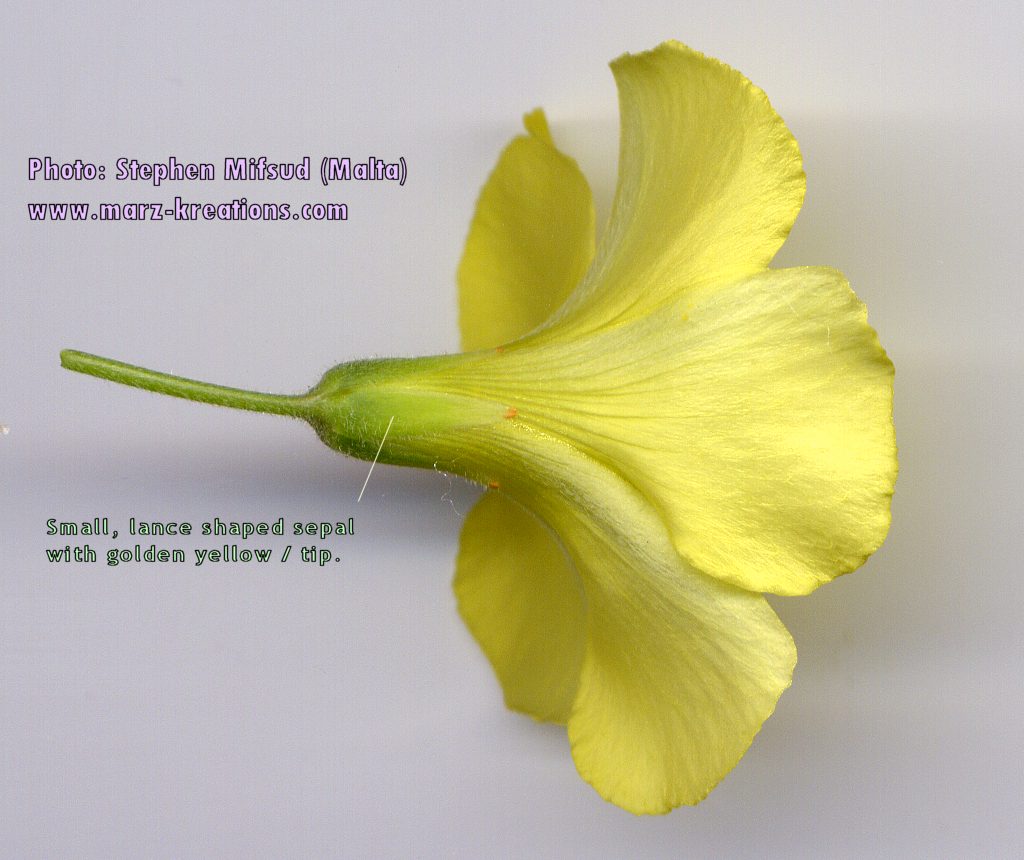
Scanned image of the backside of flower to show its small sepals. Note their curious yellow pointed tip.
IMAGE: OXLPC-18
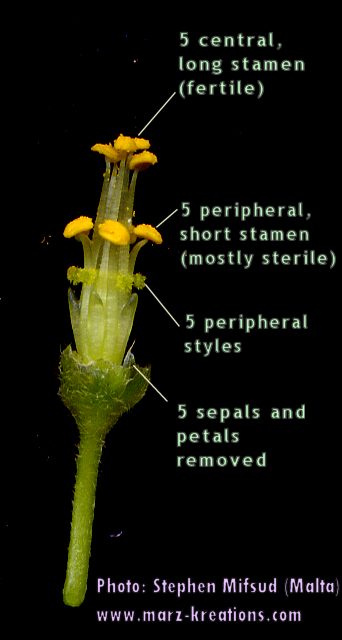
Scanned image of a dissected flower (with petals removes) to show its anatomy. It basicaly consists of 10 stamens and 5 stigma.
IMAGE: OXLPC-19
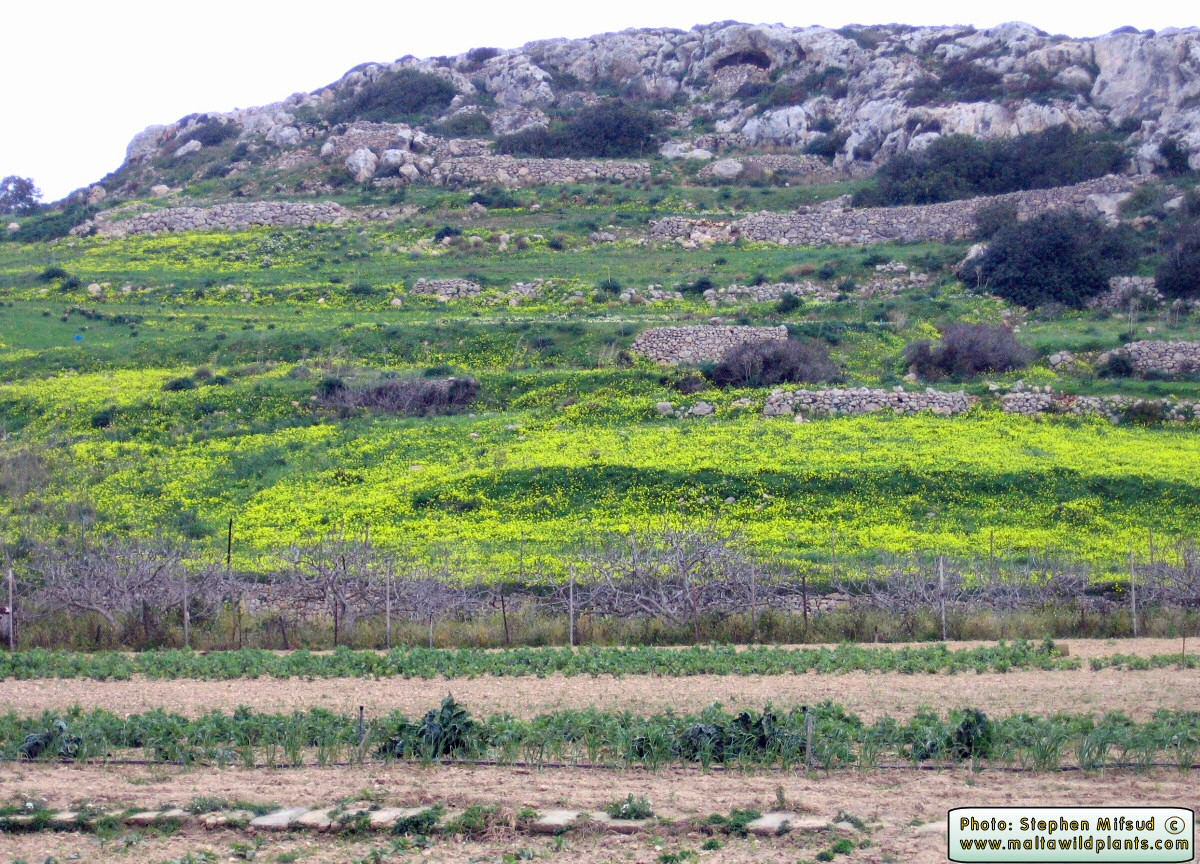
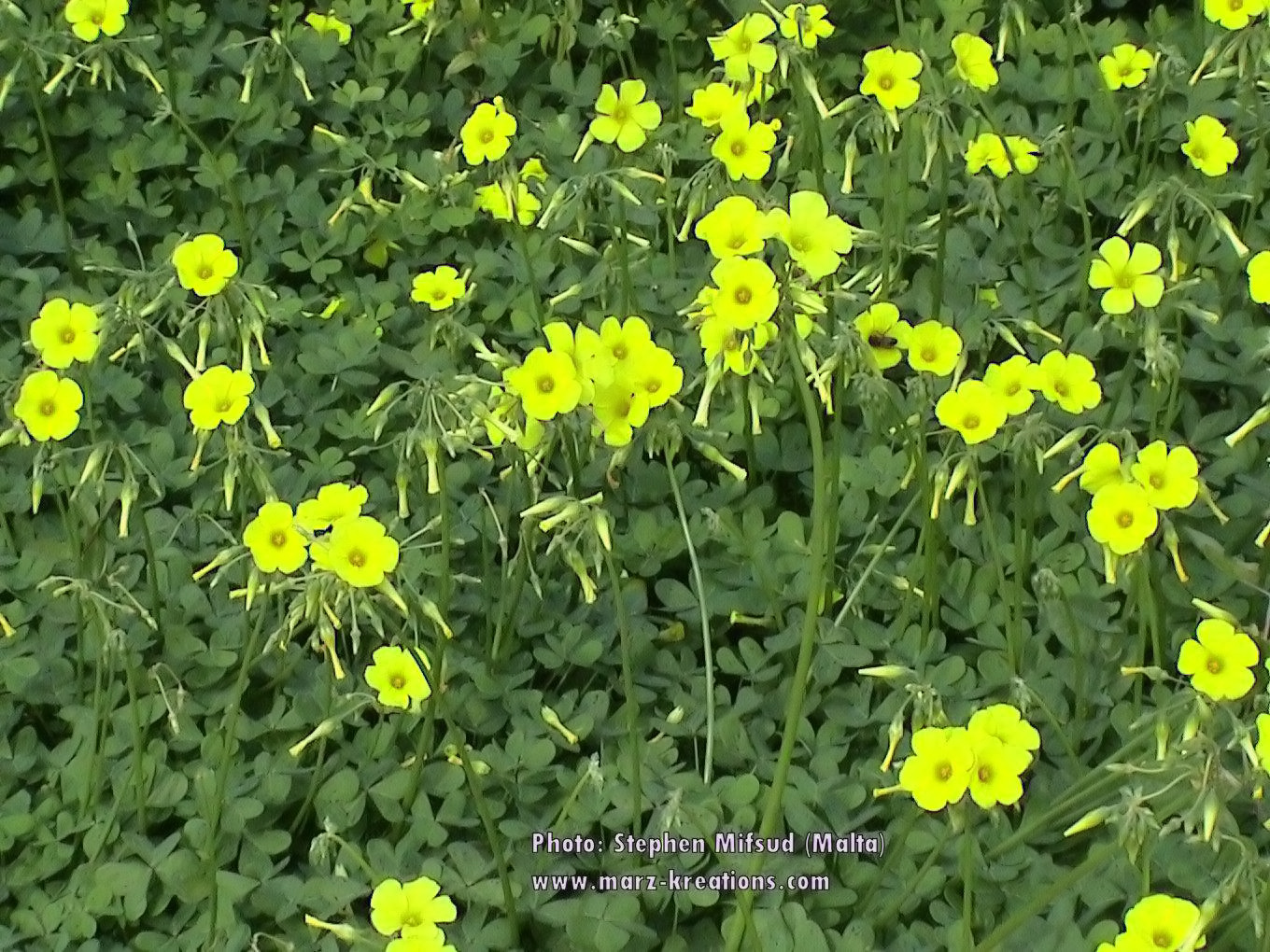
Photo of a yellow carpet formed by the bright yellow flowers of O. pes-caprae.
IMAGE: OXLPC-20
Typical photo of the Maltese countryside in late Winter (Feb-Mar) covered with extensive yellow patches of Oxalis pes-caprae. The weed extends also on several habitatsand stony walls. It can become a problem for farmers if it invades their fields.
Oxalis pes-caprae  (Bermuda Buttercup) - CLICK TO ENLARGE PHOTO Oxalis pes-caprae  (Bermuda Buttercup) - CLICK TO ENLARGE PHOTO Oxalis pes-caprae  (Bermuda Buttercup) - CLICK TO ENLARGE PHOTO Oxalis pes-caprae  (Bermuda Buttercup) - CLICK TO ENLARGE PHOTO
IMAGE: OXLPC-21
Scanned image of leaves: Normal leaves contain few dark violet (like the colour of potassium permanganate) speckles randomly scattered around the leaf.
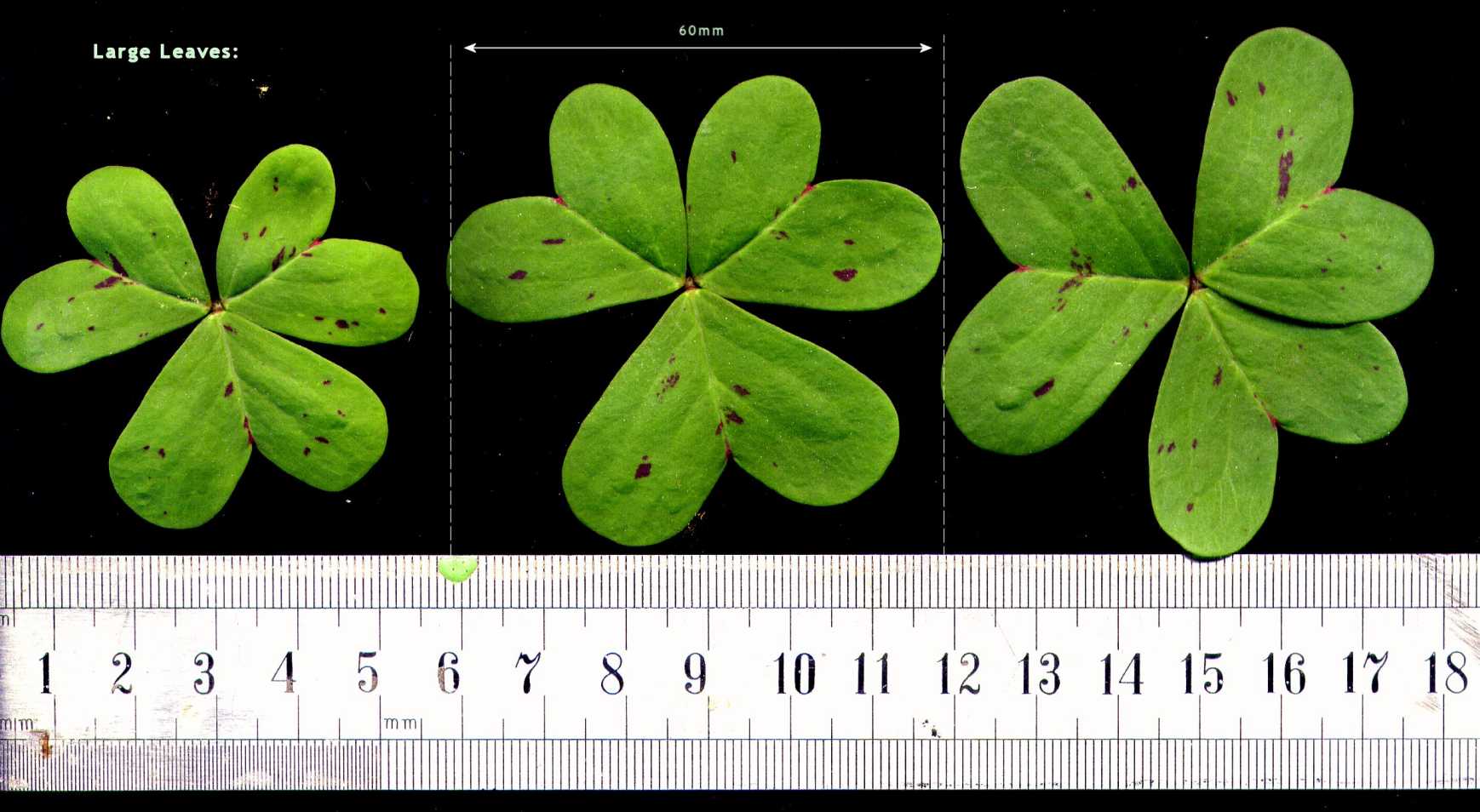
IMAGE: OXLPC-22
Scanned image of leaves: Very large leaves, about 2 times the normal size. These leaves were taken from plants situated all day in shade.
IMAGE: OXLPC-23
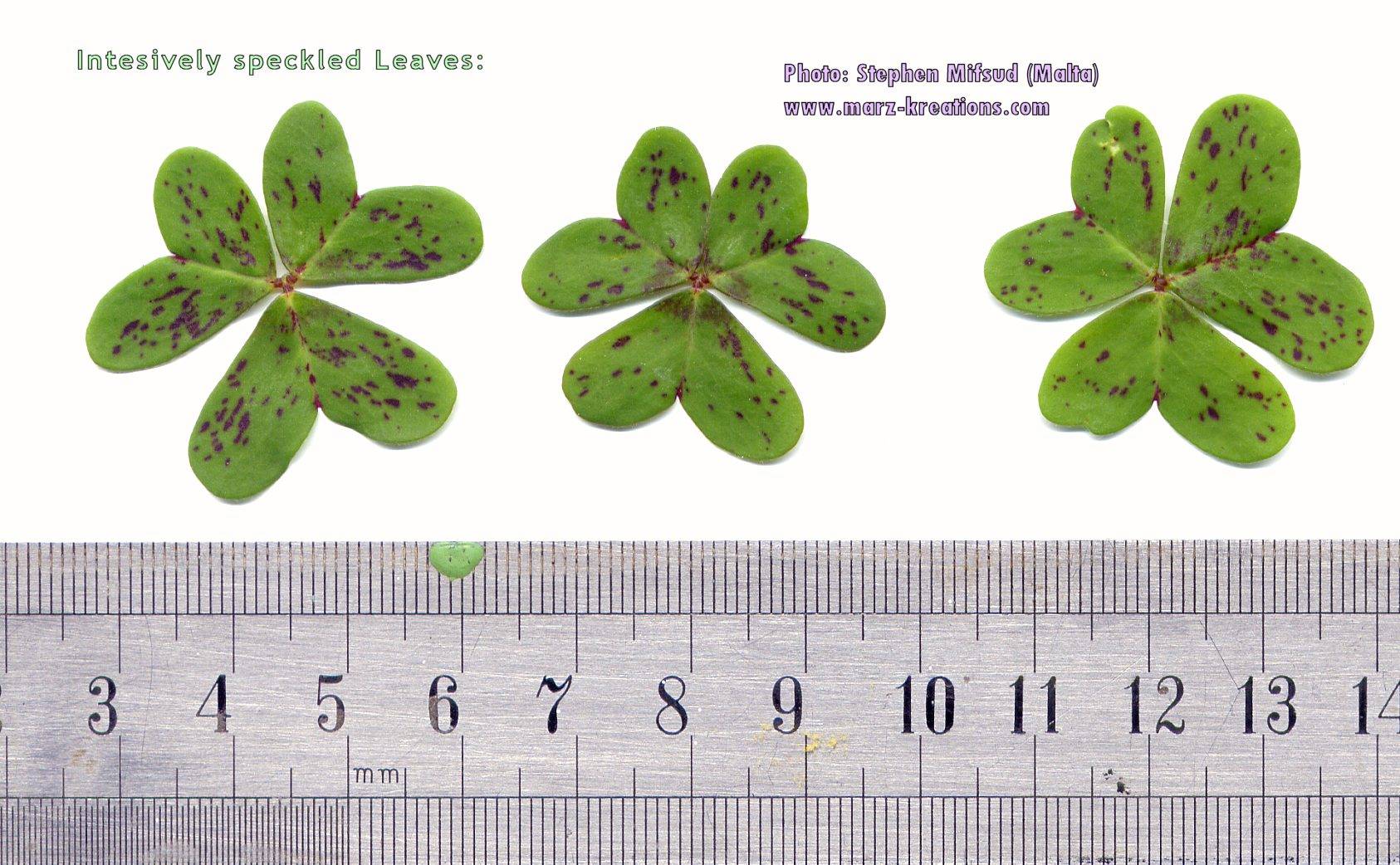
Scanned image of leaves: Intensively speckled leaves, with about 3 or 4 times as much specks than in a normal leaves.
IMAGE: OXLPC-24
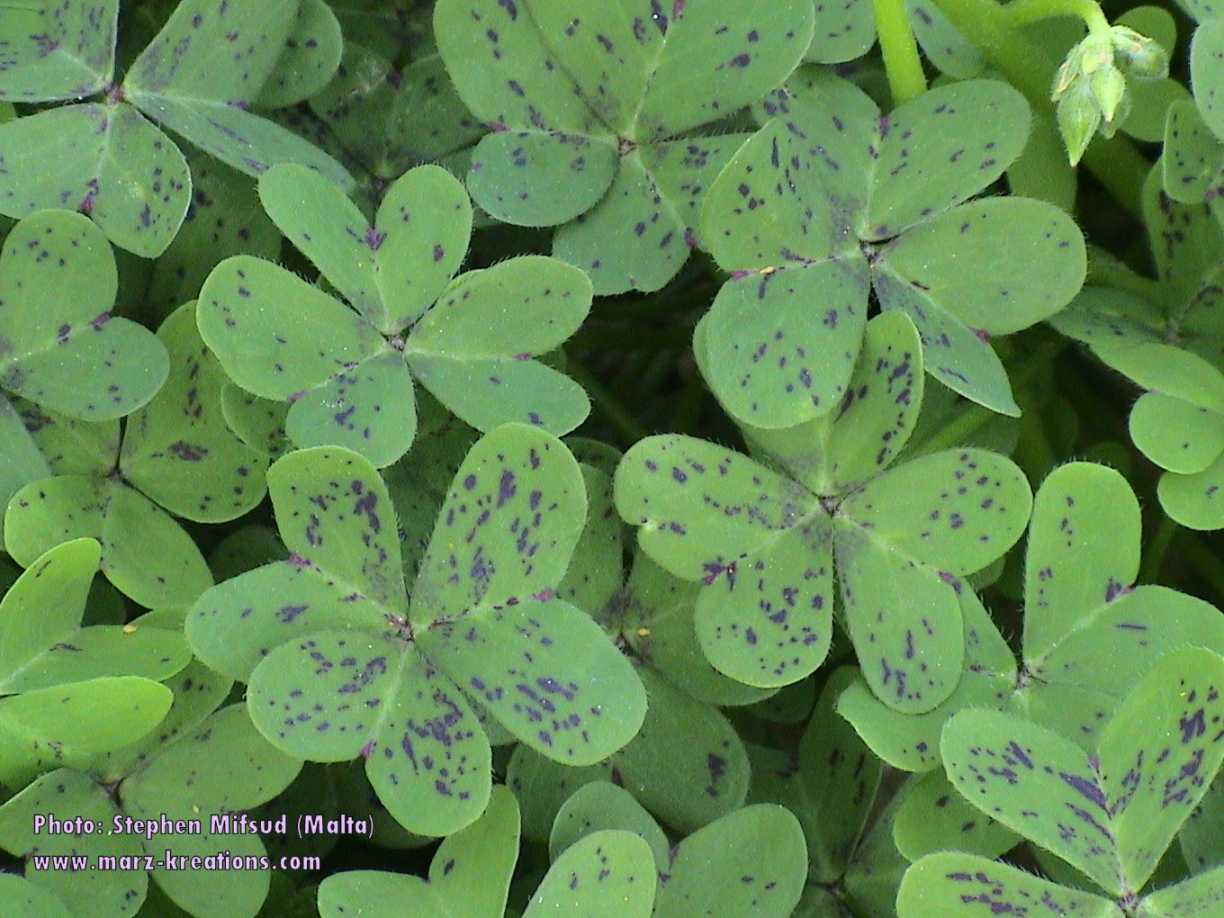
Scanned image of leaves which are intensively speckled.
Oxalis pes-caprae  (Bermuda Buttercup) - CLICK TO ENLARGE PHOTO Oxalis pes-caprae  (Bermuda Buttercup) - CLICK TO ENLARGE PHOTO Oxalis pes-caprae  (Bermuda Buttercup) - CLICK TO ENLARGE PHOTO Oxalis pes-caprae  (Bermuda Buttercup) - CLICK TO ENLARGE PHOTO
IMAGE: OXLPC-25
Close up photo of speckled large leaves in situ.
IMAGE: OXLPC-26
Enlarged picture of the leaf speckles.
IMAGE: OXLPC-27
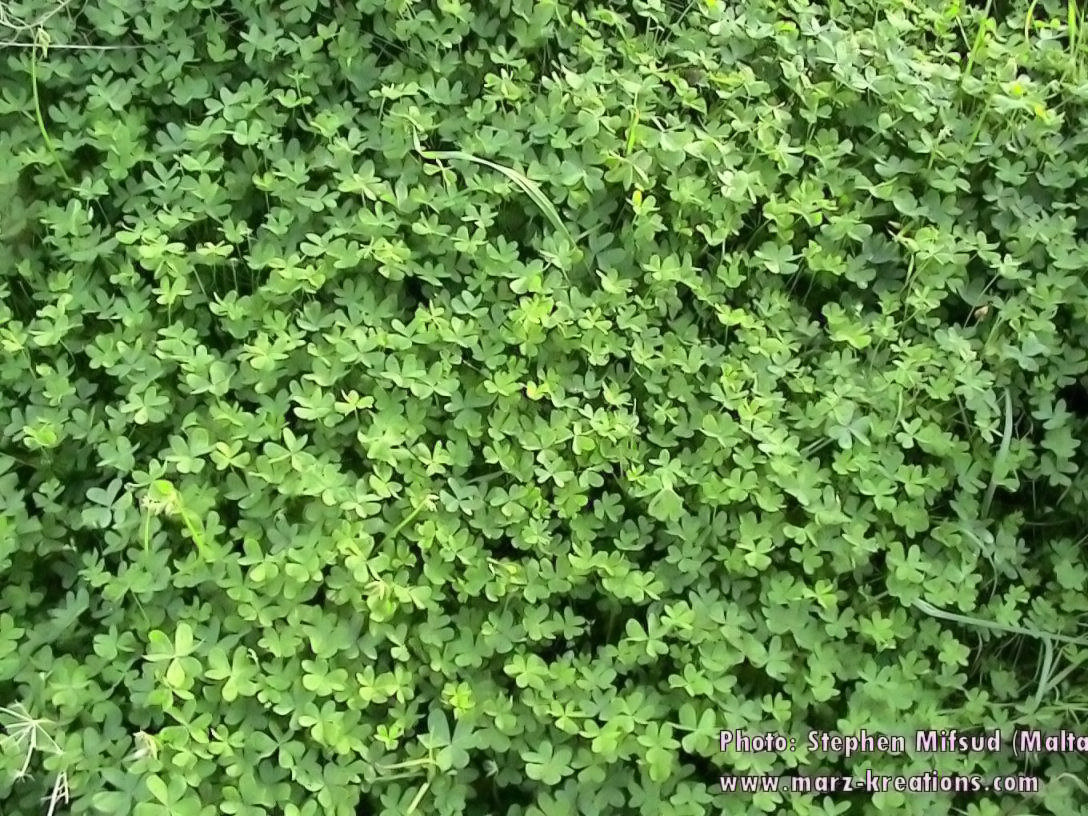
Carpet of leaves covering all ground leaving little space and light for other plants.
IMAGE: OXLPC-28
Carpeting could be very extensive. This invasive growth makes it harder for other native wild plants to survive.
Oxalis pes-caprae  (Bermuda Buttercup) - CLICK TO ENLARGE PHOTO Oxalis pes-caprae  (Bermuda Buttercup) - CLICK TO ENLARGE PHOTO Oxalis pes-caprae  (Bermuda Buttercup) - CLICK TO ENLARGE PHOTO Oxalis pes-caprae  (Bermuda Buttercup) - CLICK TO ENLARGE PHOTO
IMAGE: OXLPC-29
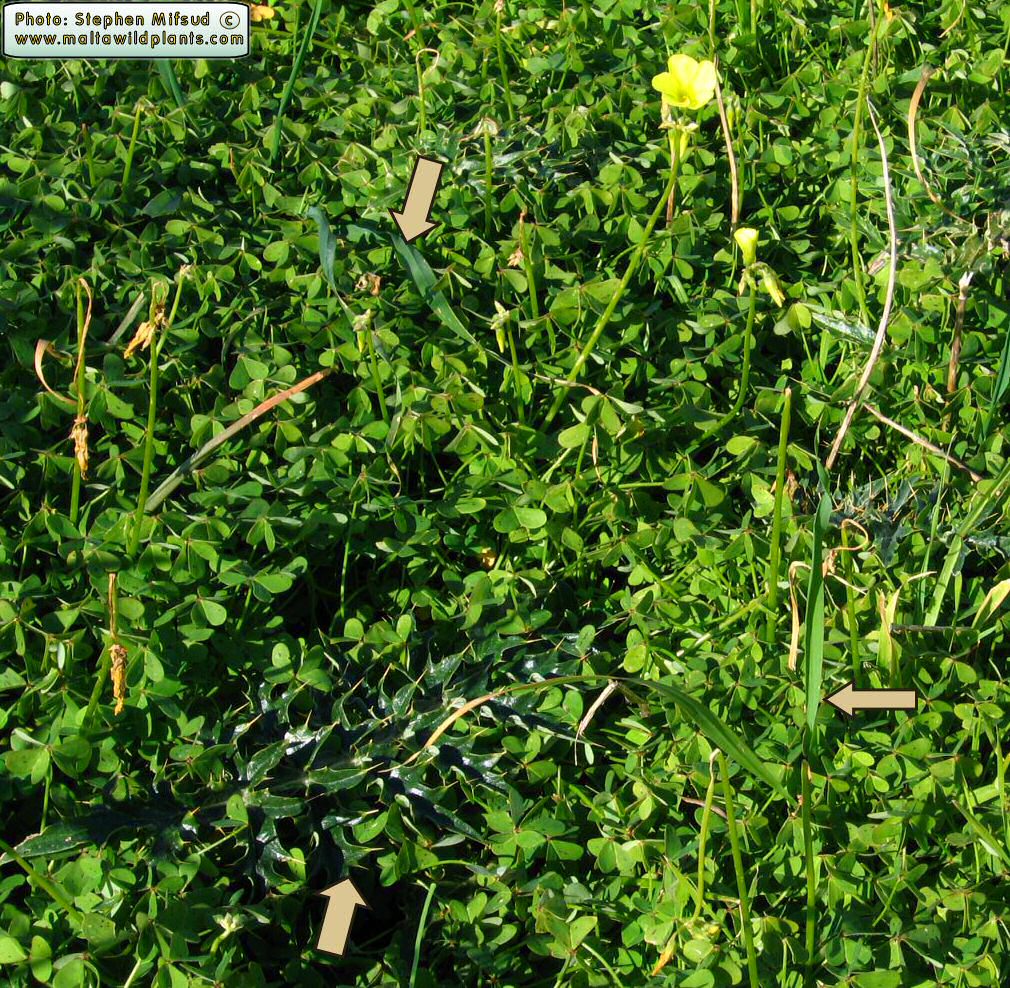
Photo illustrating the effect of Bermuda buttercup overgrowing other plants (marked with arrows). The taller plants are only partially effected, but the low growing plants will be covered by the higher vegetation of the Bermuda buttercup and so receive much less direct sunlight with the likely risk of dying due to insufficient photosynthesis or suffer unsuccesful flowering.
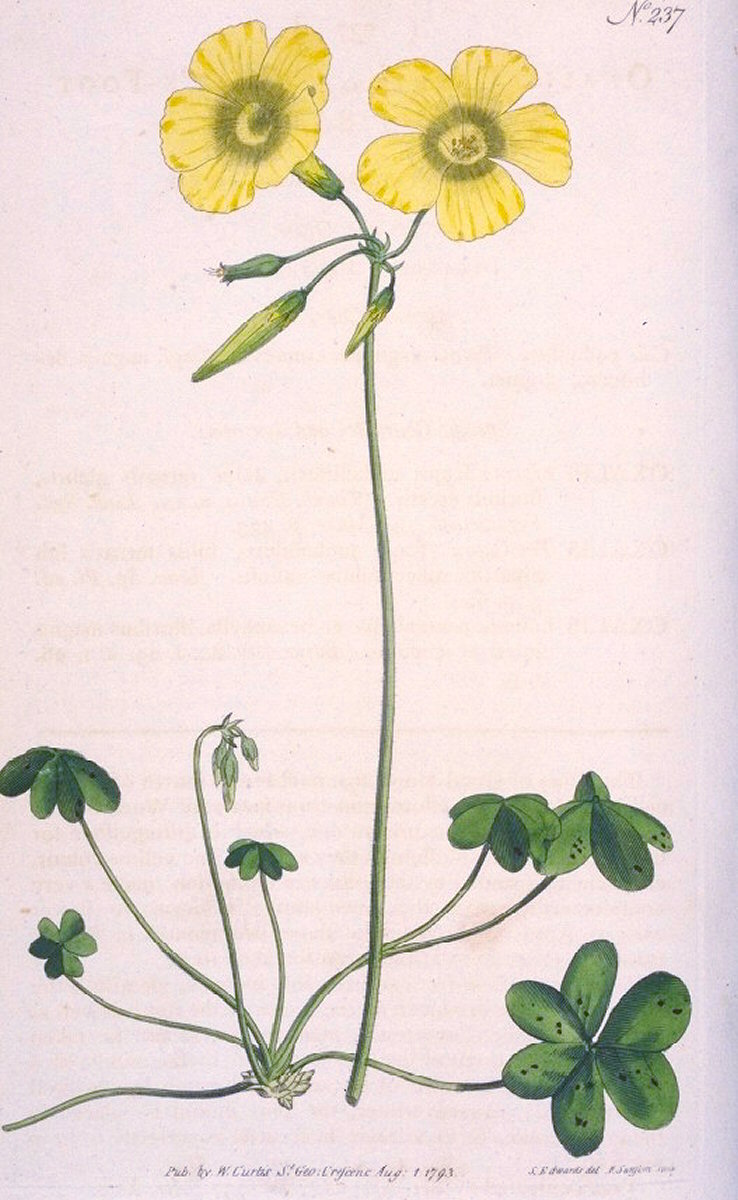
IMAGE: OXLPC-30
Colour illustration of the plant taken from http://www.nal.usda.gov.
IMAGE: OXLPC-31
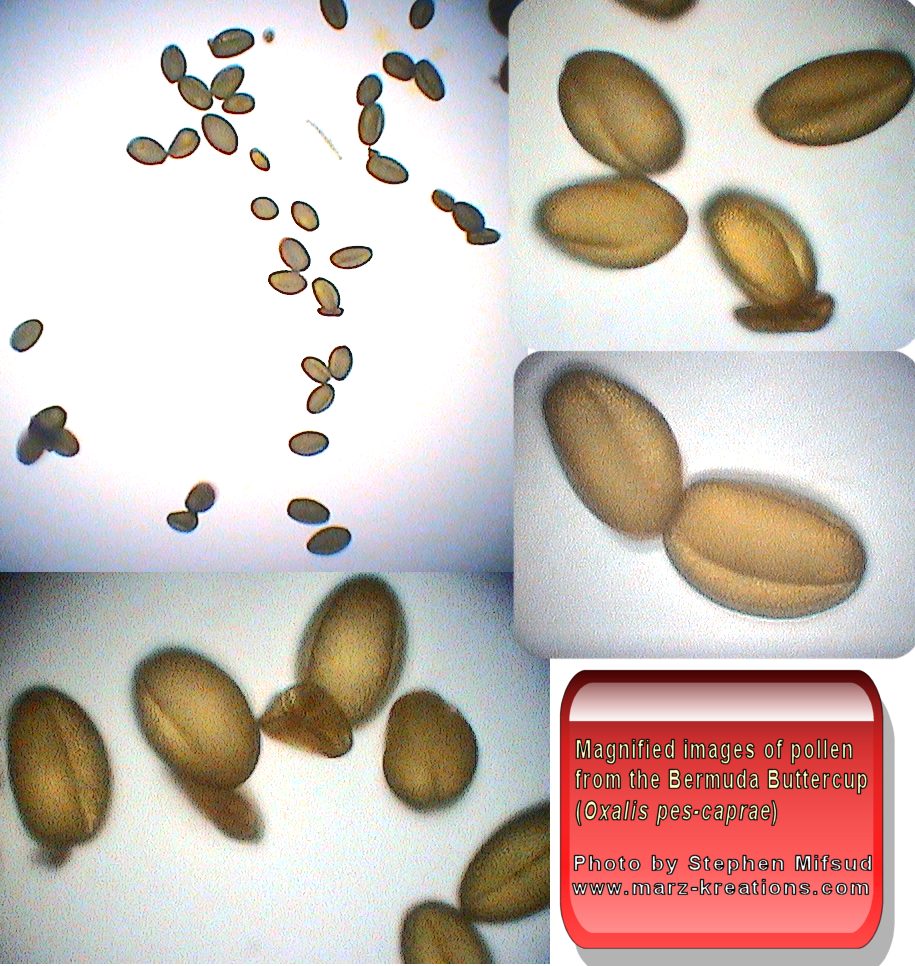
Various images of the pollen under light microscope at various magnifications (x 100 - x 400).
IMAGE: OXLPC-32
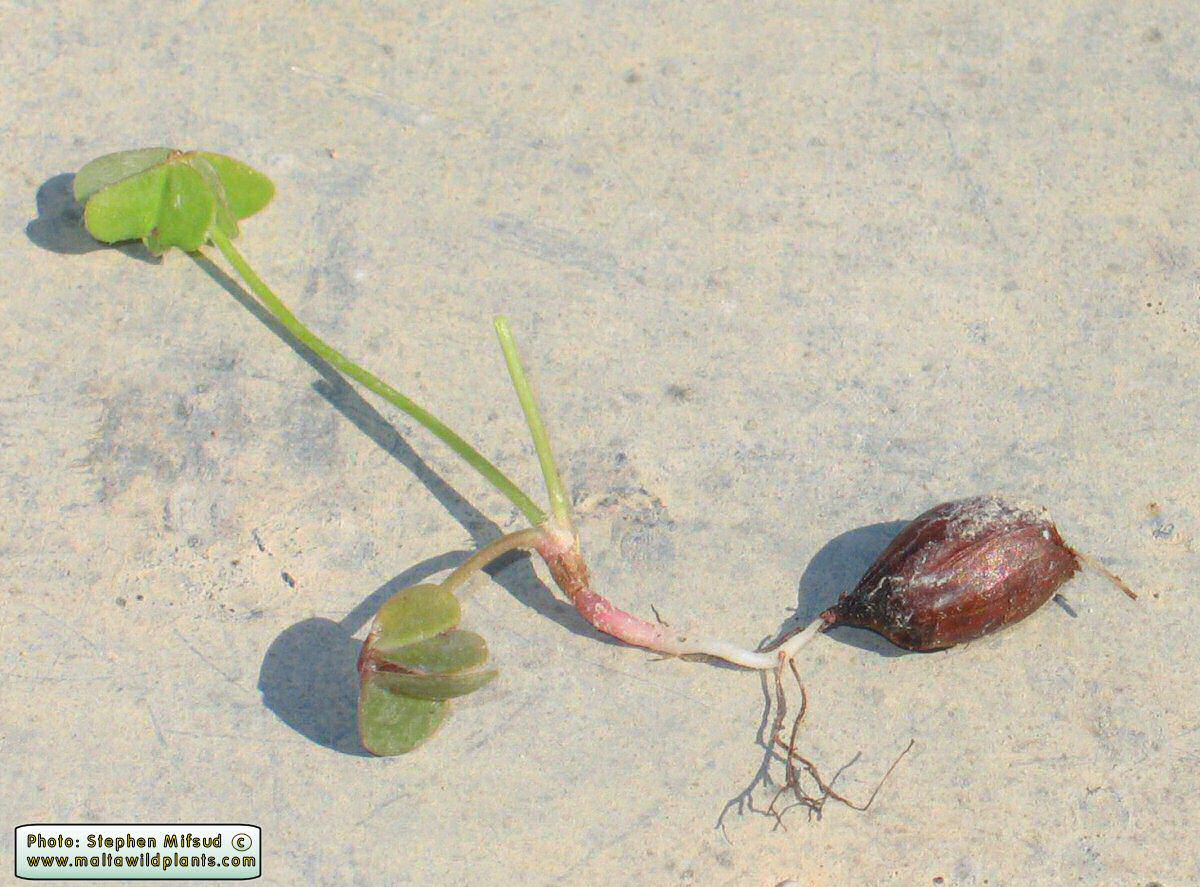
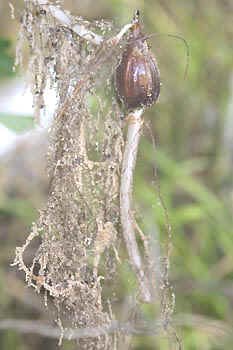
Brown, peanut-sized bulbil from which the plant germinates and propagates. Propagation by seeds is extremely rare in Malta. A main root (or true stem) emerges from the bulbil, and when it reaches ground level, it forms several leaf stalks and one, taller flowering stalk.
Oxalis pes-caprae  (Bermuda Buttercup) - CLICK TO ENLARGE PHOTO Oxalis pes-caprae  (Bermuda Buttercup) - CLICK TO ENLARGE PHOTO Oxalis pes-caprae  (Bermuda Buttercup) - CLICK TO ENLARGE PHOTO Oxalis pes-caprae  (Bermuda Buttercup) - CLICK TO ENLARGE PHOTO
IMAGE: OXLPC-33
Photo of Oxalis pes-caprae var. pleniflora growing from stone walls. Apart having different flowers from the common Bermuda buttercup, this variety has darker leaves (often unspeckled) and a darker peduncle.
IMAGE: OXLPC-34
Close up photo of a beautiful Oxalis pes-caprae var. pleniflora flower.
IMAGE: OXLPC-35
Photo of a pale and rather small flower of this plant. Might be a new variety but more probably a defect or a diseased plant.
IMAGE: OXLPC-36
Photo of several plants lining a stone wall at the Hagar Qim Temples of Qrendi.

Links & Further info

Oxalate poisoning by Kimberly Page Oxalate poisoning by Mary C. Smith
Oxalate poisoning from wikipedia.org Oxalate poisoning from emedicine.com
Weed Alert - Bermuda buttercup potent invasive weed. Lethal Blood concentration of oxalate in humans.
Managing Weeds in BushLand - Oxalis spp.  
Search for Oxalis pes-caprae on the FORUM of MaltaWildPlants.com


Buy Seeds and Docs

Buy Seeds from Maltawildplants.com Buy samples of seeds of certain wild plants for your studies, trials, research, etc. Not all species' seeds can be exported (depending on Maltese regulations), and availability depends on season of species. So, before any payment, you are kindly asked to fill in the online quotation/order form by which I can contact you back for availability and charges. Buy Seeds from Maltawildplants.com   Online Quotation

Buy Seeds from Maltawildplants.com   Online Payment
Buy Documents from Maltawildplants.com Buy documents related to Maltese Wild Plants such as the list of references, full profile, or other docs you request. Buy Documents from Maltawildplants.com   Online Payment
Buy Images  from Maltawildplants.com Buy any of my own copyright images found in this large collection of Maltese flora. You should first select the image you want to buy and input its corresponding code (found beneath each individual photo) in the online ordering form. Buy Seeds from Maltawildplants.com   Online Payment
Buy Seeds from Maltawildplants.com Kindly donate any sum of money (from 2USD / 2Euro) to help us covering some expenses needed to maintain Maltawildplants.com. Please bear in mind how much hard work such a large and up-to-date website needs to arrive directly to you home, office or library. Your kind donations are both greatly appreciated and recorded for future reference. Donors asking help will have first que preference for assistance and special attention. Buy Seeds from Maltawildplants.com   Online Donation


Submit own info about this plant

Use the form below to submit more information about this plant or a related species. If the data is taken from a book, journal, website, etc, please provide the corresponding reference / website address as indicated in the form. If it is your own observation, then your name will be cited. Your Email address will never be displayed online, it is just for internal communication.


For plant species that are marked as rare, you can also report other locations in Malta where you have seen this species.

Finally you can report any mistakes or errors found on the plant profile for necessary corrections. This will help to improve the website's accuracy.


To have more details about each particular field, just move your mouse on it and wait for the help message to pop up

* = required fields.
Plant Species:  *
Your name:   *
Your Email:   *
 
Fill any of the 3 sections below (A, B, C) and send the form - Thank you.
 
A:  Additional Information about this plant species
Own observations:
Info from published material (books, journals, website):

Reference of published material:

 
B:   Where have you seen this plant on the Maltese Islands?
Locations in Malta or Gozo where you have encountered this plant.
Mostly applies for rare plants.


1:        2:   
3:       4:   
5:       6:   

Try to be as concise as possible. Examples: Dingli Cliffs (near chapel), Wied Incita (Zebbug side), Triq il-Kbira (Qormi), Barriera ta\' Abdul (Xlendi), Fields near Salib tal-gholja (Siggiewi). GPS bearings are also welcomed!
 
C:  Corrections for mistakes and errors in this plant profile.
Section of this page where you found an error (select one)

What is the error/mistake
What should be its correction


All material and data on this webpage is under the copyright of the author of this site - Stephen Mifsud / www.MaltaWildPlants.com / Malta. (2002-2010)
This research project about the flora of Malta is sponsored by:
Nature Guided Tours in the best countryside areas of Malta The Malta Council for Science and Technology (MCST) is the national advisory body to Government on science and technology policy. The MCST is also the national agency responsible for the management of the local RTDI programme, as well as the national contact organisation for the Seventh Framework Programme (FP7). Advertise in this space Advertise in this space Other sponsors / supporting companies