| |
|
 | |
| MaltaWildPlants.com by Stephen Mifsud |
|
| |
|
|
 |  |  |  |
| External Links: |
|
Juncus acutus (Sharp-Pointed Rush) |
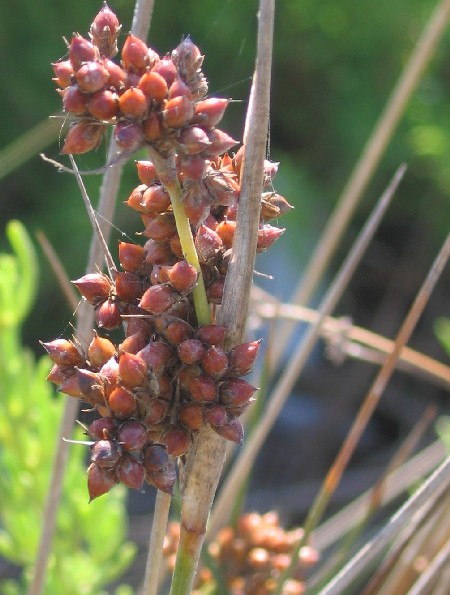
Juncus acutus (JUNCACEAE.)
Images for this profile are taken from the Maltese Islands after year 2000. |
|
| Nomenclature and Basic Information |
Species name : |
Juncus acutusL.
Published in Sp. Pl. 325 (1753) |
Synonyms :
(basionym or principal syn.) |
|
Plant Family : |
Juncaceae
Juss. (The Rush Family)
9 species from the Juncaceae family are recorded from the Maltese Islands. | English name(s) : | Sharp-Pointed Rush, Sharp Rush, Spiny Rush |
Maltese name(s) : |
Simar Lixx, Simar niggież |
Status for Malta : |
Indigenous. Present on the Maltese islands before man |
Frequency : |
Very Common Common Frequent Scarce Rare Very rare Extinct |
Growth form : |
Raunkiaer lifeform [info]: HEMICRYPTOPHYTE ( prostate plants with flowers close to the ground )
Germination [info]: Monocotyledon |
Legal Protection : |
Protected by law: Schedule III of [S.L. 549.44] (Conservation requires the designation of SAC) |
Red List (1989) : |
Not listed in the Red Data Book of the Maltese Islands |
Flowering Time : |
March – June |
Colour of Flowers: |
Inconspicuous or Brown |
Toxicity: |
Not particularly toxic |
Name Derivation : |
Juncus: Latin name for the rush, possibly from 'jungere', = to join or bind, because the stems were used for binding material or weaved into nets or baskets. (Latin origin )
acutus: Sharp; sharpened to a stiff point - referring to the sharp pointed tips of the rigid leaves. (Latin origin )
|
Planting in rural areas : |
Can be planted in rural areas according to ERA Guidelines |
|
|
Description, Habitat and Distribution | |
Habitat in Europe: |
Maritime sands; rarely on damp or saline soils inland. | |
Preferred habitat in Malta: |
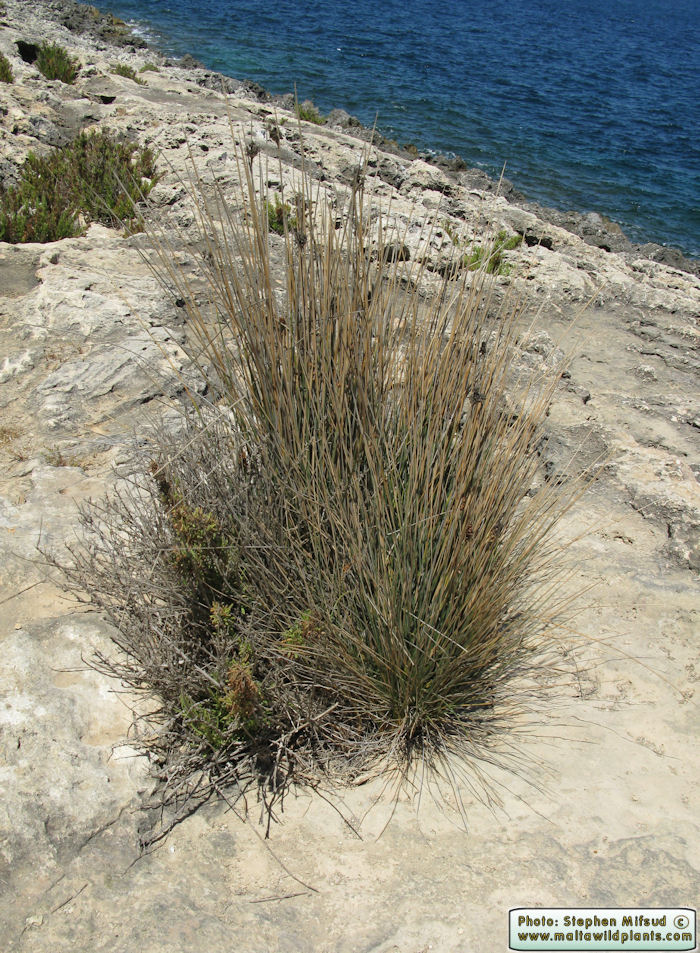
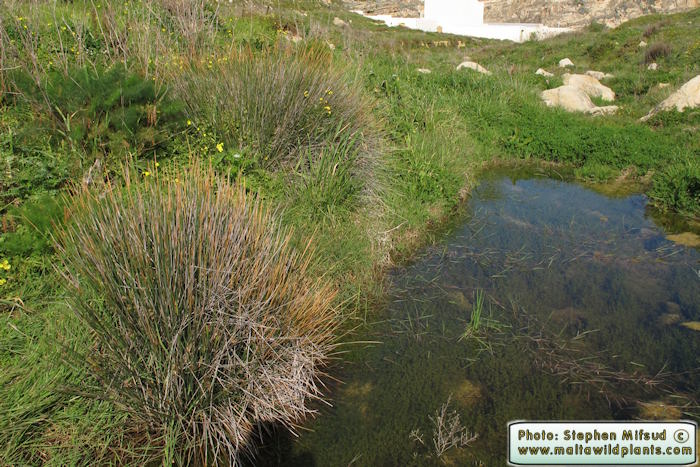
Valleys especially near coastal areas. Also grows near watercourses and damp shady sites. | |
Botanical Description: |
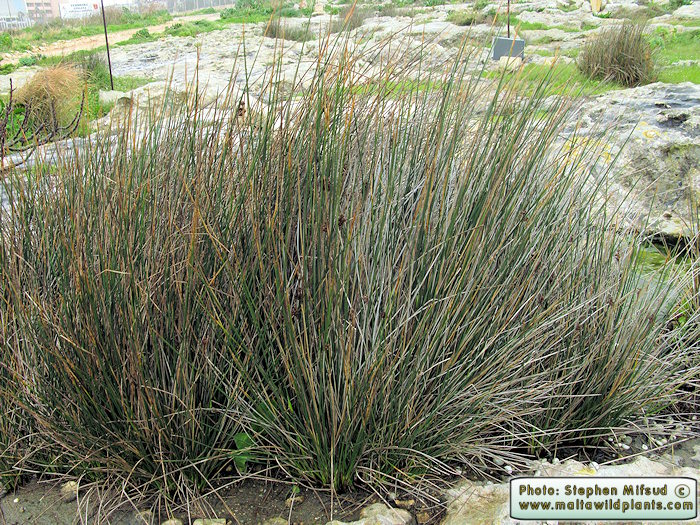
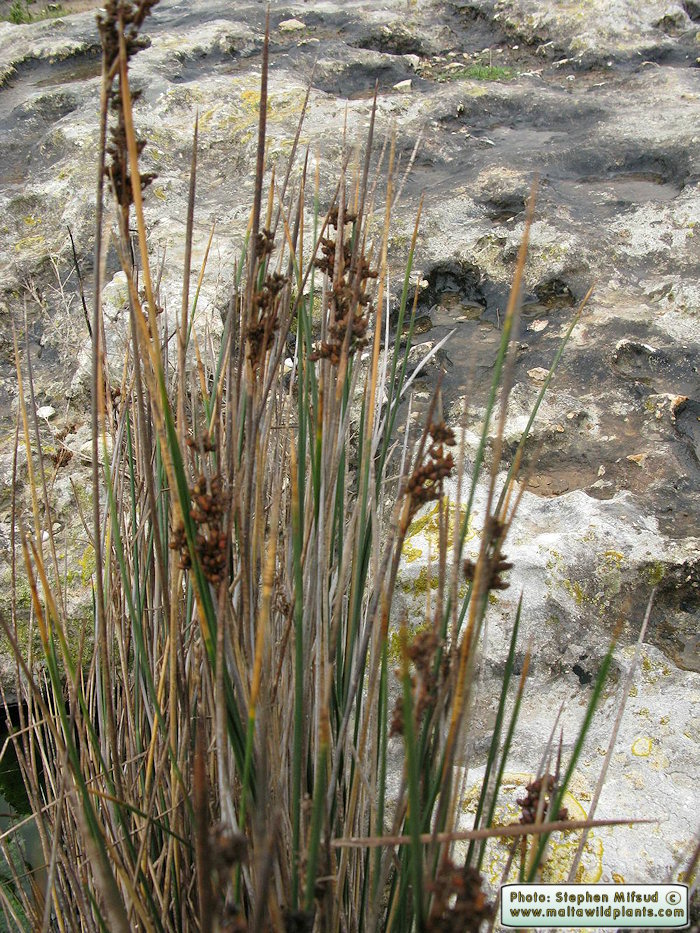
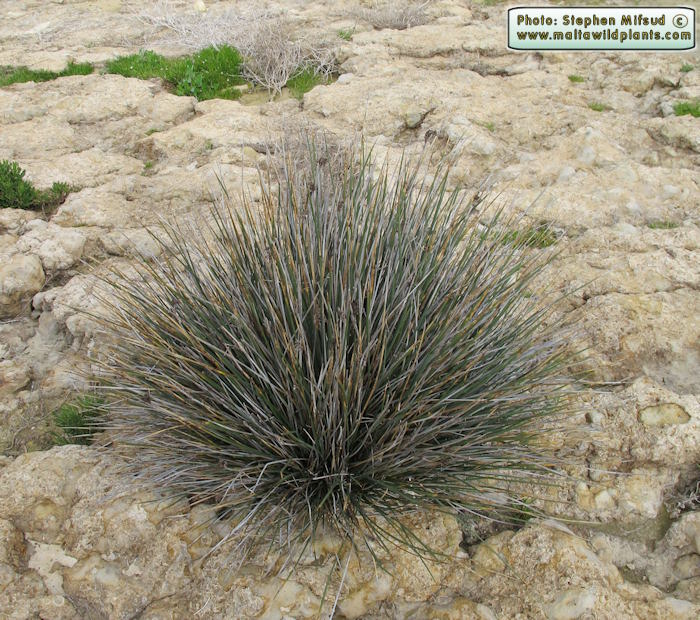
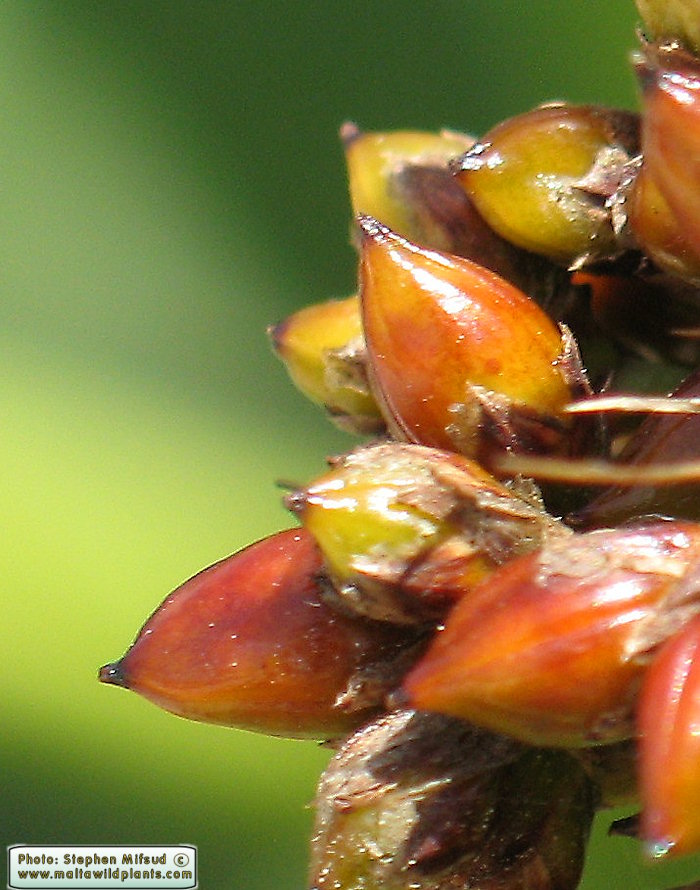
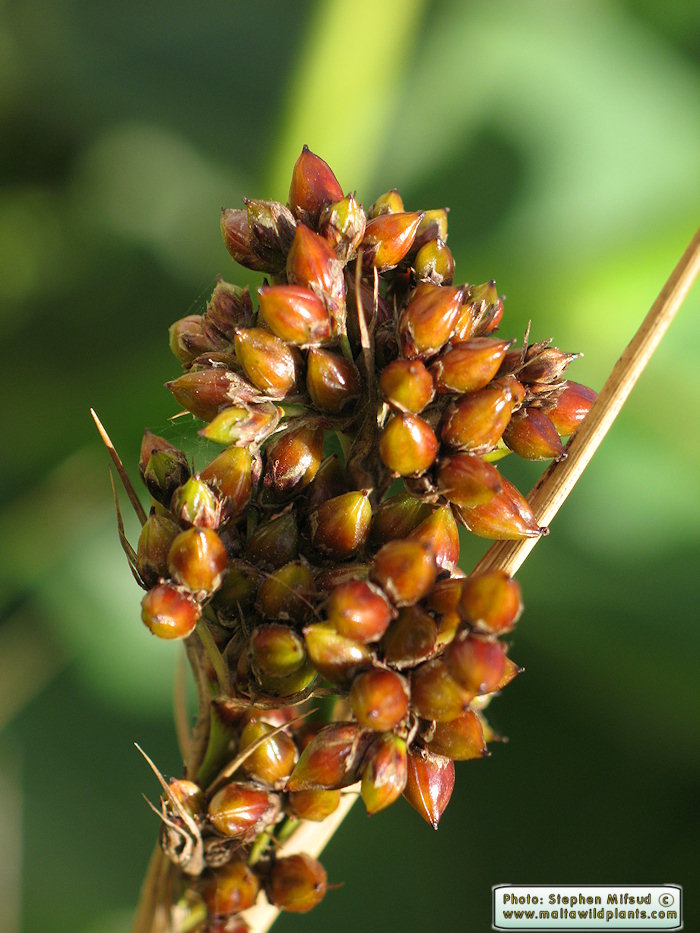
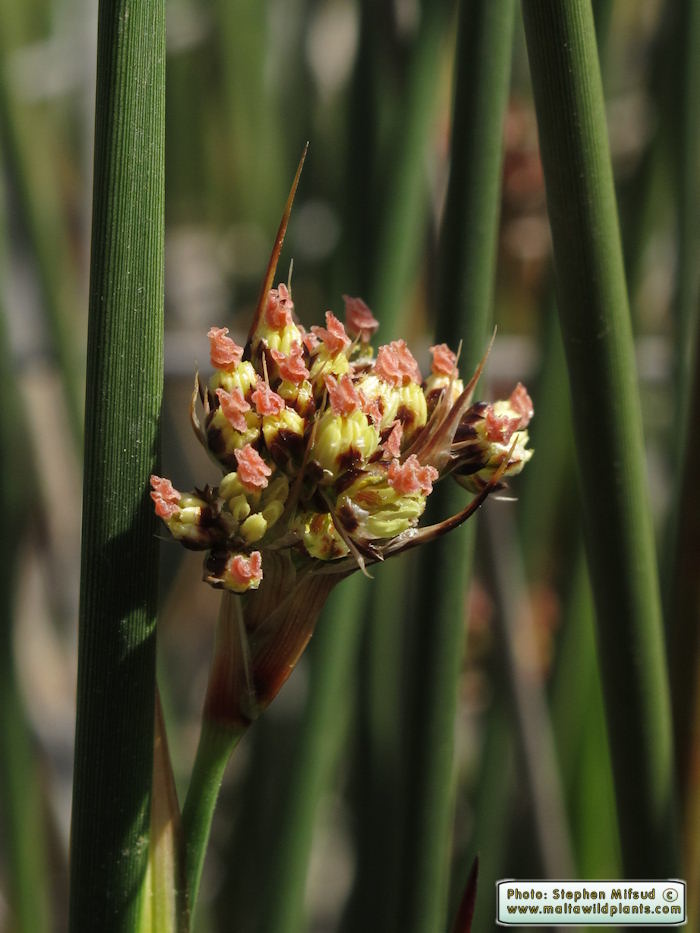
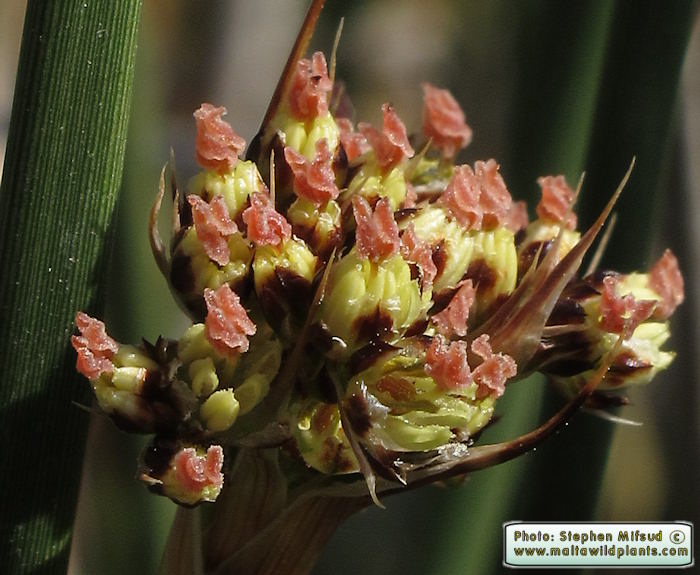
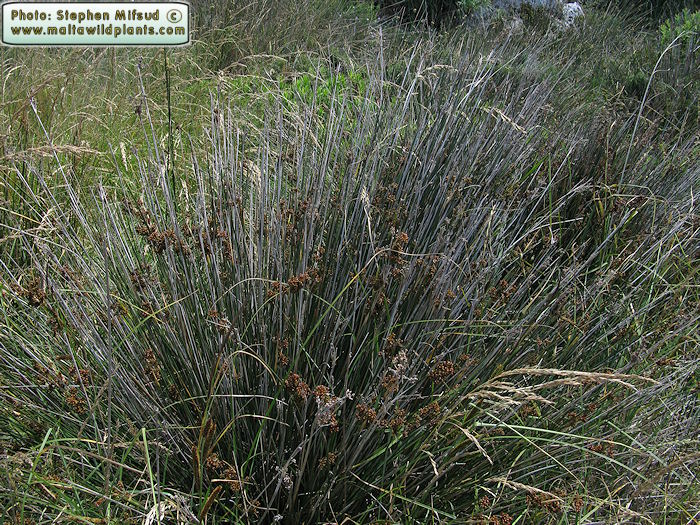
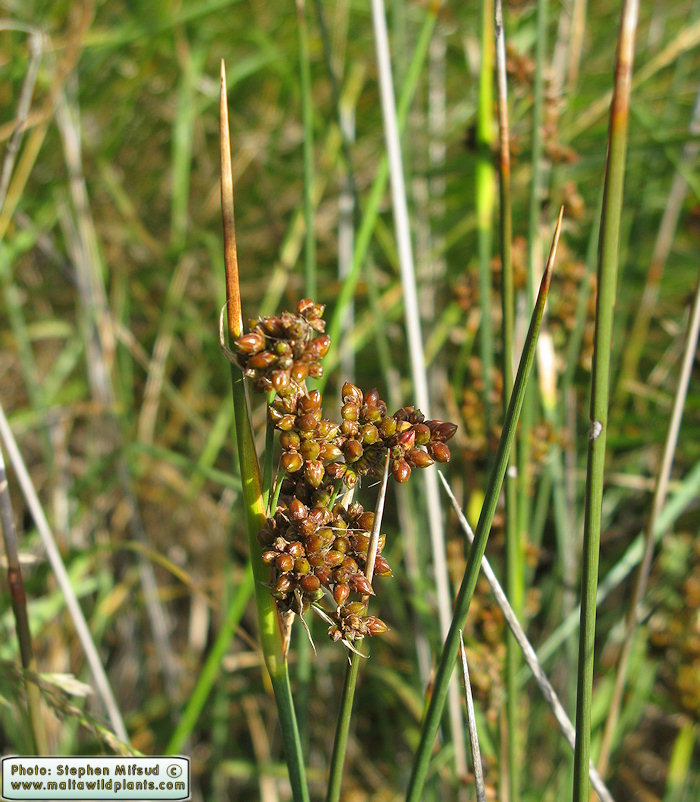
Plant densely caespitose; intravaginal shoots present. Stems (15-)50-150 cm, usually 2-4 mm in diameter, rigid, with 2-5 leaves. Inflorescence many-flowered, usually dense, globose, rarely lax and elongated; lowest two bracts well-developed and strongly pungent, usually short. Perianth-segments equal or subequal, oblong, with a wide, scarious margin; outer obtuse or acute; inner wide, with scarious apical auricles. Stamens equalling or slightly shorter than perianth; anthers 1.5-2 mm, several times as long as filaments. Capsule 4-6 mm, much exceeding the perianth, obovoid to ovoid, with a broadly conical to obtuse apex, shortly mucronate. Seeds 80-120, 1.5-2.5 mm; appendages equal. | |
Chromosome number: |
2n=48 | |
Distributional range: |
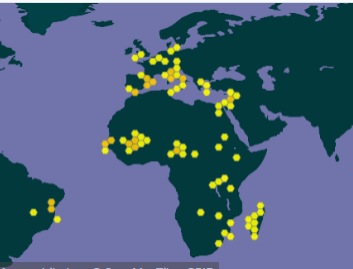
Mediterranean region and W. Europe, northwards to Ireland. |
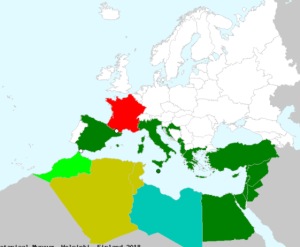
Distributional map in Europe
and the Mediterranean region (2018): |
|
Occurrences in Europe.
(from Flora Europaea pre year 1993): |
Albania, the Azores, the Balaeric Islands, Britain (excl. Northern Ireland and Channel islands), Corse, Crete, France (incl. Monaco and Channel Islands but excluding Corse), Greece, Ireland, Spain (incl. Andorra but excl. the Balaerics), Italy (excl. Sicily and Sardignia), ex-Jugoslavia, Portugal, Sardinia, Sicily and/or Malta, Turkey (European part) |
Occurrences in Europe and the Mediterranean region.
(from Euro+Med Checklist, 2019)
Country codes
|
AE(G) Ag Al Bl Br Ca Co Cr Cy Eg Ga Gr Hb Hs IJ It Ju Li LS Lu Ma Md Rf(CS) Sa Si Sn Tcs Tn Tu(A E) |
|
| | |







 Atlas Flora Europaea
 GBIF Distribution map