Southern Dwarf Iris

Iris pseudopumila / Southern Dwarf Iris / Bellus
This plant is brought to you by one of the project's sponsors:
HSBC Cares for the Environment Fund
More sponsors are needed for this project [ click here ]

Contents Links


Nomenclature

Botanical Data

Description

General Information

Photo Gallery

Further Info & Links

Buy Seeds and Docs

Submit own info
about this plant

Give a small Donation Online

FORUM

Copyright Info


Main Index

 
Visitor hits (Dec-2006)

Nomenclature

Species name:

Iris pseudopumila   Tineo

Author(s):

Vincenzo Tineo;
   Italy, 1791-1856

General names:

Southern Dwarf Iris, Dwarf Bearded Iris

Maltese name:

Bellus

Plant Family:

Iridaceae   (Iris Family)

Name Derivation:

Iris = Rainbow coloured, referring to the wide variety of flower colours found among the many species; Iris was the Greek goddess of the rainbow in Greek mythology. (Greek);
pseudopumila = 'Pseudo' = false; 'pumila' = dwarf; hence 'false Dwarf' (Latin).

Synonyms:

Iris panormitana

Remarks:

Protected by law. Limited Mediterranean distribution and Rare. -


Botanical Data

PLANT STRUCTURE:

Characteristic

Growth Form

Branching

Surface

Description

Erect but without a true aerial stem :

Erect flower stalk(s) and leaves grow directly from the true underground stem such as rhizomes, tubers, corms or bulbs.

Single, unbranched scape :

Plant forms a single, leafless, robust, unbranched flowering stalk (=scape) which is often found growing from underground tubers, rhizomes, bulbs or corms.

Hirsute :

Covered with rough, coarse hairs.

General
Picture

Wild Plants of the Mediterranean Islands of Malta  - Copyright Stephen Mifsud / Maltawildplants.com / Malta (2002-2007) Wild Plants of the Mediterranean Islands of Malta  - Copyright Stephen Mifsud / Maltawildplants.com / Malta (2002-2007) Wild Plants of the Mediterranean Islands of Malta  - Copyright Stephen Mifsud / Maltawildplants.com / Malta (2002-2007)

LEAVES:

Characteristic

Arrangement

Attachment

Venation

Description

V-shaped :

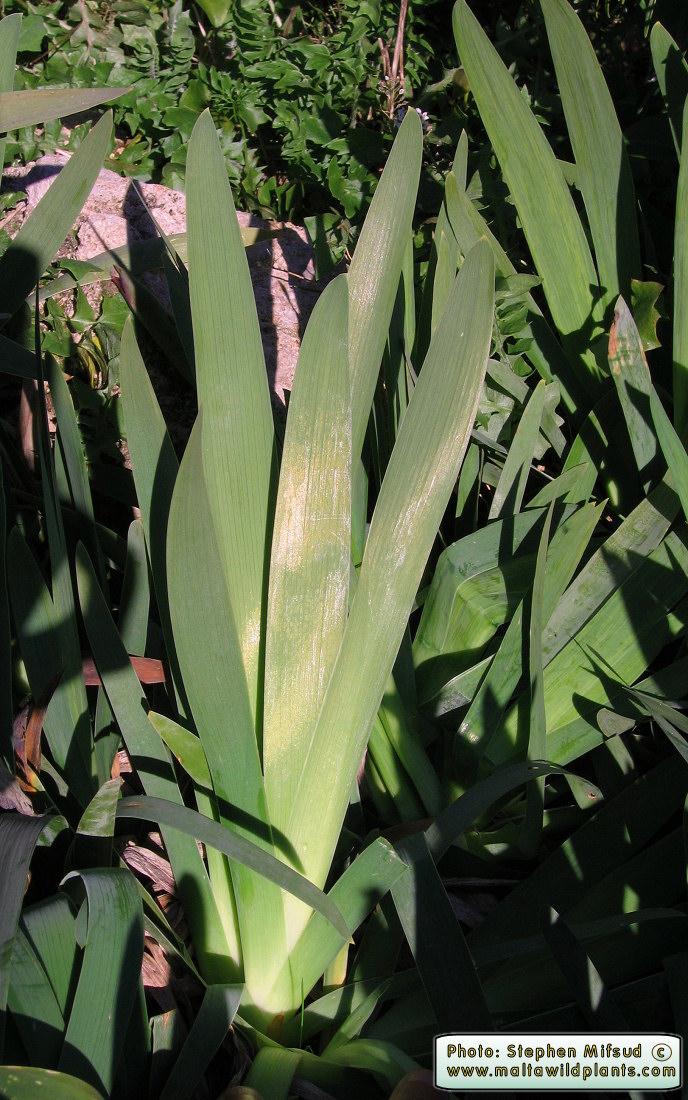
Leaves grow from the underground bulb or rhizome as a planar, V-shaped arrangement, where they younger leaf comes out as through an envelope from the older leaf underneath it.

Sessile from an underground stem :

Growing directly from an underground stem (bulb, rhizome, tuber, etc.) without a stalk.

Parallel venation :

Veins running from the base parallel to the leaf longitudinal axis.

General
Picture

Wild Plants of the Mediterranean Islands of Malta  - Copyright Stephen Mifsud / Maltawildplants.com / Malta (2002-2007) Wild Plants of the Mediterranean Islands of Malta  - Copyright Stephen Mifsud / Maltawildplants.com / Malta (2002-2007) Wild Plants of the Mediterranean Islands of Malta  - Copyright Stephen Mifsud / Maltawildplants.com / Malta (2002-2007)
 

Characteristic

Leaf Shape

Leaf Margin

Remarks

Description

Ensiform :

Sword-shaped, long, flat and gradually tapering to a pointed tip.

Entire :

Smooth margin without indentations, lobes or any projections.

General
Picture

Wild Plants of the Mediterranean Islands of Malta  - Copyright Stephen Mifsud / Maltawildplants.com / Malta (2002-2007) Wild Plants of the Mediterranean Islands of Malta  - Copyright Stephen Mifsud / Maltawildplants.com / Malta (2002-2007) Wild Plants of the Mediterranean Islands of Malta  - Copyright Stephen Mifsud / Maltawildplants.com / Malta (2002-2007)

FLOWERS:

Characteristic

Colour

Basic Flower Type

No. of Petals

No. of Sepals

Description

Deep violet, pale yellow or cream

There are 3 type of flower-forms with the colours mentioned above. The violet form is the most common in Malta.

Iris-like :

Complex flower which basically consists of 3 upright tepals (the standards) and another 3 alternating tepals (the falls) that droop down and are usually more conspicuous and/or larger than the standards.

3

They are the inner perianth segments which are found upright and sometimes referred to as the 'standards'.

3

They are the outer perianth segments which are found drooping down, conspicuous and sometimes referred to as the 'falls'.

General
Picture

  Wild Plants of the Mediterranean Islands of Malta  - Copyright Stephen Mifsud / Maltawildplants.com / Malta (2002-2007) Wild Plants of the Mediterranean Islands of Malta  - Copyright Stephen Mifsud / Maltawildplants.com / Malta (2002-2007) Wild Plants of the Mediterranean Islands of Malta  - Copyright Stephen Mifsud / Maltawildplants.com / Malta (2002-2007)
 

Characteristic

Inflorescence

Description

Ovary

Stamens

Description

Single and Terminal :

Single, solitary flower at the apex of the stem or flower branch.

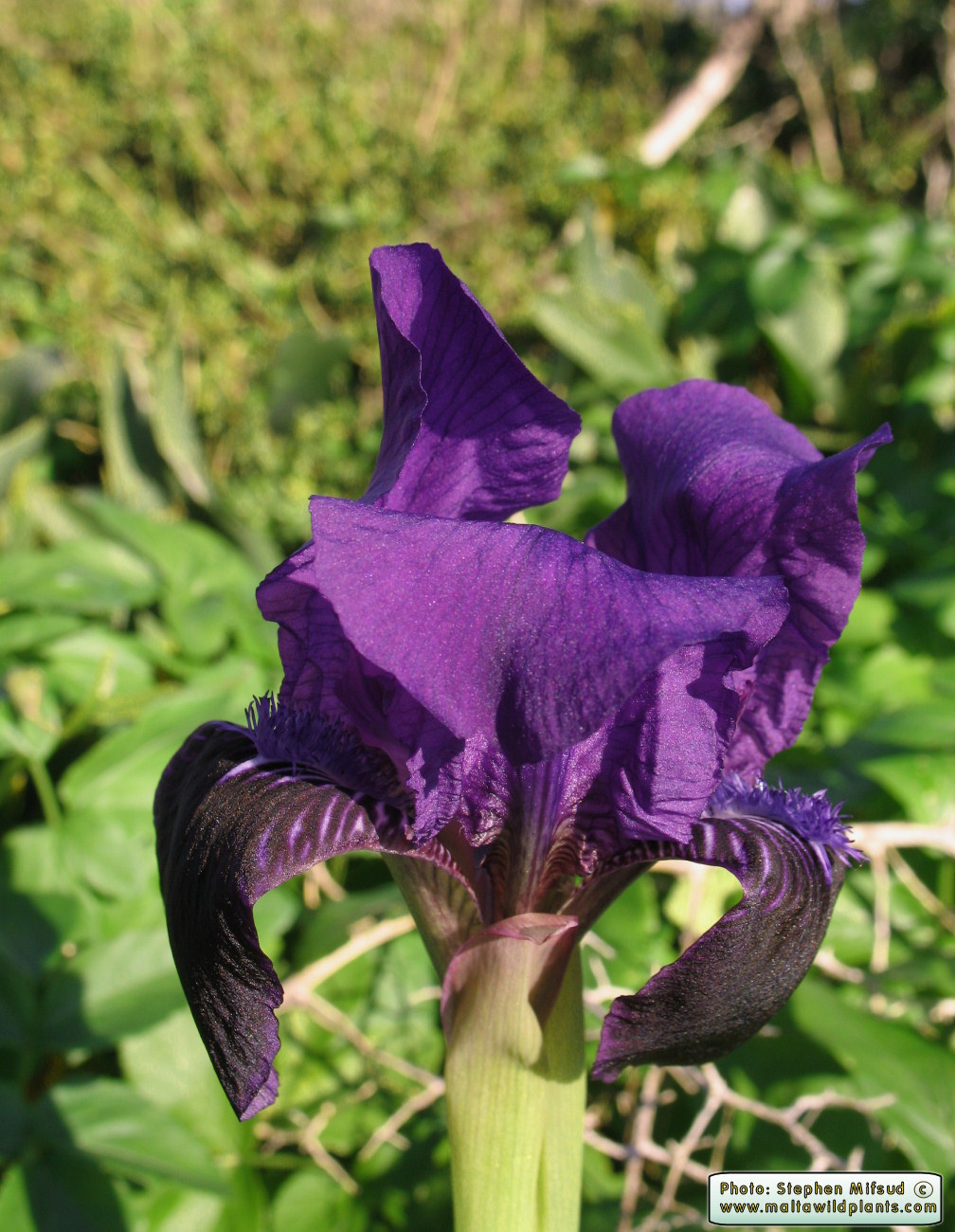
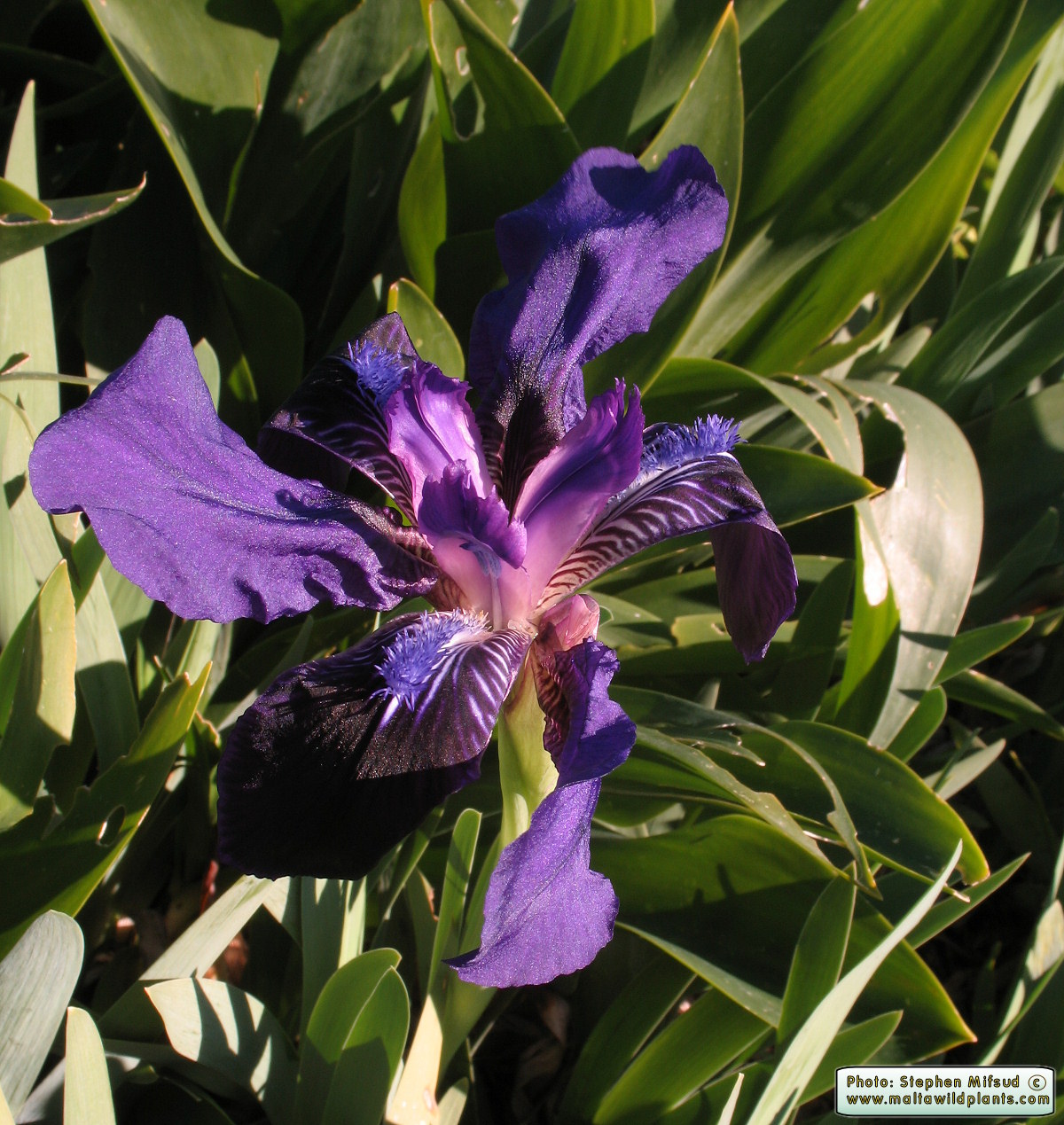
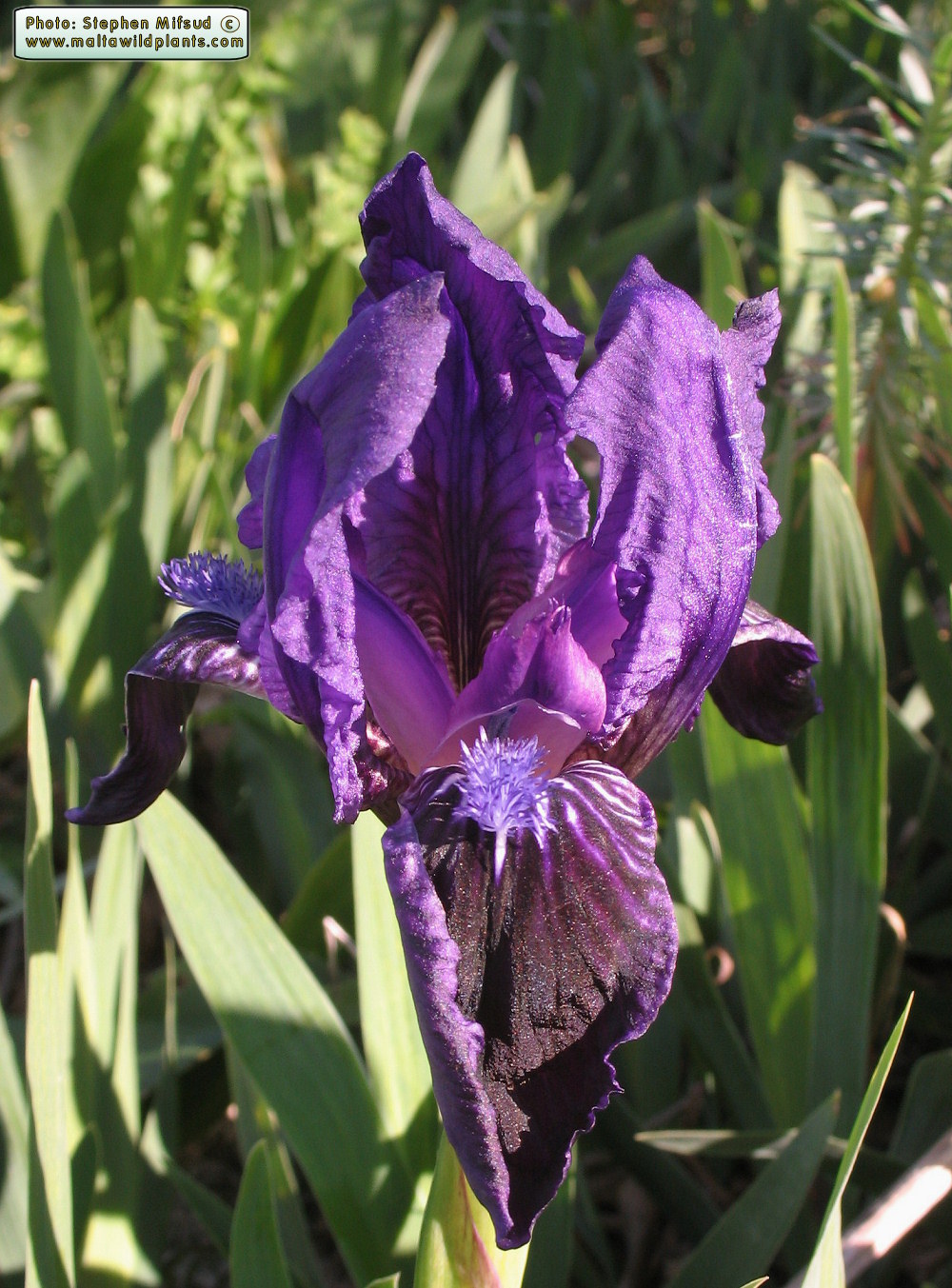
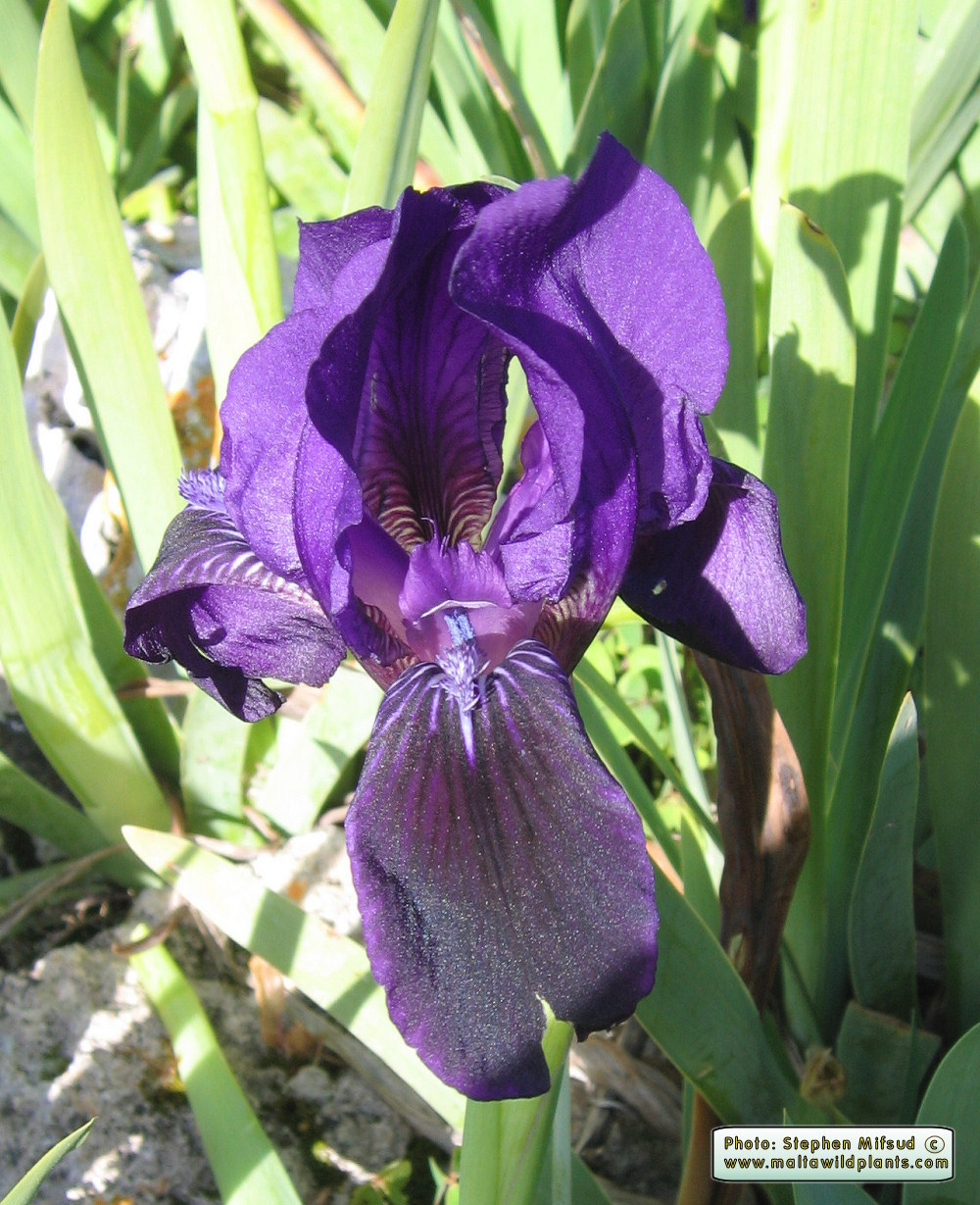
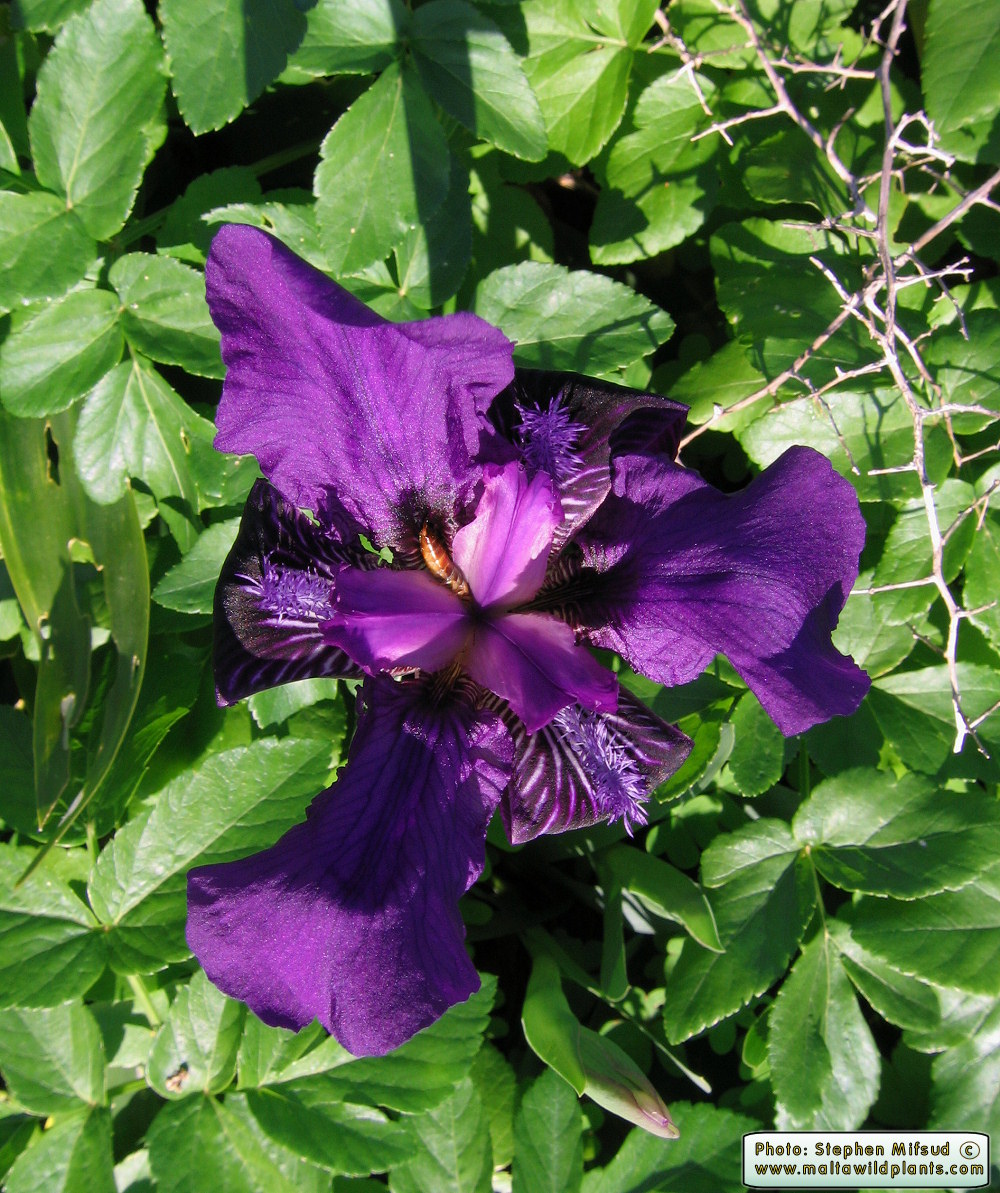
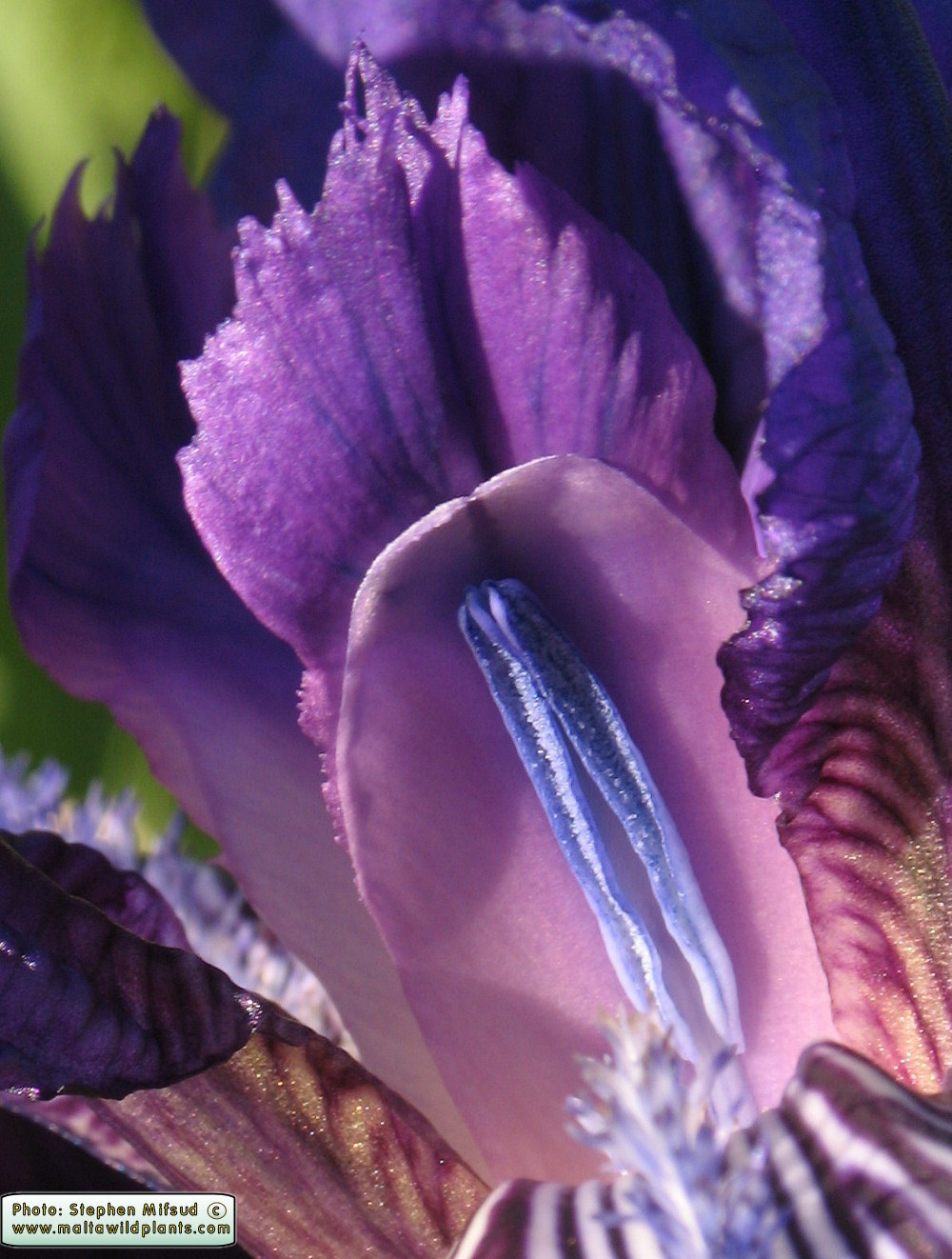
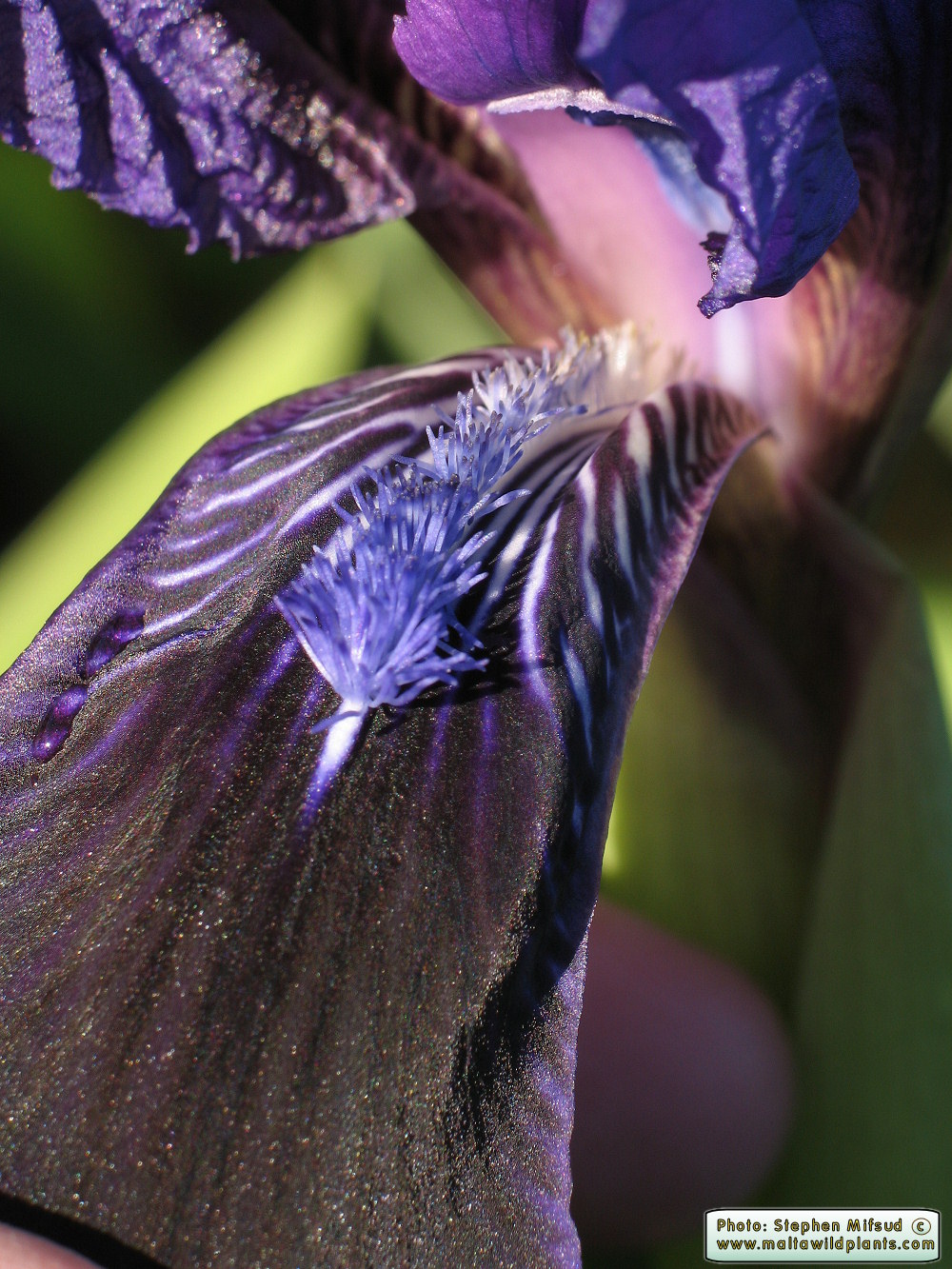
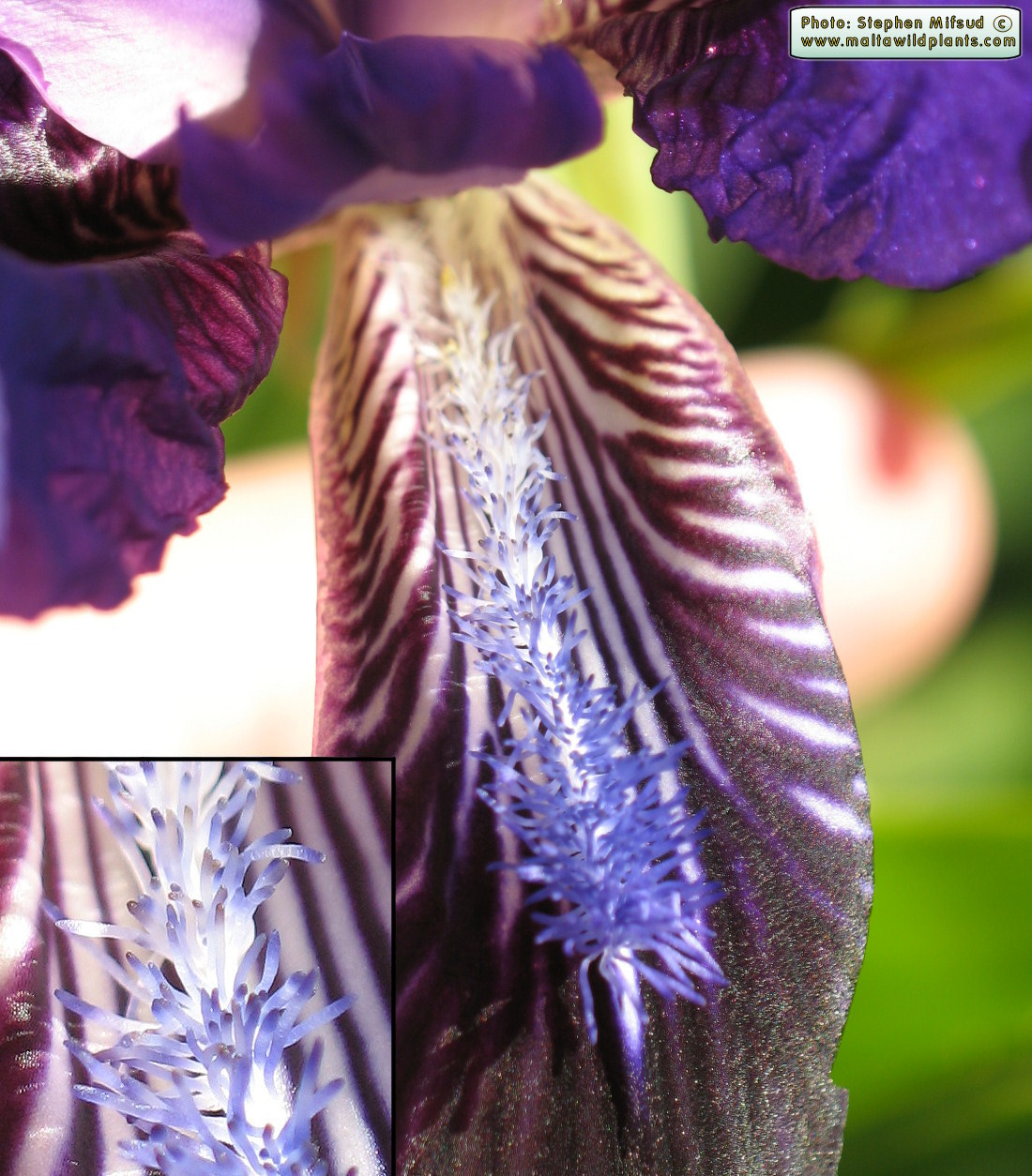
The upright tepals are often pleated and quite large. The drooping tepals have a central stripe of indigo bristles (=beard) and further decorated by having azebra-like pattern at their inner portion and a blackened patch towards the tip. Over the beard there is a petaloid style with lacerated lobes at its tip. In between this and the beard there is a pair of indigo stamens.

Inferior :

Ovary situated below the flower parts (the calyx, corolla, and androecium). In other words, these are attached above the ovary.

#, Epipetalous :

Stamens are attached or borne upon the petals or corolla tube.

General
Picture

Wild Plants of the Mediterranean Islands of Malta  - Copyright Stephen Mifsud / Maltawildplants.com / Malta (2002-2007) Wild Plants of the Mediterranean Islands of Malta  - Copyright Stephen Mifsud / Maltawildplants.com / Malta (2002-2007) Wild Plants of the Mediterranean Islands of Malta  - Copyright Stephen Mifsud / Maltawildplants.com / Malta (2002-2007) Wild Plants of the Mediterranean Islands of Malta  - Copyright Stephen Mifsud / Maltawildplants.com / Malta (2002-2007)
 

Characteristic

Scent

Average Flower Size

Pollen Colour

Other Notes

Description

YES

A particular delicate sweet scent is given off, especially in the morning.

8-10cm across

Light blue or indigo

-


SEEDS:

Characteristic

No. Per Fruit

Shape

Size

Colour

Description

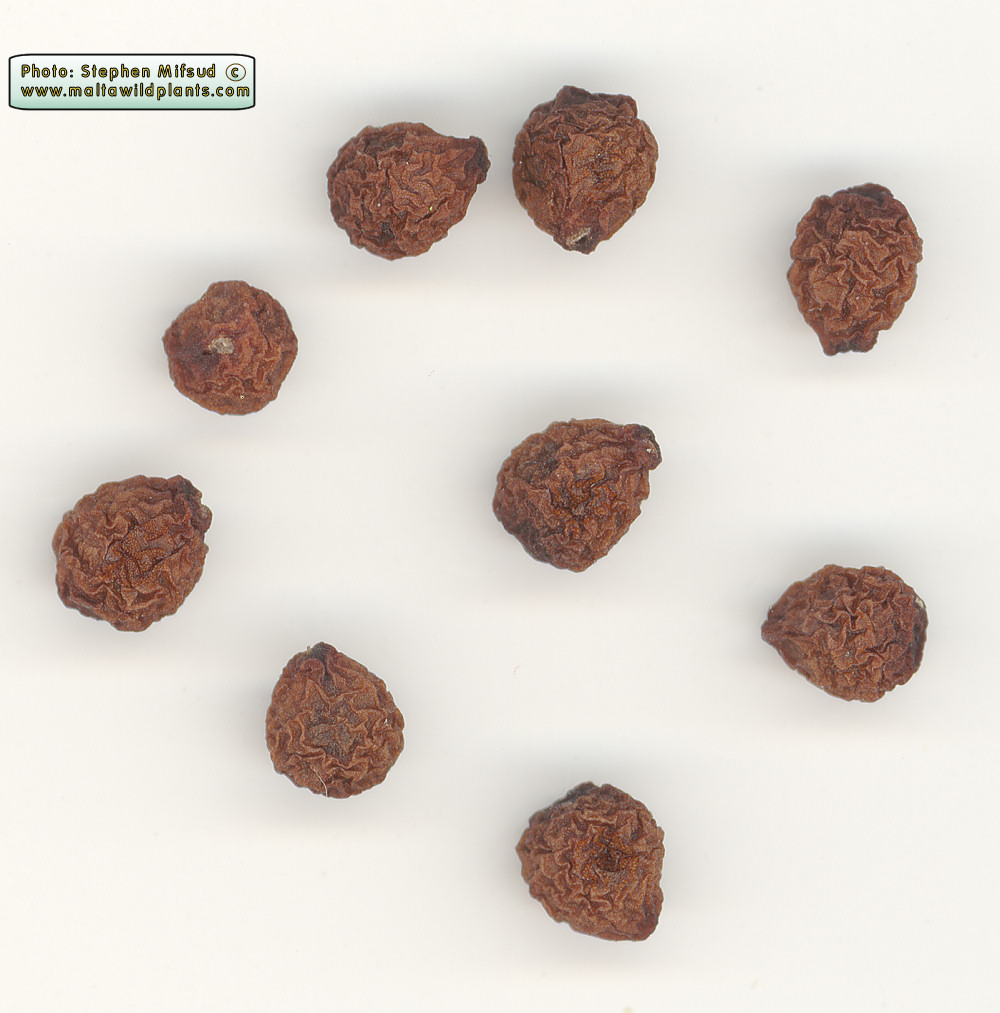
25-100

Oval

They have a prominent wrinkled texture.

3-4mm

Dark Brown

General
Picture

Wild Plants of the Mediterranean Islands of Malta  - Copyright Stephen Mifsud / Maltawildplants.com / Malta (2002-2007) Wild Plants of the Mediterranean Islands of Malta  - Copyright Stephen Mifsud / Maltawildplants.com / Malta (2002-2007) Wild Plants of the Mediterranean Islands of Malta  - Copyright Stephen Mifsud / Maltawildplants.com / Malta (2002-2007) Wild Plants of the Mediterranean Islands of Malta  - Copyright Stephen Mifsud / Maltawildplants.com / Malta (2002-2007)

FRUIT AND OTHER BOTANICAL DATA:

Characteristic

Fruit Type

Colour of Fruit

Subterranean Parts

Other Notes

Description

Dehiscent Loculicidal Capsule :

A fruit capsule that splits open longitudinally into the cavity of the locule when the seeds are ripe.

Straw Colour

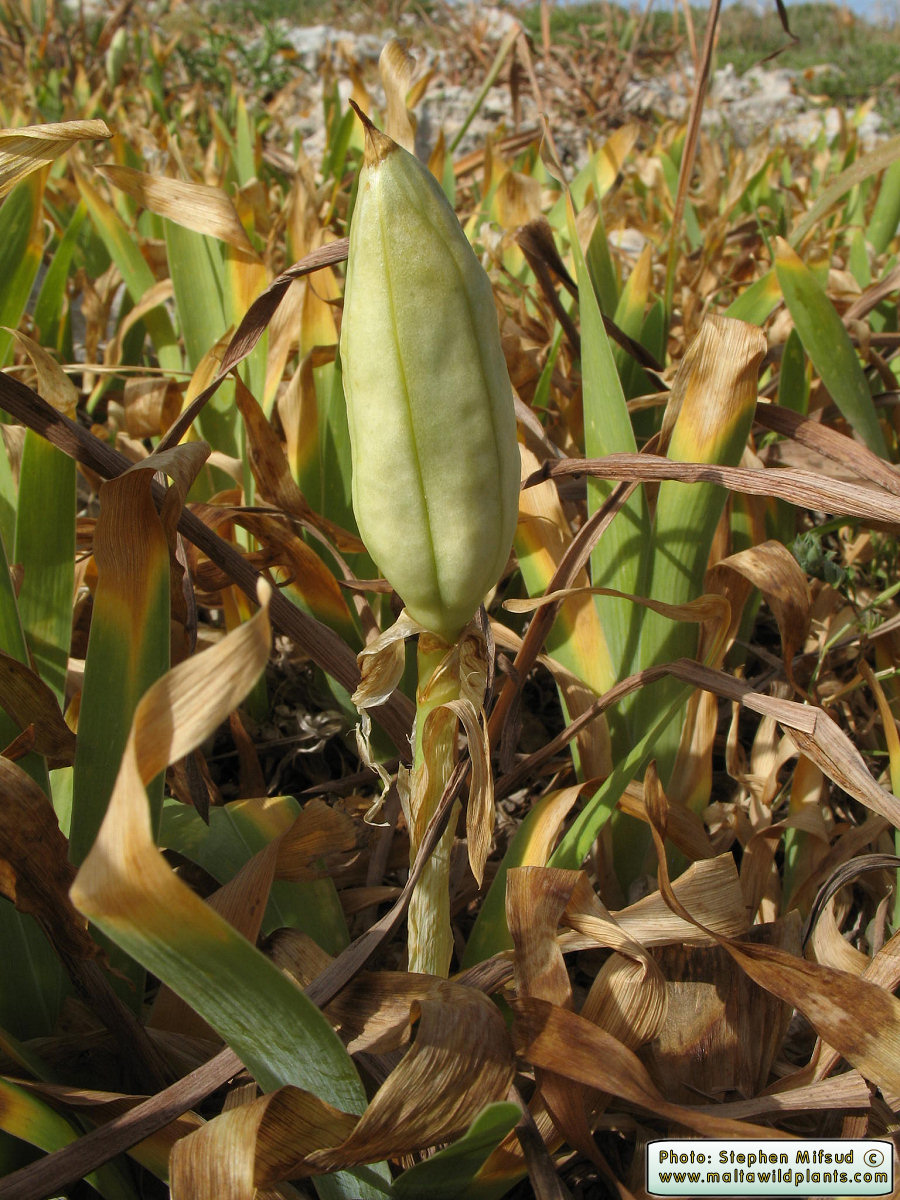
Initially the fruit is pale green, which dries and turns to straw colour when seeds are ripe.

Rhizome :

A prostrate or underground plant stem, forming shoots above and roots below.They serve as a reproductive structure and sometimes have thickened areas that store starch.

-

General
Picture

Wild Plants of the Mediterranean Islands of Malta  - Copyright Stephen Mifsud / Maltawildplants.com / Malta (2002-2007) Wild Plants of the Mediterranean Islands of Malta  - Copyright Stephen Mifsud / Maltawildplants.com / Malta (2002-2007) Wild Plants of the Mediterranean Islands of Malta  - Copyright Stephen Mifsud / Maltawildplants.com / Malta (2002-2007) Wild Plants of the Mediterranean Islands of Malta  - Copyright Stephen Mifsud / Maltawildplants.com / Malta (2002-2007)

Plant Description

Life Cycle:

Perennial

Habitat:

Garigue and Steppe.

Frequency:

Rare

Sources in Malta:

Location will remain undisclosed to protect the plant from picking.

Plant Height:

30-75cm.

Flowering Time:

Jan - Mar

Poison:

Not Poisonous

This is one of the few Irises that are found on the Maltese islands, and like many of them, it is a rather rare plant; restricted to small patches around very few garigues of the Maltese islands. The monocot plant consists of an underground rhizome, 10-20cm long, that produces evergreen leaves, and in January-February it forms one flowering stalk called scape. There are 3 types or variations of the plant, one that makes deep violet flowers (most common type), another that produces pale yellow flowers, and one which make white or cream flowers (rare).

The leaves grow directly from the rhizome and form a V-shaped arrangement, where the younger leaf envelopes out from the one beneath. Leaves can be described as sword shaped (long and gradually tapering) with a pointed or sometimes blunt tip. On average they are 20cm long and 2.5cm wide. The margin is entire and the lamina is glabrous with parallel venation.

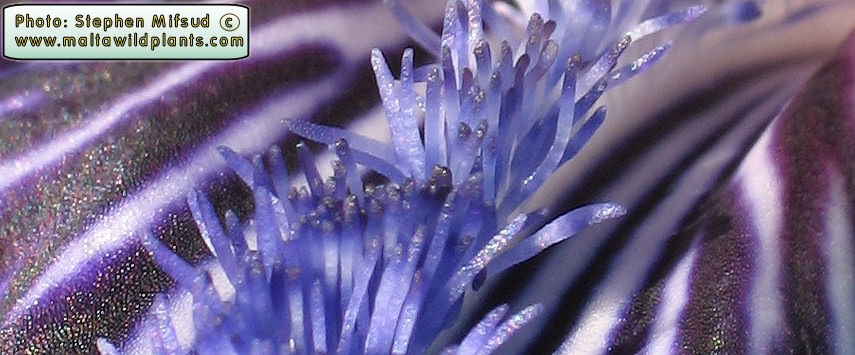
The plant forms a large, solitary and terminal flower. The inferior ovary and a large portion of the flower tube are covered by the spathe - a sheathing bract-like structure. The flower tube is 3 to 5 times longer than the ovary. Each flower has six non-identical tepals. The 3 outer tepals are known as falls and are found drooping down, while the other 3 inner tepals - known as standards - are erect and upright. The standards (70mm x 35mm) are pleated but not decorated. On the contrary, the falls (75mm x 30mm) are decorated by a zebra-like pattern at its inner end and edges which gradually fades out towards the tip. Furthermore, each fall has a large dark blob at the outer region and additionally it has an interesting central band of indigo bristles which is referred to as the beard. The beard is about 4cm long and 7mm wide. The indigo bristles tend to have a greyish or black tip, while they get whiter towards the inner end of the tepal.

There is a set of 3 styles and as in many irises, they have a unique showy structure. In this species, each style has the shape of a petal (hence called as a petaloid style) and is located just over each fall tepal. It measures 10mm across and about 35mm long. It consists of 2 joined lips of different lengths and colour. The shorter lip is lilac and generally smooth. The longer lip is purple-violet and has 2 triangular lobes at its upper end which have a lacerated margin. The lobes start more or less at the rim of the shorter lip. The stigma is located somewhere at the base and between the lobes of the upper lip.

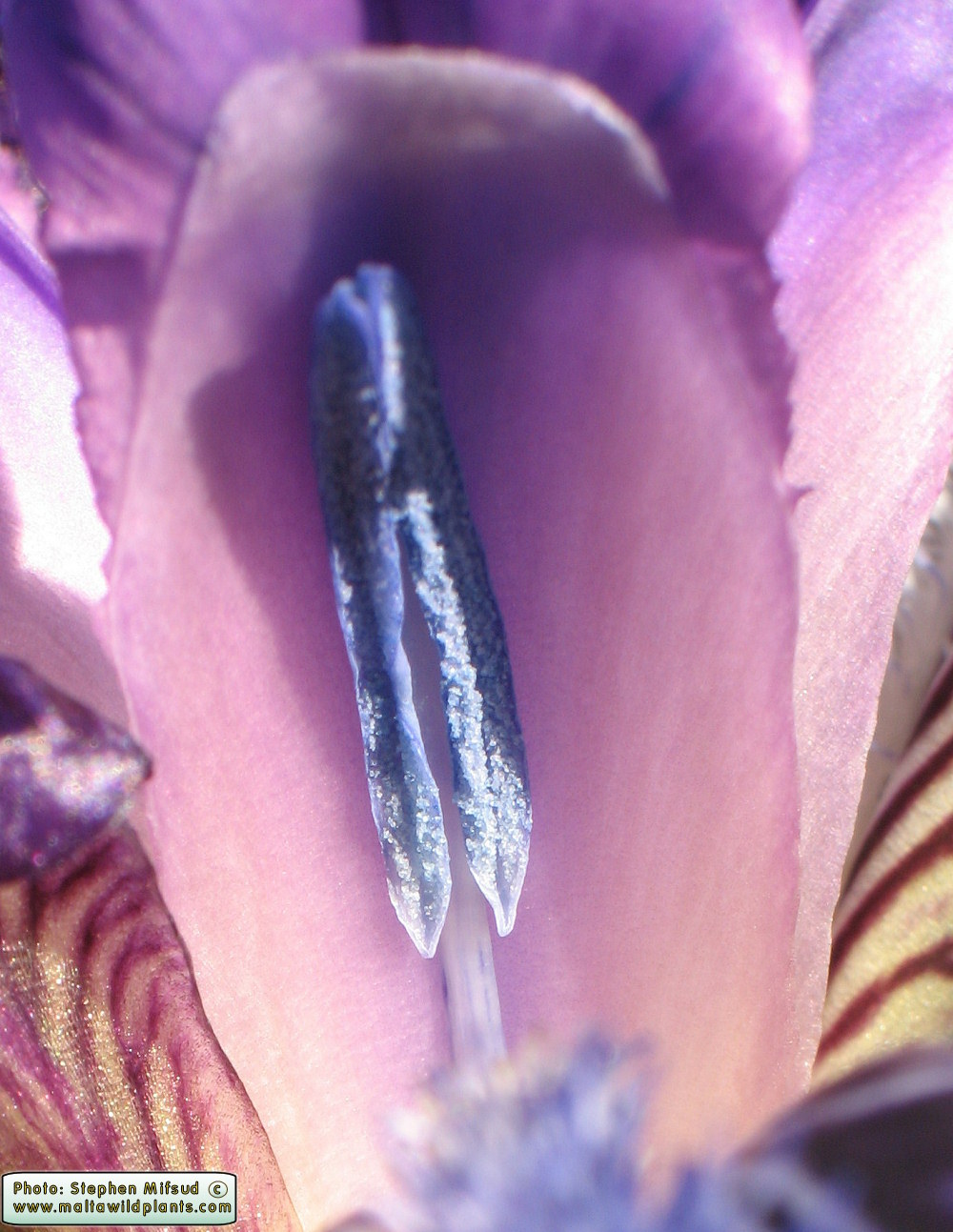
There are 3 stamens, each being found sandwiched between the petaloid style and the fall tepal. The stamens have a pair of indigo pod-like anthers that are about 15mm long and produce light blue pollen.

After fertilization, the flower tepals shrivel and fall, while the ovary develops into a cylindrical/oval fruit capsule. This produces many black seeds, about 3mm across which are liberated when the capsule splits open.


Additional Information


Nativity and distribution

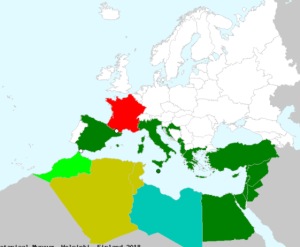
The distributional range of this plant according to  [WWW-26] is restricted only to Sicily and former Yugoslavia. Furthermore, another 2 sources specifically state that it is an endemic to Southern Apulia and Sicily  [WWW-84, WWW-47]. In Apulia, it is found on the 'Murge' and the 'Gargano'.   [WWW-47]

Apulia is a region in the south of Italy. It is at the end of the Italian peninsula on the eastern side, facing Albania and Greece. Although the former references  [WWW-84, WWW-47] do not mention that this Iris is found in Yugoslavia,  [WWW-84] gives an indication by stating that from its position, Apulia is a kind of bridge toward the Balkans, and several species of plants are common between the two coasts.

Apulia favours the typical Mediterranean climate, but being the longest region of Italy with 784 KM of coasts, several microclimates are found and they range from zones 8 to 10. The population of Apulia are commonly of the yellow flower form, while in Sicily blue-violet and yellow forms are present with even intermediate specimens.  [WWW-84]

Pollination

The iris flower is of special interest as an example of the relation between flowering plants and pollinating insects. The shape of the flower and the position of the pollen-receiving and stigmatic surfaces on the outer petals form a landing-stage for a flying insect, which in probing the perianth for nectar, will first come in contact of perianth, three with the stigmatic stamens in one whorl surface which is borne and an ovary formed of three carpels. The shelf-like transverse projection on the inner whorl under side of the stamens, which is beneath the over-arching style arm below the stigma, so that the insect comes in contact with its pollen-covered surface only after passing the stigma, while in backing out of the flower it will come in contact only with the non-receptive lower face of the stigma. Thus, an insect bearing pollen from one flower, will in entering a second, deposit the pollen on the stigma, while in backing out of a flower, the pollen which it bears will not be rubbed off on the stigma of the same flower.  [WWW-60]

Closely related species

There is another Iris species which is very similar and so can be confused with Iris pseudopumila. Iris chamaeiris has more or less the same leaf and flower morphology as I. pseudopumila and they can be distinguished from each other as described in the following table:  [WWW-47]

Feature I. pseudopumila I. chamaeiris
Length of flower tube compared with length of ovary Tube length 3-5 times that of the ovary Tube length 2 times that of the ovary
Number of flowers per plant Always 1 flower. 1,2 or 3 flowers.
Spathe size Covers completely the flower tube. Covers partially the flower tube.

Other short notes

Iris pseudopumila is thought to be the ancestral form of all the bearded Iris.  [WWW-84]

In Italy this Iris flowers between March and May  [WWW-47], while in Malta it does this between Jan and Mar.  [SM]

Since of its short flowering stalk, the use as an ornamental cut flower is not much practiced in South Italy. The ones sold and which look to be the violet form of Iris pseudopumila are probably cultivated I. germanica.  [WWW-47]

Strangely enough, this plant is not included in the book by Haslam et al. "A flora of the Maltese islands"  [332] which reports almost all flora up to 1977 (when the book was republished). The Iris species listed in this book are: I. chinesis, I. fimbriata, I. foetidissima, I.germanica. I.pallida, I.pseudacorus, I.Sicula, I.sisyrinchium, I.tectorum and I.xiphium.  [SM]

This plant is listed amongst the protected flora of the Maltese Islands according to the official document: LN257.2003, Environment Protection Act [376]. In this profile, no flowers where picked to be scanned in the studio and annotation images where done on the flowers in situ.  [SM]

Personal Observations


New populations of Iris pseudopumila in Malta
During the research field work for this project, I have discovered 2 populations of Iris pseudopumilla that have never been recorded in the Maltese flora. One of the populations found in October 2007 was a patch of about 4m across in Dingli, producing violet flowers. The population is partially sheltered by Opuntia ficus-carica and situated in a site that it is hardly accessible to the public. The plants were growing very close to each other forming a dense mat.[SM]

The other population was found in the Northern part of Malta in May 2007 and is the largest population of Iris pseudopumila in Malta in terms of covered area, since it occupies an area of about 16m by 10m. The plants are found scattered rather than close to each other. The great news about this population is that the flowers are of the cream(yellow) form, which is the most rare of the two flower forms of this species of Iris in Malta. One of the established population in Malta (Cliff top at the western coast of Malta) is decreasing considerably over time. [SM]

On comparing the two populations, I found out some interesting variation in the purple-brown coloration of the down petals. The colour of the tepals of the new population reach up to the edge of the petal, while that of western coast, the patch do not reach the edge, and so there is a small yellow border. The latter is photographed in the photogallery below. [SM]
Differences between the yellow and violet forms.
From my examinations of the populations of Iris pseudopumila in Malta, I have observed 2 slight differences between the yellow and violet form when the plants are without flowers. Apart from the different colours, the flowers between the two varieties show certain differences, which might not essentially be of botanical importance, but I think it is worth to pointing them out. Since this observation was made on 3 different populations of the violet form, and 3 populations of the yellow one, the observation should be plausible. The side by side flower comparison where between the population at Mistra/Selmun for the violet one, and the population at the cliff top at the West coastal area for the yellow form. The following different characteristics were observed: [SM]

Feature Violet flower form Yellow flower form
General Plant Size Large; with largest leaves reaching about 28cm in length and 2.5cm broad when flowering Smaller; Plant is often few cm shorter, with largest leaves reaching about 20cm in length and 1.8cm broad at flowering time.
Flower Size Large; average length of standard petal from base to tip is 7.2mm, average length from tip of beard of the fall petal to its tip is 4.1mm Smaller; average length of standard petal from base to tip is 5.5mm, average length from the beard of the fall petal to its tip is 2.5mm
Flower fragrance Average to mild sweet scented Strongly scented, somehow different (more 'delicate') from the violet variety.
Flowering time Late January to February Flowers few weeks earlier, typically beginning to mid January.


Due to these marked differences one may ask if the yellow form is at least at the subspecies rank a different plant from the vilet form and so perhaps it has some endemic value too. Further comparison study of our yellow-flower form with that of Sicily would be an interesting reseacrh to conclude my hypothesis. [SM]
Not much information about this plant has been found, neither in books nor on the Internet. If you can supply further information to be included in this profile, please, do not hesitate to email me. Full reference credits will be given.

Photo Gallery

Iris pseudopumila (Southern Dwarf Iris) - CLICK TO ENLARGE PHOTO Iris pseudopumila (Southern Dwarf Iris) - CLICK TO ENLARGE PHOTO Iris pseudopumila (Southern Dwarf Iris) - CLICK TO ENLARGE PHOTO Iris pseudopumila (Southern Dwarf Iris) - CLICK TO ENLARGE PHOTO
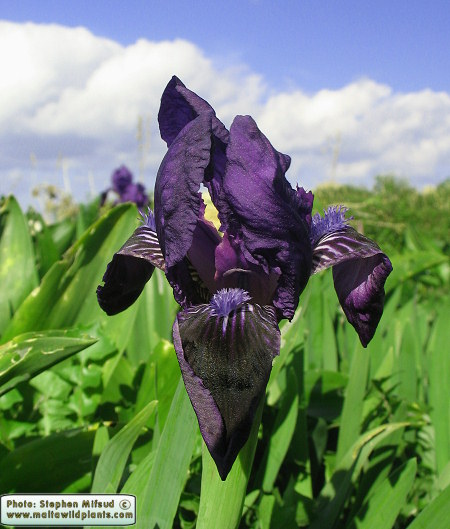
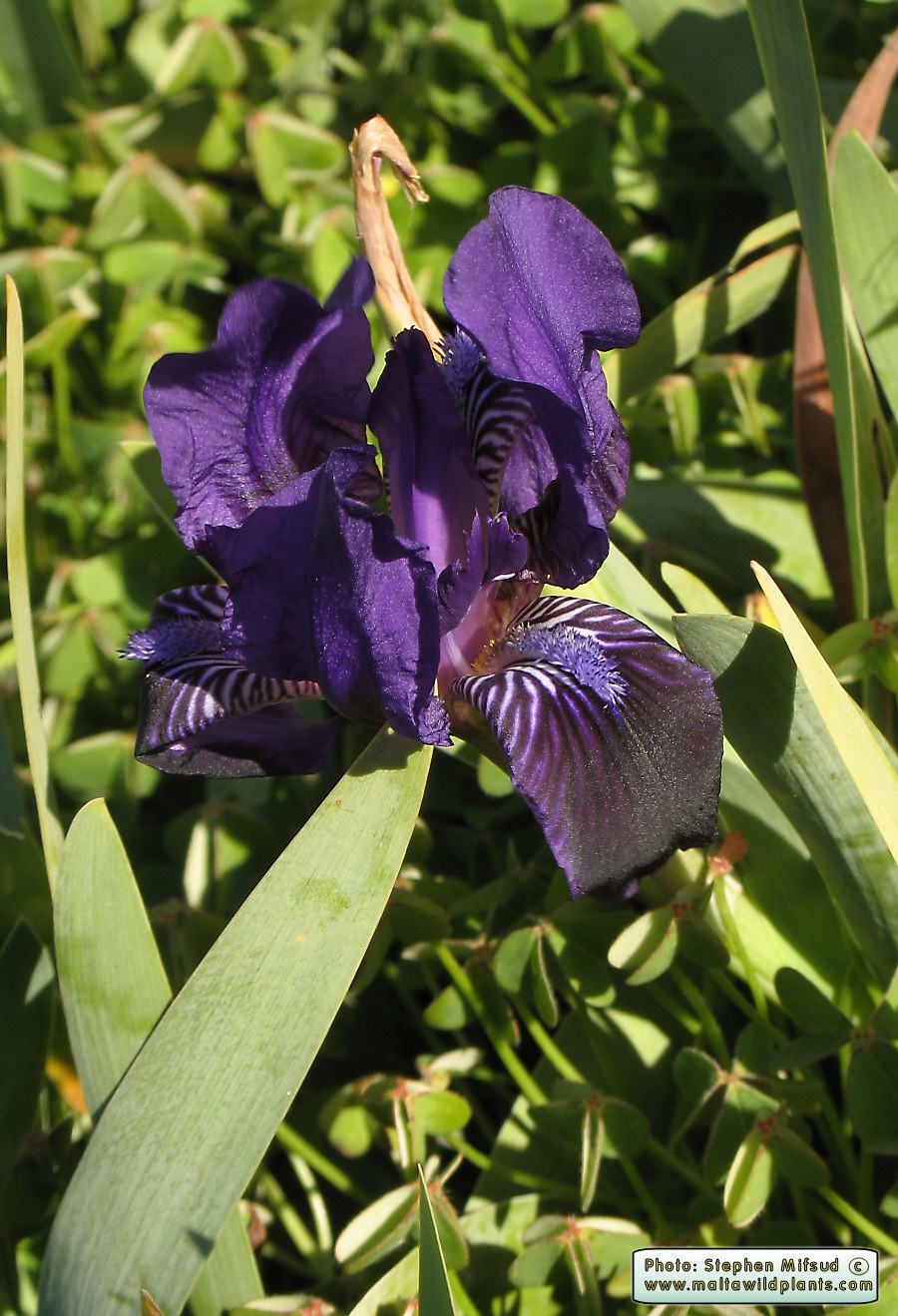
Photo of a typical deep violet flower. Flowers of I. pseudopumila are large, terminal, solitary and one per plant.
Photo of a flower which consists of 6 tepals, 3 upright and 3 falling down. The later are more decorated and have a central linear tuft of bristles referred to as the beard.
Photo of the beautiful flower of this Iris species. The erect tepals are the inner perianth segments (=petals) while the bearded, drooping down tepals are the outer perianth segments (=sepals). This photo is taken in a way that 2 bearded tepals are shown.
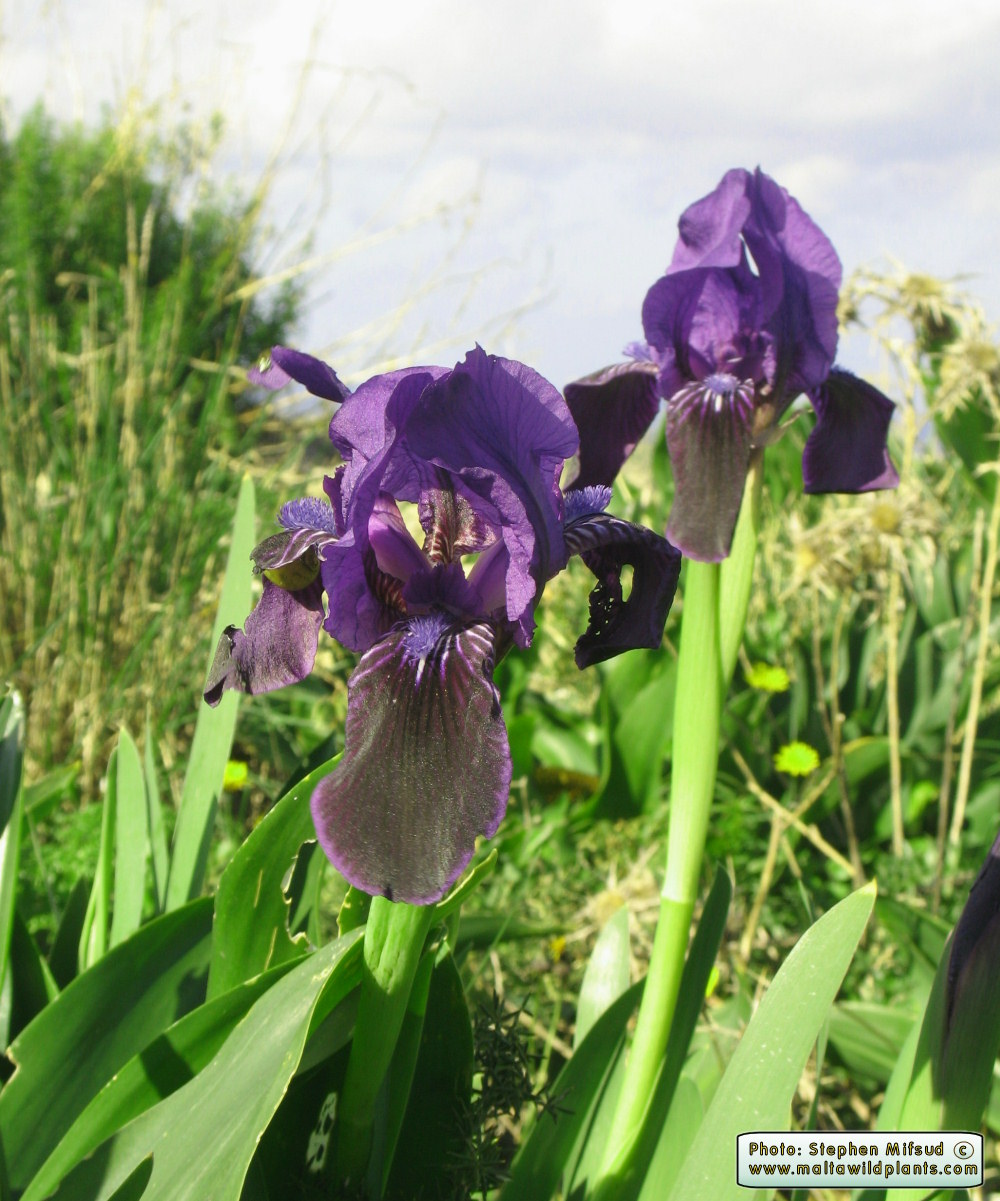
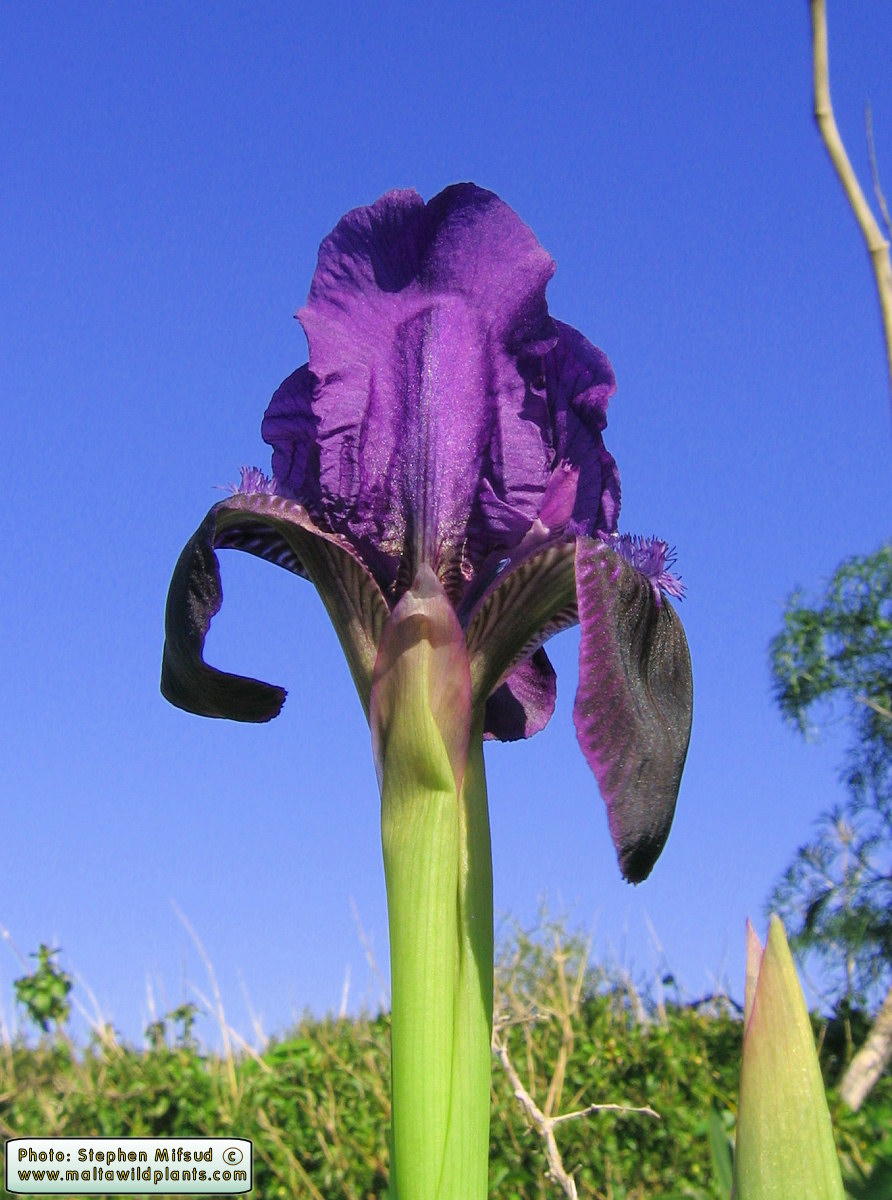
Photo of 2 flowers. These plants grows a communities as a patch over garigue. Each plant forms only one flower.
Iris pseudopumila (Southern Dwarf Iris) - CLICK TO ENLARGE PHOTO Iris pseudopumila (Southern Dwarf Iris) - CLICK TO ENLARGE PHOTO Iris pseudopumila (Southern Dwarf Iris) - CLICK TO ENLARGE PHOTO Iris pseudopumila (Southern Dwarf Iris) - CLICK TO ENLARGE PHOTO
Photo of a flower facing the bearded tepal. The erect tepals are often found pleated.
Another photo of the large and beautiful flower.
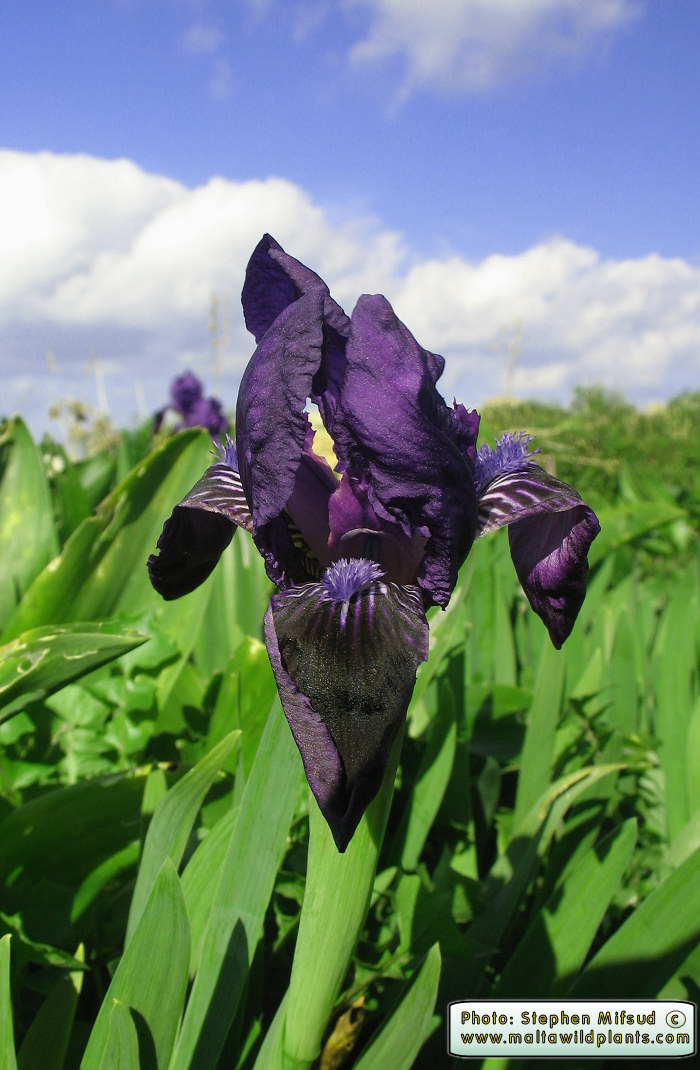
Photo of a flower against the sky background.
Side-view photo of another typical flower.
Iris pseudopumila (Southern Dwarf Iris) - CLICK TO ENLARGE PHOTO Iris pseudopumila (Southern Dwarf Iris) - CLICK TO ENLARGE PHOTO Iris pseudopumila (Southern Dwarf Iris) - CLICK TO ENLARGE PHOTO Iris pseudopumila (Southern Dwarf Iris) - CLICK TO ENLARGE PHOTO
Top view photo of flower. The central, small structures are the 3 petal-like styles.
Photo of a flower with the tepals slightly separated apart to show their detail and that of the central petaloid styles. Beneath one of the styles, one can notice the light-blue stamen.
Another photo of the beautiful flower. (2nd March 2006).
Photo of another specimen (14th Feb 2007).
Iris pseudopumila (Southern Dwarf Iris) - CLICK TO ENLARGE PHOTO Iris pseudopumila (Southern Dwarf Iris) - CLICK TO ENLARGE PHOTO Iris pseudopumila (Southern Dwarf Iris) - CLICK TO ENLARGE PHOTO Iris pseudopumila (Southern Dwarf Iris) - CLICK TO ENLARGE PHOTO
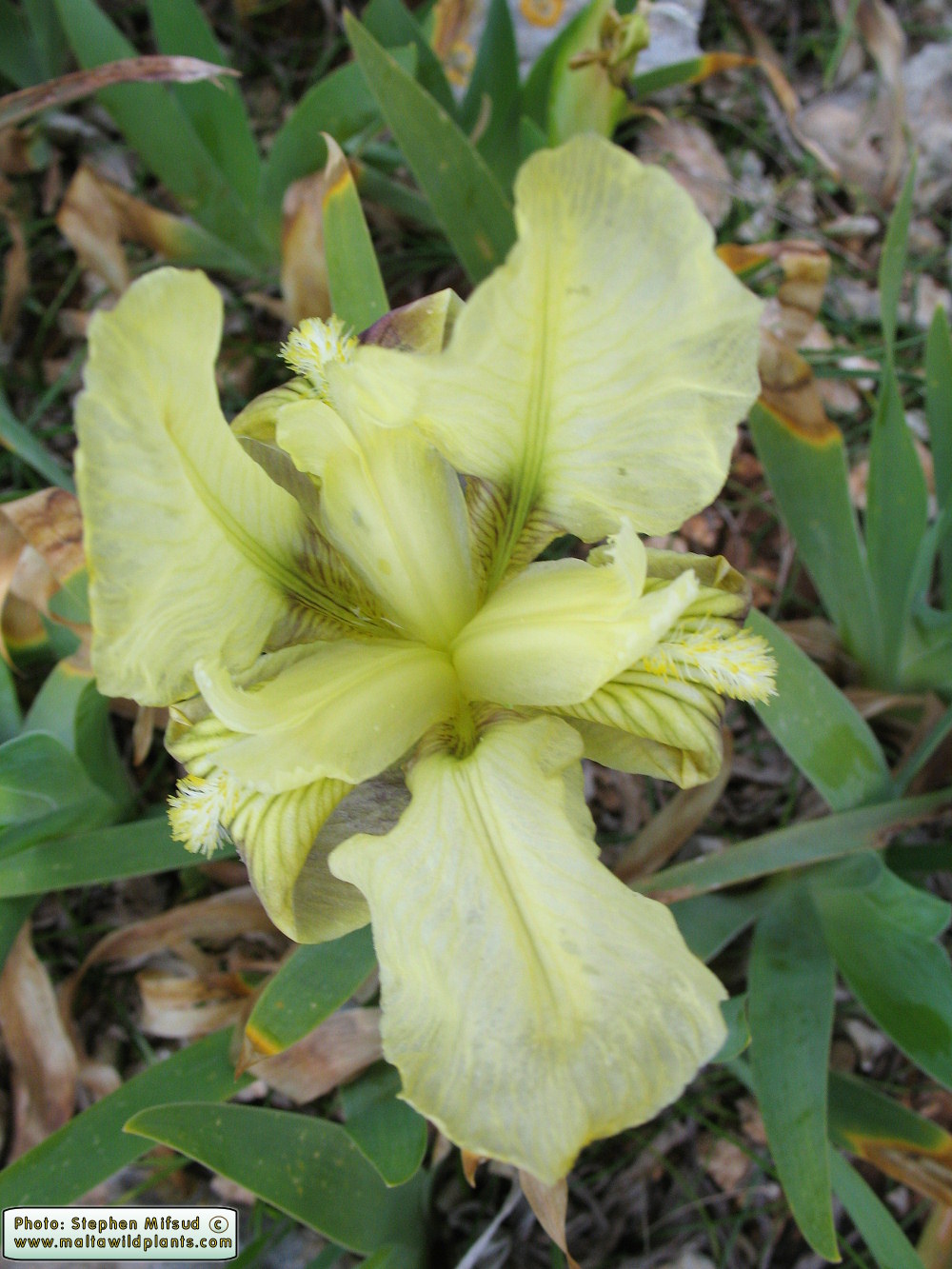
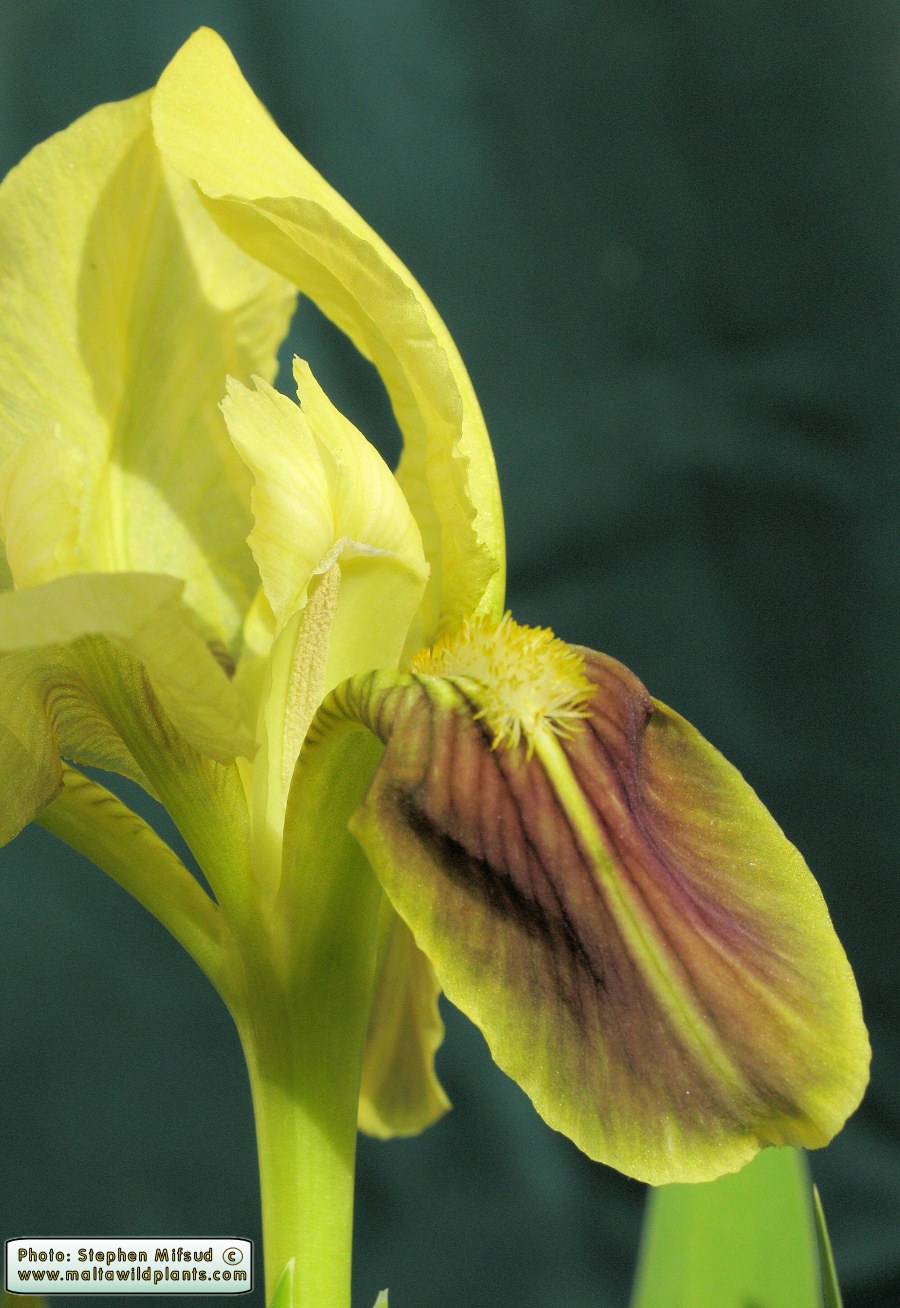
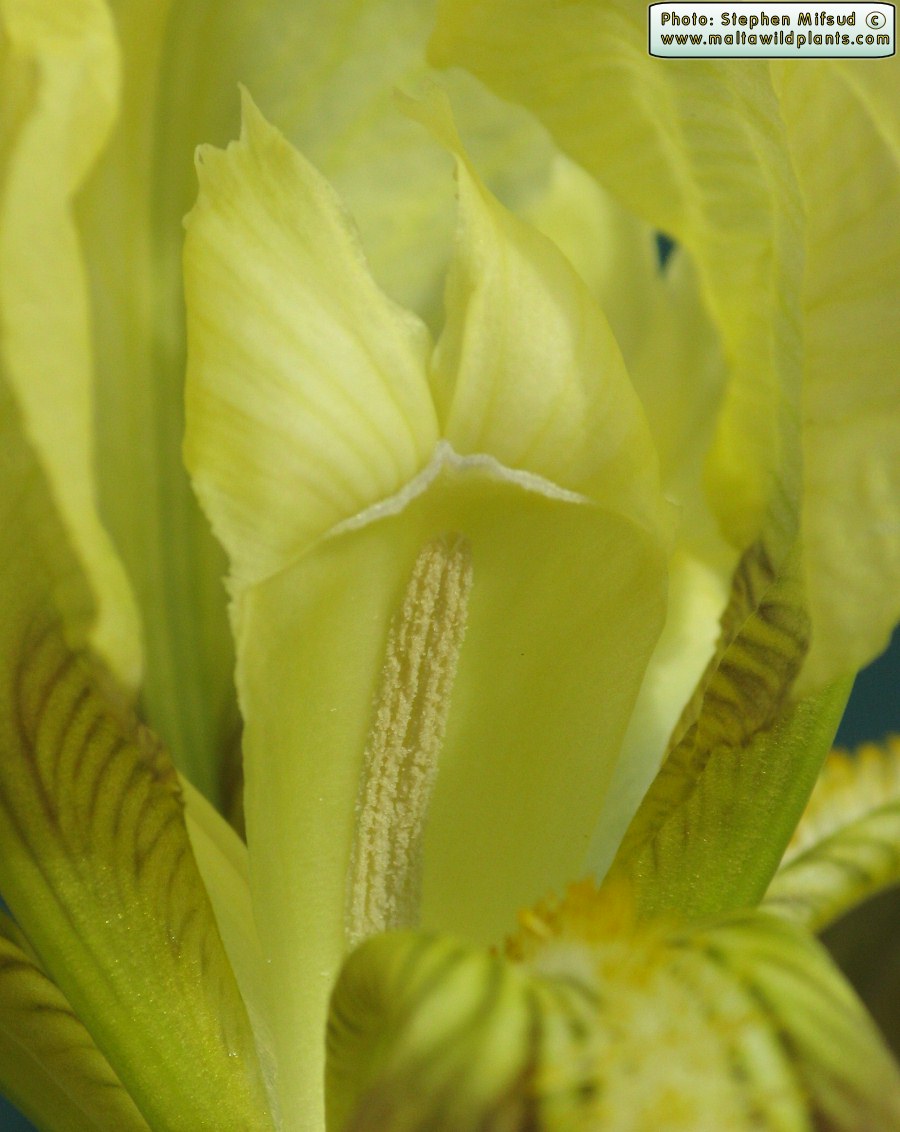
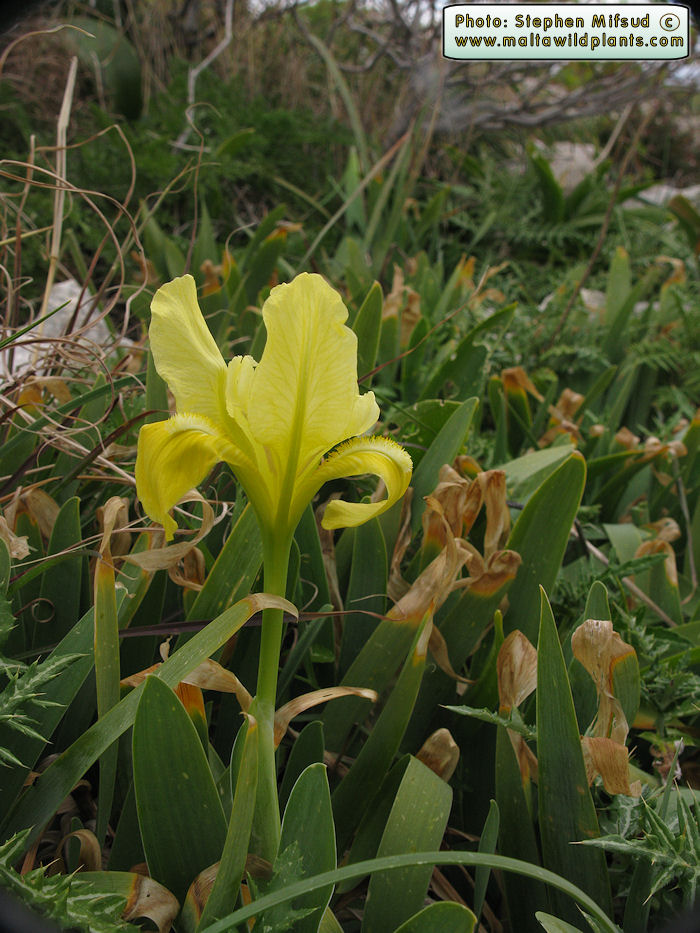
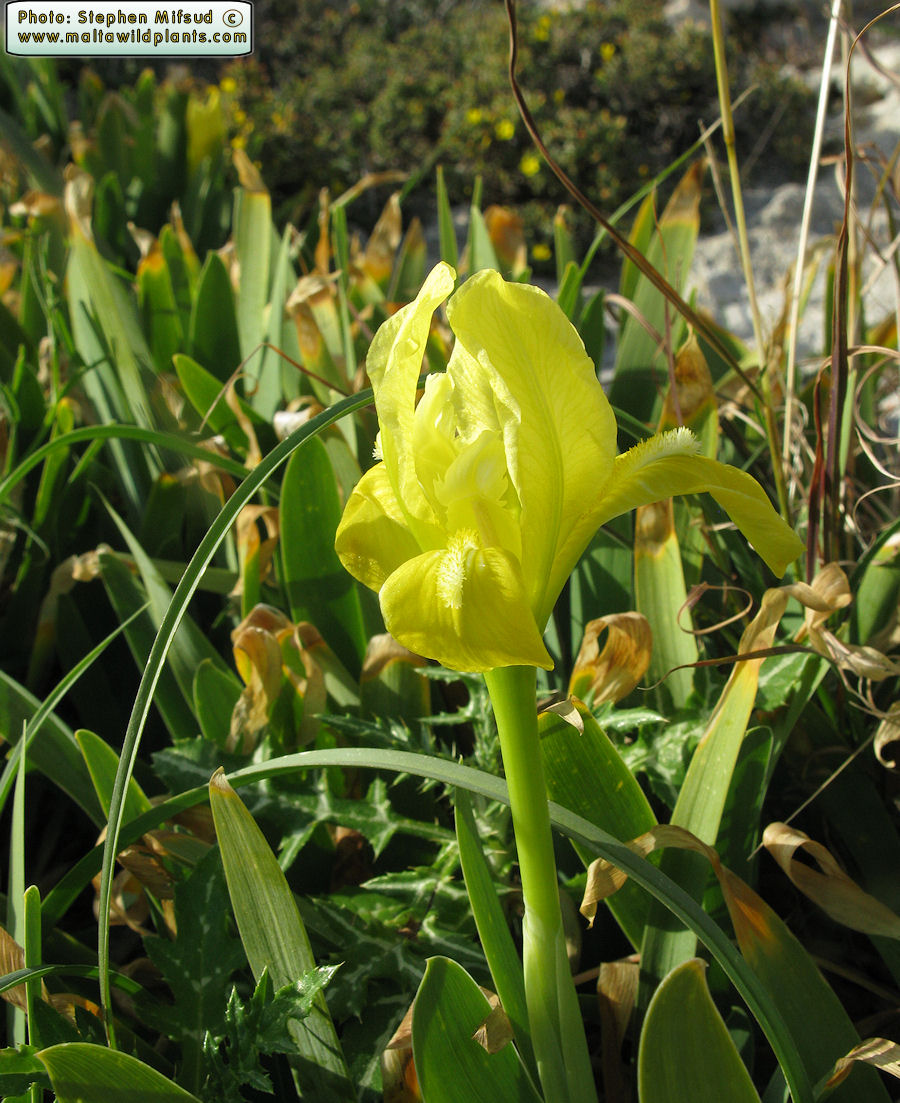
Iris pseudopumila is also found with pale yellow flowers. Usually one can find communities of the yellow or the violet flowers but seldom both together. The morphology of both flower forms is identical.
Top-view photo of the yellow-form flower showing the arrangement of the 6 tepals and the central stigma flaps.
Another top-view photo of flower with the outer tepals visible.
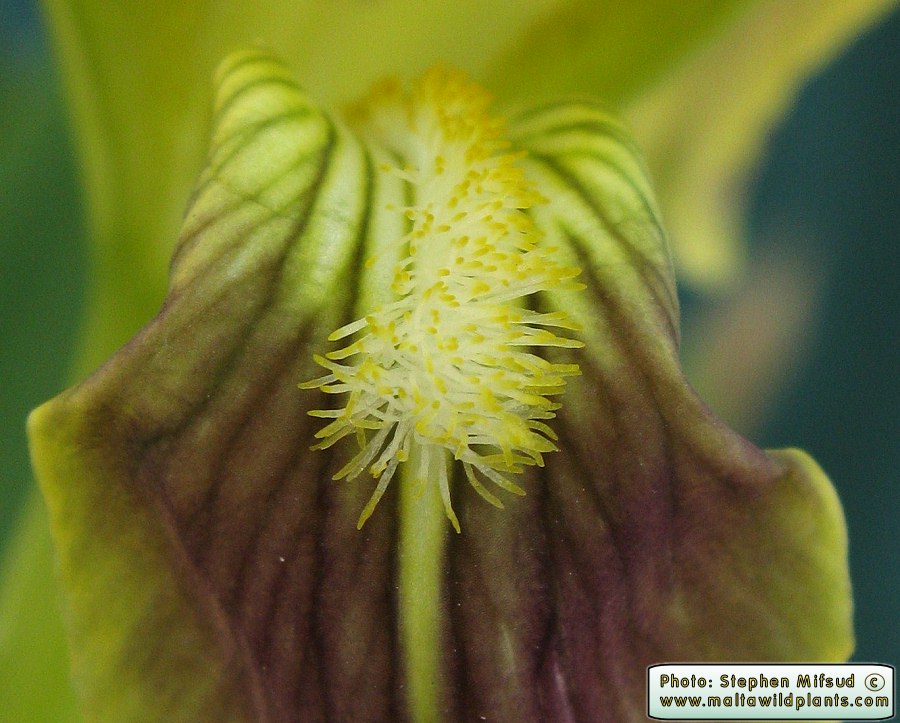
Close up photo of one of the outer tepals showing the detail of the dark veined patch and the yellow beard. The apical part of the petal-like style is clearly seen to have 2 triangular and lacerated lobes. Between this and the beard one can note a small part of the stamens.
Iris pseudopumila (Southern Dwarf Iris) - CLICK TO ENLARGE PHOTO Iris pseudopumila (Southern Dwarf Iris) - CLICK TO ENLARGE PHOTO Iris pseudopumila (Southern Dwarf Iris) - CLICK TO ENLARGE PHOTO Iris pseudopumila (Southern Dwarf Iris) - CLICK TO ENLARGE PHOTO
Photo of the yellow-form flower characterised by totally yellow erect tepals, and purple-brown and yellow 'down' tepals.
Photo of the bearded tepal of a yellow-form flower.
Photo of the pale yellow anther enclosed in the stigma-flap of same colour.
Close up photo of the beard of a yellow-form flower.
Iris pseudopumila (Southern Dwarf Iris) - CLICK TO ENLARGE PHOTO Iris pseudopumila (Southern Dwarf Iris) - CLICK TO ENLARGE PHOTO Iris pseudopumila (Southern Dwarf Iris) - CLICK TO ENLARGE PHOTO Iris pseudopumila (Southern Dwarf Iris) - CLICK TO ENLARGE PHOTO
Annotated photo of the flower labeling its various structural parts. Scanned images where not taken so as no flowers of this rare plant are picked and destroyed. Hence annotations are made in photos of flower in situ. This flower should never be picked up.
Annotated photo of the reproductive organs. The stigma-style structure is one of the most elaborated amongst flowers.Scanned images where not taken so as no flowers of this rare plant are picked and destroyed. Hence annotations are made in photos of flower in situ. This flower should never be picked up.
Close up photo of the stamens. They are found just beneath the stigma-flap (lilac-purple structure) and over the beard of the tepal. The beard seems to indicate the pollinator its way in!
Close up photo of the pair of stamen. Their anthers are light blue, elongated and open from one side longitudinally so as to expose its pollen granules. The anthers are about 15mm long.
Iris pseudopumila (Southern Dwarf Iris) - CLICK TO ENLARGE PHOTO Iris pseudopumila (Southern Dwarf Iris) - CLICK TO ENLARGE PHOTO Iris pseudopumila (Southern Dwarf Iris) - CLICK TO ENLARGE PHOTO Iris pseudopumila (Southern Dwarf Iris) - CLICK TO ENLARGE PHOTO
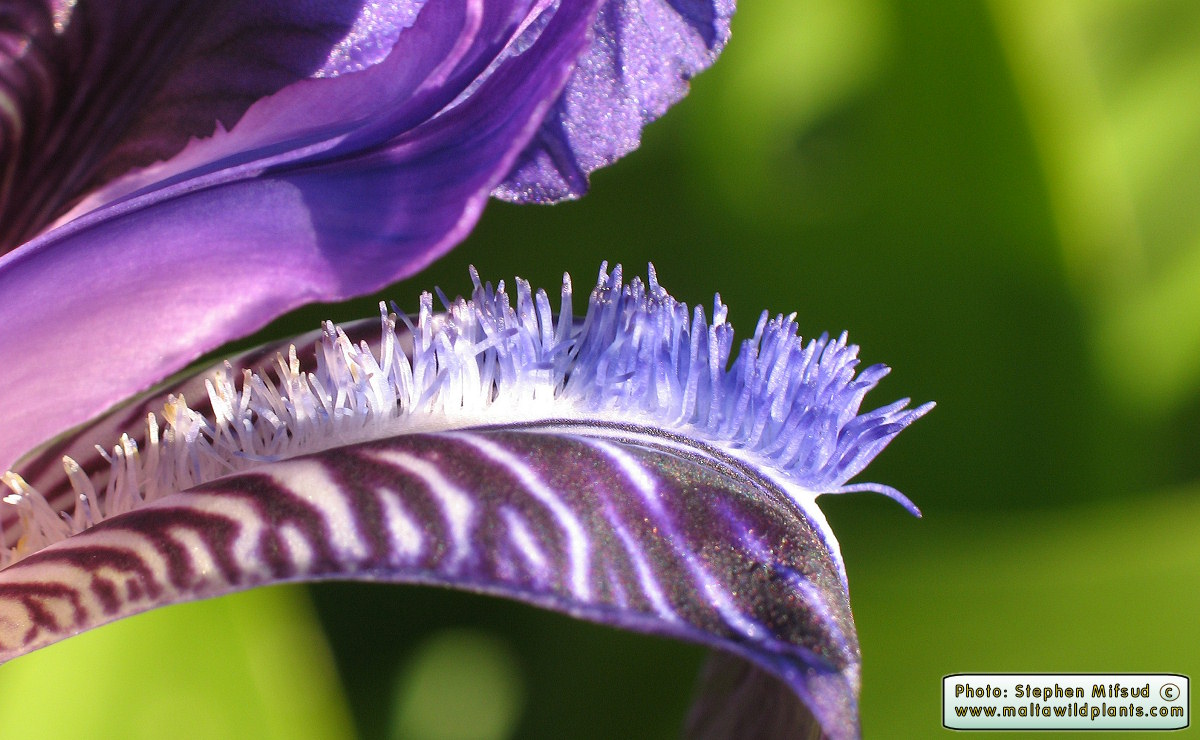
Photo of the outer tepal showing the detail of its central bristles and its colour.
Photo of the outer tepal. The inner part is decorated with a zebra-like pattern which fades gradually along the tip. The central tuft of bristles is referred to as a 'beard'.
Photo of the outer perianth segment showing the elegant patterns and colourful beard.Close up of the bristles is also included in the photo.
Close up photo of the bristles (side view). Bristles at the outer part are almost completely bluish-violet. Gradually, they start getting a whiter base towards the inner part of the tepal, and nearly becoming white at the other end.
Iris pseudopumila (Southern Dwarf Iris) - CLICK TO ENLARGE PHOTO Iris pseudopumila (Southern Dwarf Iris) - CLICK TO ENLARGE PHOTO Iris pseudopumila (Southern Dwarf Iris) - CLICK TO ENLARGE PHOTO Iris pseudopumila (Southern Dwarf Iris) - CLICK TO ENLARGE PHOTO
Close up photo of the bristles indicates that many have a greyish/black tip.
Lateral-view photo of the bearded tepal.
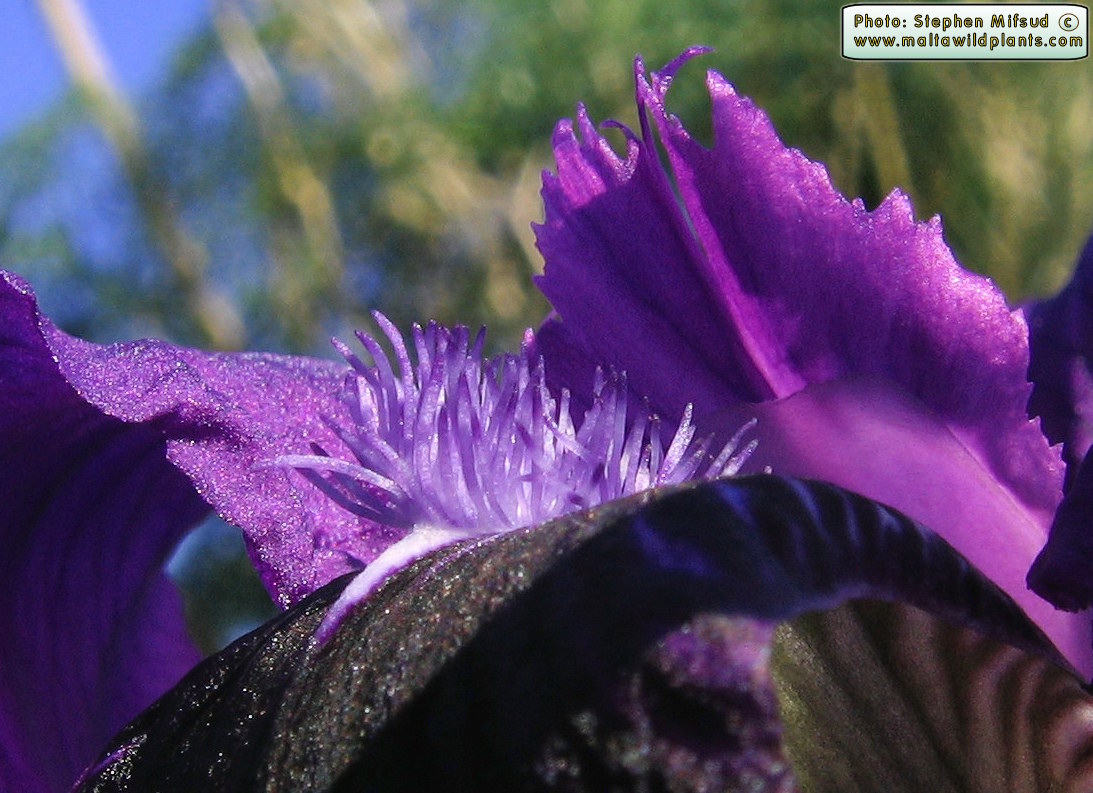
Photo of the bearded tepal which is slightly pulled down to show the petaloid style and the bluish stamen beneath it. One can also admire the beautiful zebra-like patterns of the tepal.
Another close up photo of the beard also showing at the back detail of the upper part of the petal-like style. The margin is lacerated.
Iris pseudopumila (Southern Dwarf Iris) - CLICK TO ENLARGE PHOTO Iris pseudopumila (Southern Dwarf Iris) - CLICK TO ENLARGE PHOTO Iris pseudopumila (Southern Dwarf Iris) - CLICK TO ENLARGE PHOTO Iris pseudopumila (Southern Dwarf Iris) - CLICK TO ENLARGE PHOTO
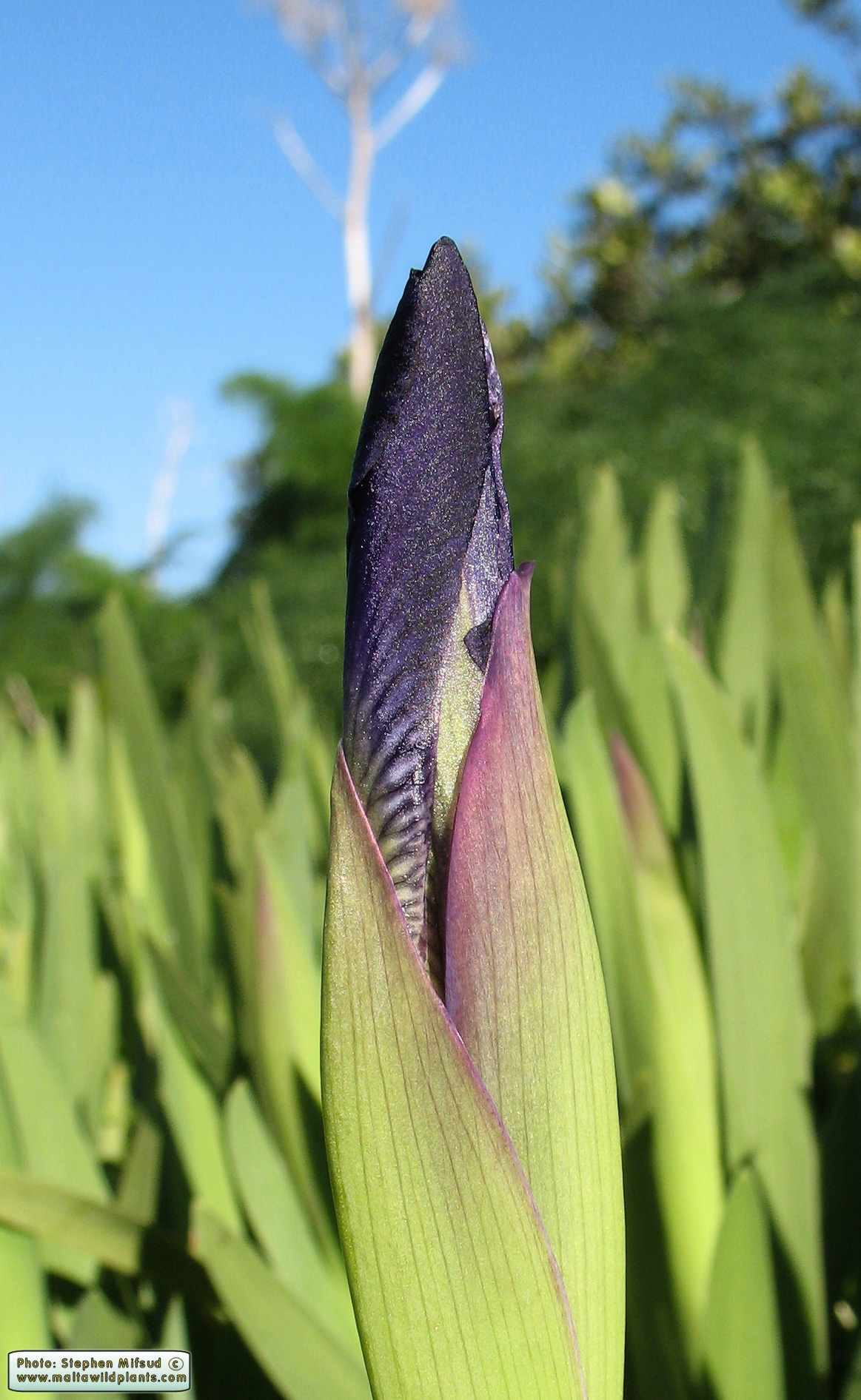
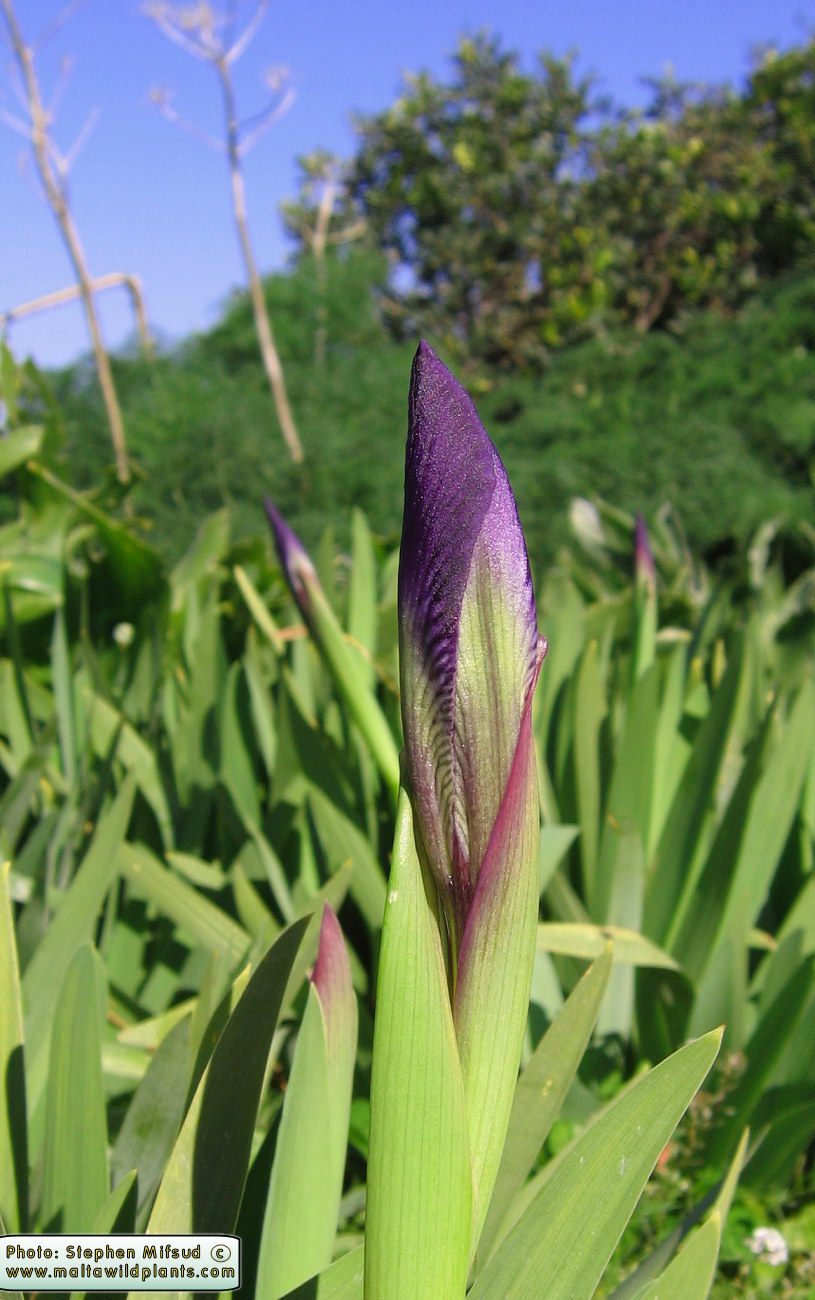
Sharp photo of the violet-form bud in situ.
Photo of a bud emerging through the leaf-like bracts known as scapes.
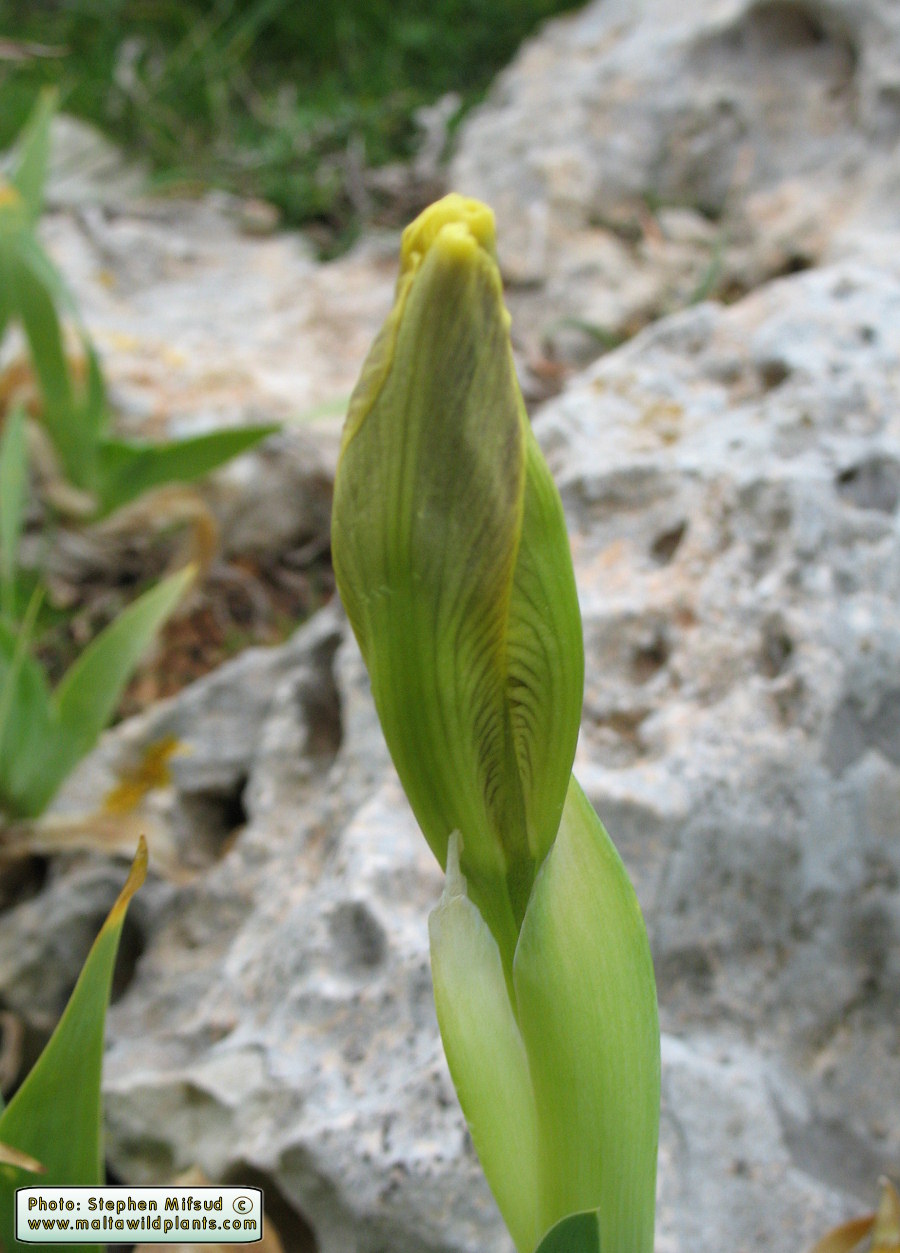
Photo of the bud of a yellow-form flower.
Photo of the Common Earwig (Forficula decipiens) inside the flower. Is it just an inhabitant of the flower or can it participate in pollination?
Iris pseudopumila (Southern Dwarf Iris) - CLICK TO ENLARGE PHOTO Iris pseudopumila (Southern Dwarf Iris) - CLICK TO ENLARGE PHOTO Iris pseudopumila (Southern Dwarf Iris) - CLICK TO ENLARGE PHOTO Iris pseudopumila (Southern Dwarf Iris) - CLICK TO ENLARGE PHOTO
Photo showing the erect, ensiform (sword-shaped) leaves of this monocotyledon. They are arranged as a V-shape with the flowering stalk growing out from the middle. Interestingly, the leaves are evergreen.
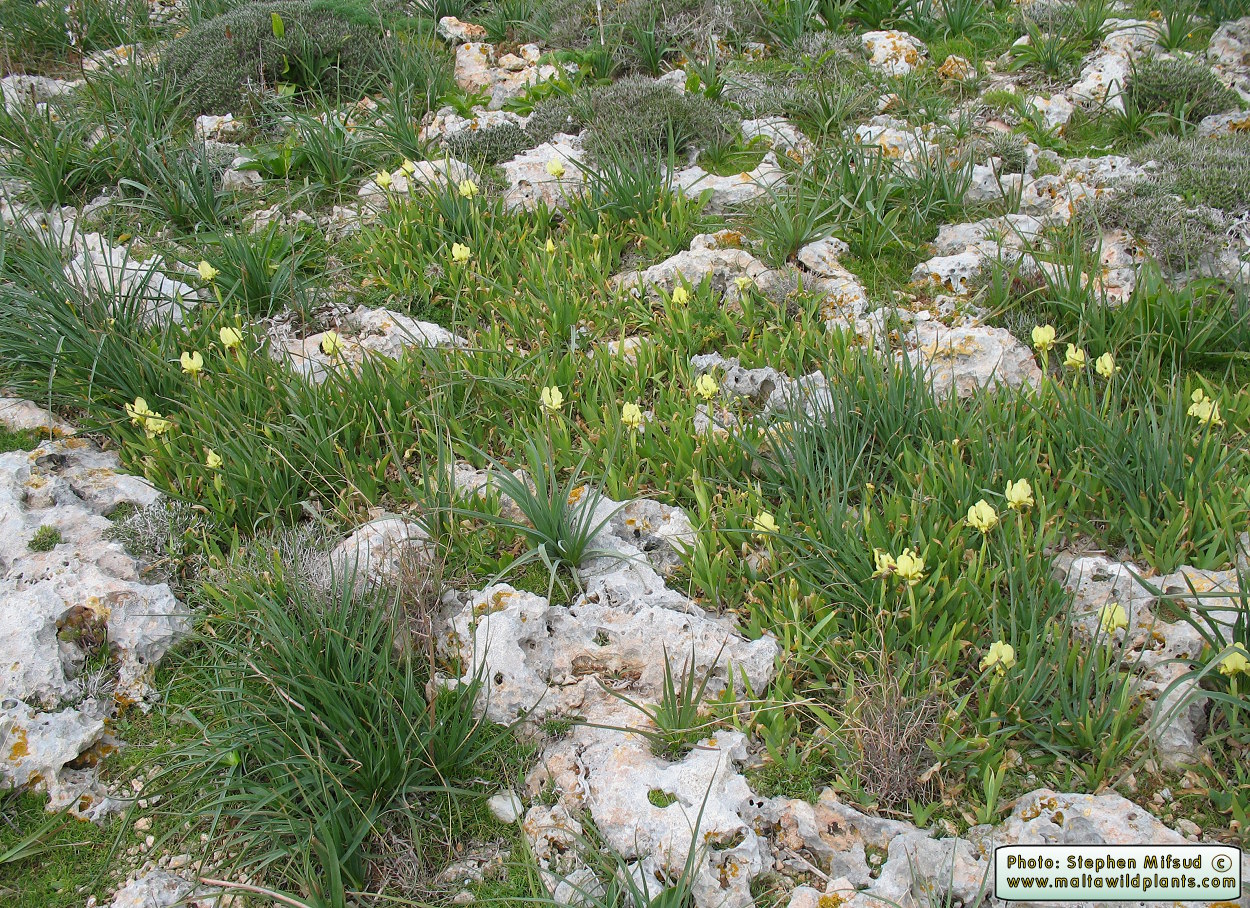
The habitat of this plant is garigue or steppe. Found as isolated patches over few garigues in Malta.
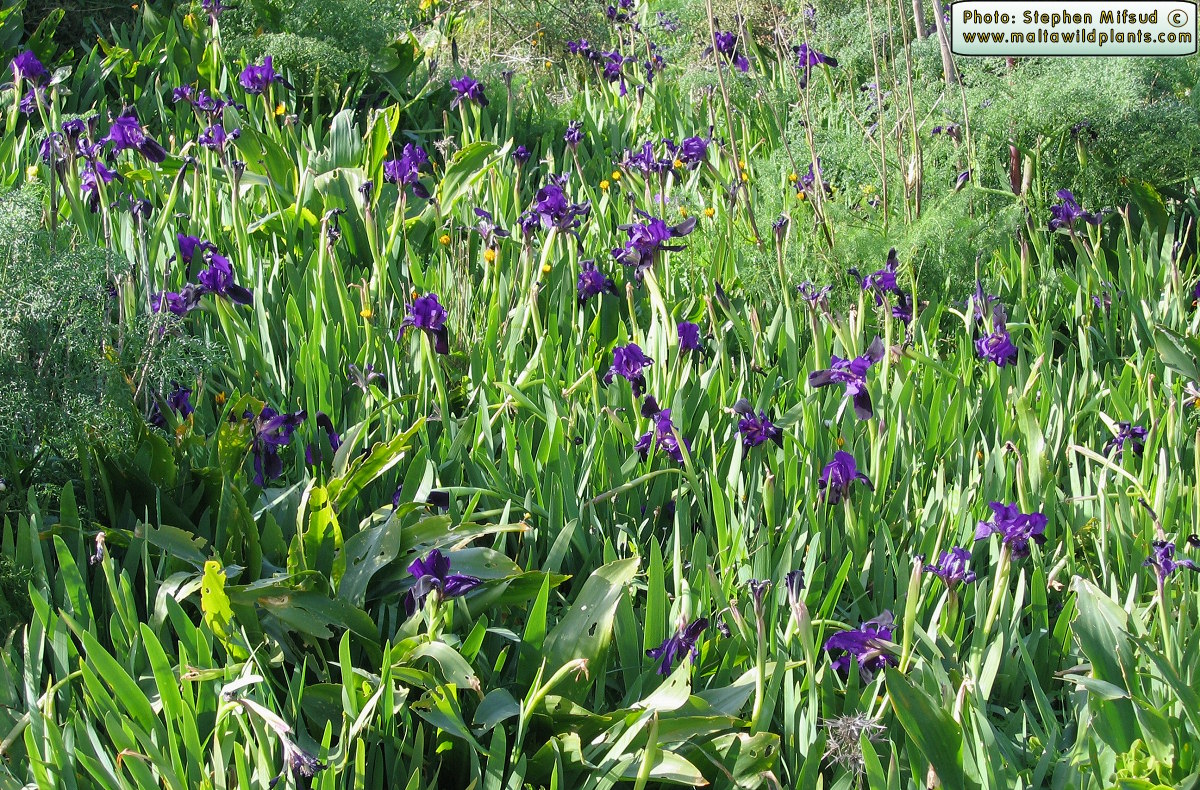
Photo of a plant in situ.
Photo of some plants and their habitat. Numerous plants are found near each other as an isolated population.
Iris pseudopumila (Southern Dwarf Iris) - CLICK TO ENLARGE PHOTO      
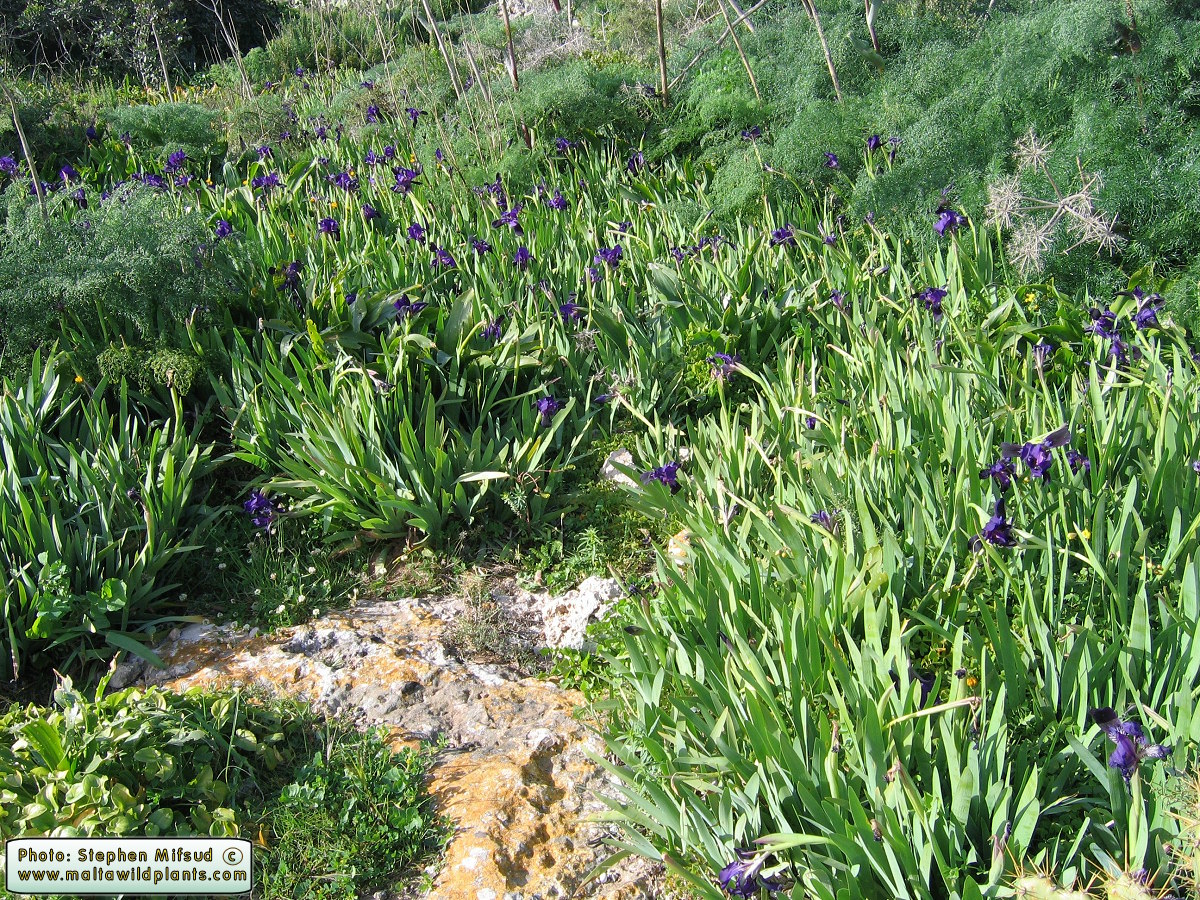
Photo of a patch of the purple-flower plants over rocky land.
-
-
-

Further Information and Links

More photos from Callphotos website Basic notes about the Irises
LN257.2003 Environment Protection Act  
Search for Iris pseudopumila on the FORUM of MaltaWildPlants.com


Buy from and support MaltaWildPlants.com

Buy Seeds from Maltawildplants.com Buy samples of seeds of certain wild plants for your studies, trials, research, etc. Not all species' seeds can be exported (depending on Maltese regulations), and availability depends on season of species. So, before any payment, you are kindly asked to fill in the online quotation/order form by which I can contact you back for availability and charges. Buy Seeds from Maltawildplants.com   Online Quotation

Buy Seeds from Maltawildplants.com   Online Payment
Buy Documents from Maltawildplants.com Buy documents related to Maltese Wild Plants such as the list of references, full profile, or other docs you request. Buy Documents from Maltawildplants.com   Online Payment
Buy Images  from Maltawildplants.com Buy any of my own copyright images found in this large collection of Maltese flora. You should first select the image you want to buy and input its corresponding code (found beneath each individual photo) in the online ordering form. Buy Seeds from Maltawildplants.com   Online Payment
Buy Seeds from Maltawildplants.com Kindly donate any sum of money (from 2USD / 2Euro) to help us covering some expenses needed to maintain Maltawildplants.com. Please bear in mind how much hard work such a large and up-to-date website needs to arrive directly to you home, office or library. Your kind donations are both greatly appreciated and recorded for future reference. Donors asking help will have first que preference for assistance and special attention. Buy Seeds from Maltawildplants.com   Online Donation


Submit More Information

Use the form below to submit more information about this plant or a related species. If the data is taken from a book, journal, website, etc, please provide the corresponding reference / website address as indicated in the form. If it is your own observation, then your name will be cited. Your Email address will never be displayed online, it is just for internal communication.


For plant species that are marked as rare, you can also report other locations in Malta where you have seen this species.

Finally you can report any mistakes or errors found on the plant profile for necessary corrections. This will help to improve the website's acuracy.


To have more details about each particular field, just move your mouse on it and wait for the help message to pop up

* = required fields.
Plant Species:  *
Your name:   *
Your Email:   *
Fill any of the following 3 sections below (A, B or/and C) and send the form. - Thank you.
 
A:  Additional Information about this plant species
Own observations:
Info from published material (books, jounals, website):

Reference of published material:

 
B:   Where have you seen this plant on the Maltese Islands?
Locations in Malta or Gozo where you have encountered this plant.
Mostly applies for rare plants.


1:        2:   
3:       4:   
5:       6:   

Try to be as concise as possible. Examples: Dingli Cliffs (near chapel), Wied Incita (Zebbug side), Triq il-Kbira (Qormi), Barriera ta\' Abdul (Xlendi), Fields near Salib tal-gholja (Siggiewi). GPS bearings are also welcomed!
 
C:  Corrections for mistakes and errors in this plant profile.
Section of this plant Profile page where you found an error (select one)

What is the error/mistake
What should be its correction


All material and data on this webpage is under the copyright of the author of this site - Stephen Mifsud / www.MaltaWildPlants.com / Malta. (2002-2008)
This research project about the flora of Malta is sponsored by:
Middlesea Insurance p.l.c. A Fund established to help in the amelioration and enhancement of the environment in Malta and to take initiatives that enhance awareness on environmental issues amongst the public Empty space for sponsor Empty space for sponsor Benefit companies get by sponsoring this project