| |
|
 | |
| MaltaWildPlants.com by Stephen Mifsud |
|
| |
|
|
 |  |  |  |
| External Links: |
|
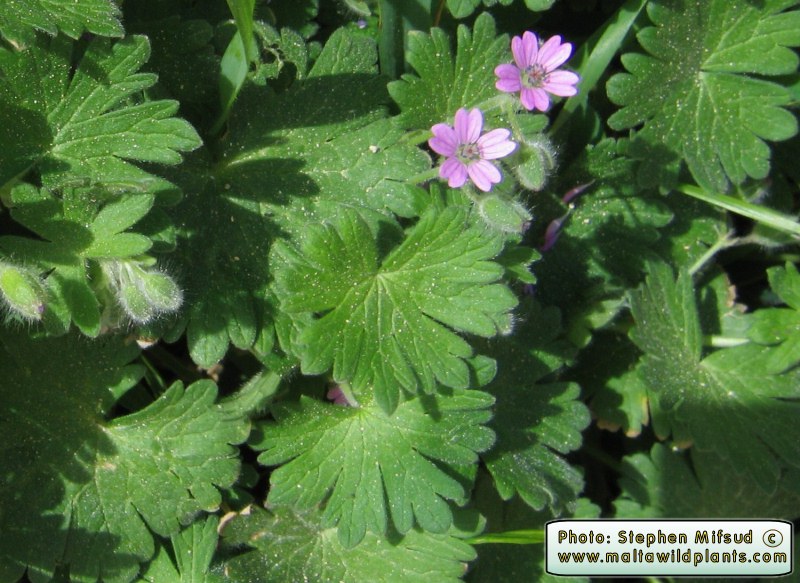
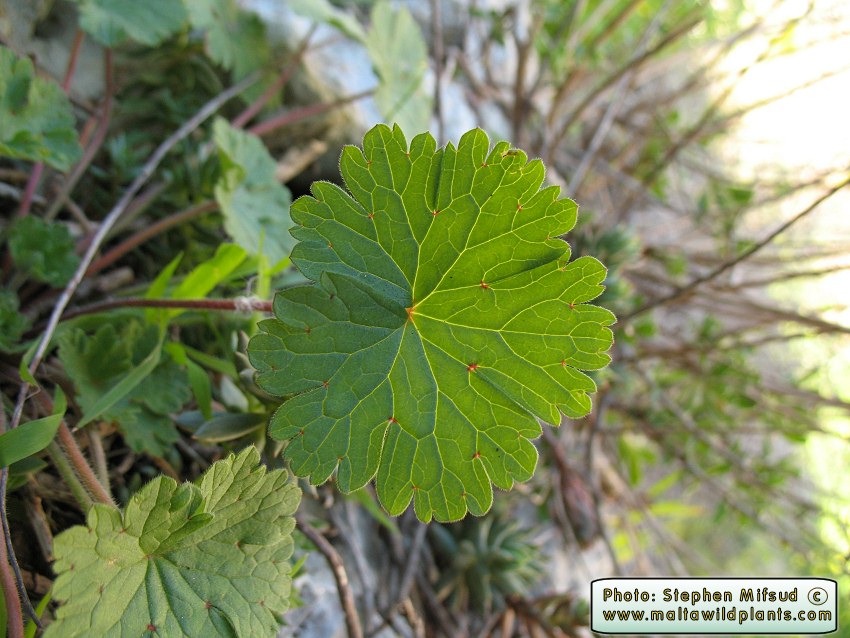
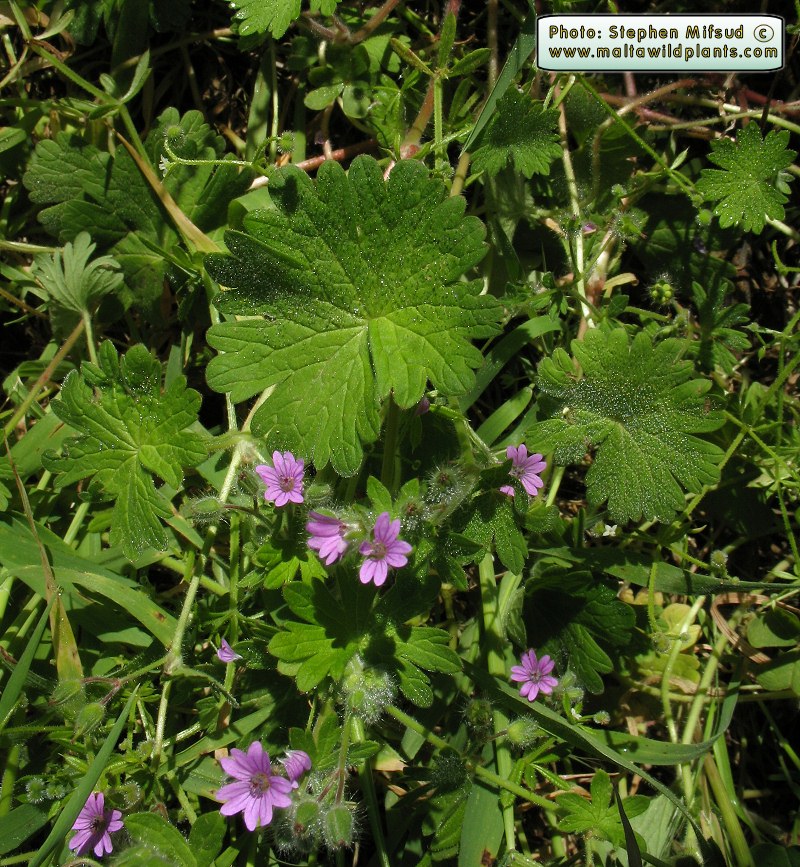
Geranium molle (Dove's foot Crane's Bill) |
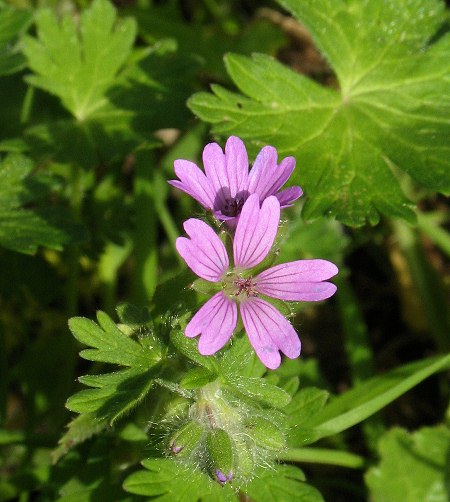
Geranium molle (GERANIACEAE.)
Images for this profile are taken from the Maltese Islands after year 2000. |
|
| Nomenclature and Basic Information |
Species name : |
Geranium molleL.
Published in Sp. Pl. : 682 (1753) |
Synonyms :
(basionym or principal syn.) |
|
Plant Family : |
Geraniaceae
Juss. (The Geranium Family)
14 species from the Geraniaceae family are recorded from the Maltese Islands. | English name(s) : | Dove's foot Crane's Bill, Soft Crane's Bill, Woodland Geranium |
Maltese name(s) : |
Ġeranju tal-weraq artab, Ġeranju Komuni |
Status for Malta : |
Indigenous. Present on the Maltese islands before man |
Frequency : |
Very Common Common Frequent Scarce Rare Very rare Extinct |
Growth form : |
Raunkiaer lifeform [info]: THEROPHYTE ( annual plants, herbaceous )
Germination [info]: Dicotyledon |
Legal Protection : |
Not legally protected till the last update of this website (2/Mar/2022) |
Red List (1989) : |
Not listed in the Red Data Book of the Maltese Islands |
Flowering Time : |
January – May |
Colour of Flowers: |
Pink or Violet |
Toxicity: |
Not particularly toxic |
Name Derivation : |
Geranium: From the Greek 'geranos' = a crane, referring to the slender long-beaked fruit. (Greek origin )
molle: 1 = Alluding to the soft hairs on most parts of the plant, especially the leaves.
|
Planting in rural areas : |
Can be planted in rural areas according to ERA Guidelines |
|
|
Description, Habitat and Distribution | |
Habitat in Europe: |
 Data will be available in the next update of this website.
 | |
Preferred habitat in Malta: |
Rocky slopes or valley sides, woodland and also reported in roadsides. | |
Botanical Description: |
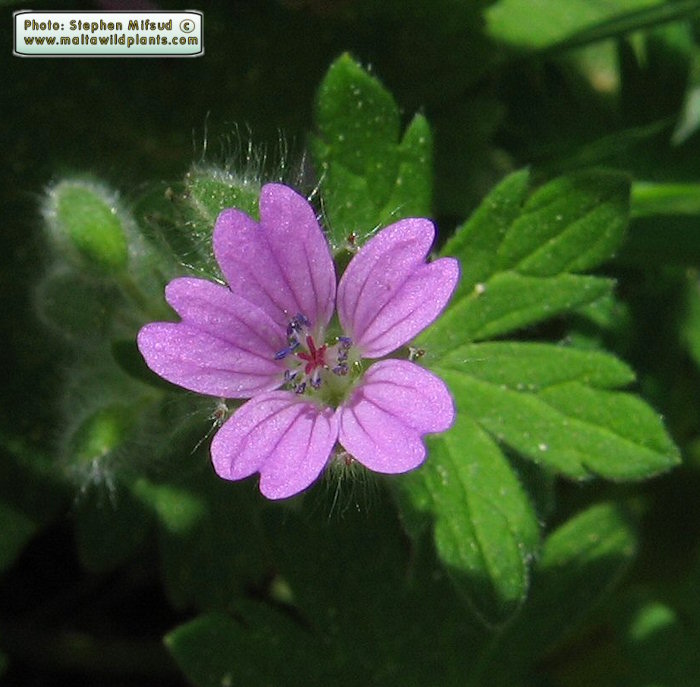
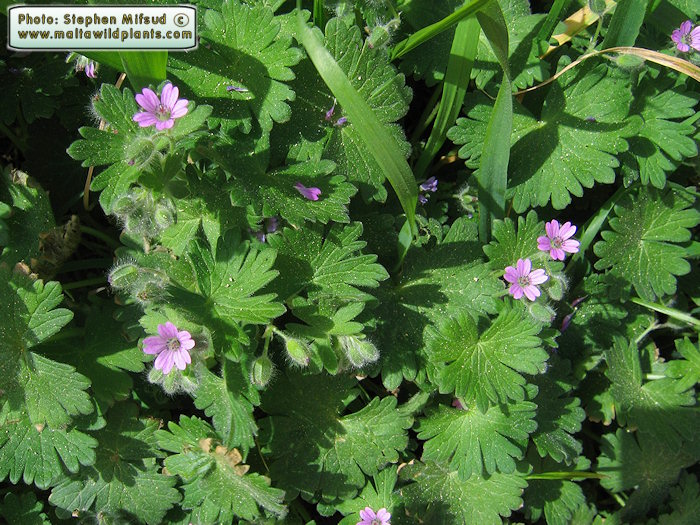
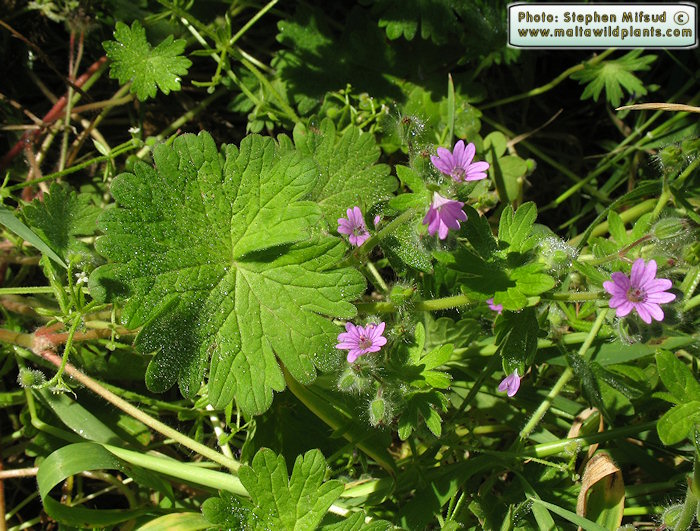
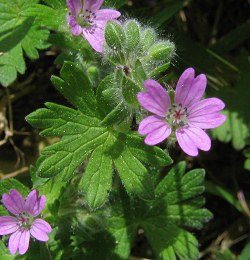
Densely pubescent, usually greyish-green annual, perhaps rarely perennial; stems 10-40 cm, decumbent or ascending, branched from the base, with long, soft white hairs and shorter, often glandular hairs. Basal leaves 1.5-4 cm wide, divided for 70 % of the radius into 5-7 obovate-cuneate, shortly 3-fid lobes; uppermost leaves alternate, sessile. Lowest leaves of inflorescence considerably exceeding subtended peduncle, and with petiole considerably longer than lamina. Sepals 4-5 mm, shortly mucronate; petals 3-7 mm, deeply emarginate, pinkish-purple. Filaments glabrous. Mericarps glabrous, usually with transverse ridges. | |
Chromosome number: |
2n=26 | |
Distributional range: |
Europe, except the extreme north. |
Distributional map in Europe
and the Mediterranean region (2018): |
|
Occurrences in Europe.
(from Flora Europaea pre year 1993): |
All except Iceland, Russia and former USSR, Svalbard archipelago, but only as a naturalized alien in Faroe Islands |
Occurrences in Europe and the Mediterranean region.
(from Euro+Med Checklist, 2019)
Country codes
|
AE(G) Ag Al Ar Au(A) Az(F G J M T) Be(L) Bl Br Bu By Ca(C F G H L T) Co Cr Cs Ct Cy Da Eg Es Fe Ga Ge Gg Gr Hb(E) He Ho Hs(S) Hu Ir It La Le Li Lt Lu Ma Md(M P) Mo No Po Rf(C CS E NW S) Rm Sa Si(M S) Sk Sl Sn Sr Su Tn Tu(A E) Uk(K) [nFa] |
|
| | |







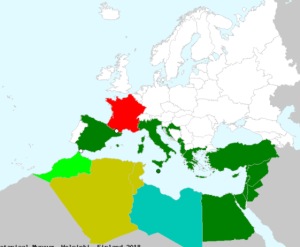 Atlas Flora Europaea
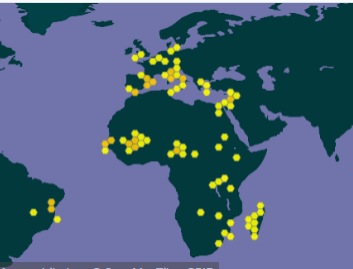 GBIF Distribution map