| |
|
 | |
| MaltaWildPlants.com by Stephen Mifsud |
|
| |
|
|
 |  |  |  |
| External Links: |
|
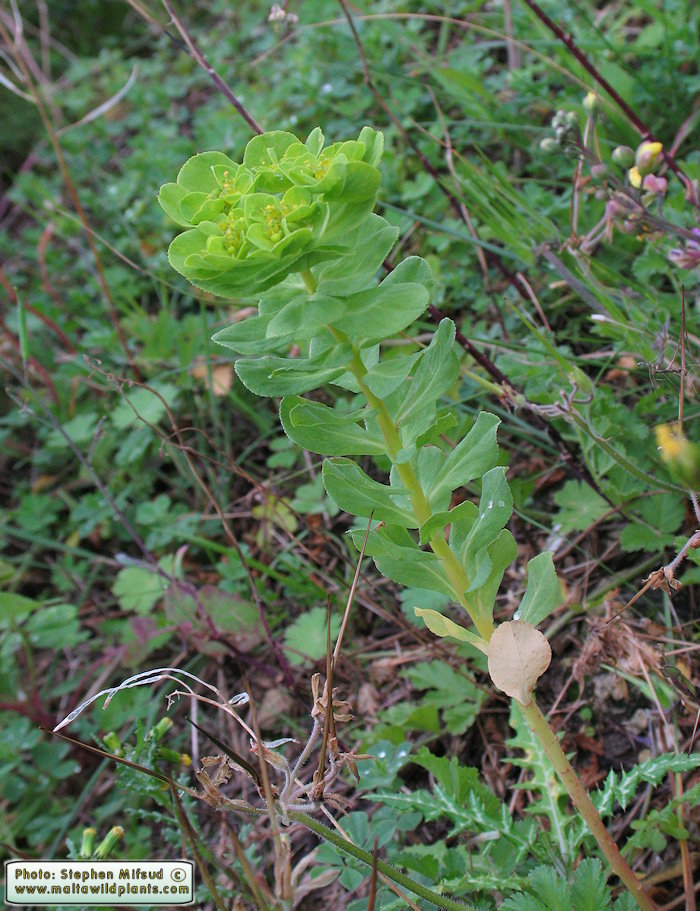
Euphorbia helioscopia (Sun Spurge) |

Euphorbia helioscopia (EUPHORBIACEAE.)
Images for this profile are taken from the Maltese Islands after year 2000. |
|
| Nomenclature and Basic Information |
Species name : |
Euphorbia helioscopiaL.
Published in Sp. Pl. : 459 (1753) |
Synonyms :
(basionym or principal syn.) |
|
Plant Family : |
Euphorbiaceae
Juss. (The Spurge Family)
30 species from the Euphorbiaceae family are recorded from the Maltese Islands. | English name(s) : | Sun Spurge, Sun Euphorbia, Madwoman's Milk |
Maltese name(s) : |
Tengħud raddiena |
Status for Malta : |
Indigenous. Present on the Maltese islands before man |
Frequency : |
Very Common Common Frequent Scarce Rare Very rare Extinct |
Growth form : |
Raunkiaer lifeform [info]: THEROPHYTE ( annual plants, herbaceous )
Germination [info]: Dicotyledon |
Legal Protection : |
Not legally protected till the last update of this website (2/Mar/2022) |
Red List (1989) : |
Not listed in the Red Data Book of the Maltese Islands |
Flowering Time : |
November – May |
Colour of Flowers: |
Inconspicuous or Green |
Toxicity: |
May cause allergic reactions or irritation in contact with the skin or mucous membranes |
Name Derivation : |
Euphorbia: Named for Euphorbus, a Greek physician to Juba II - King of Mauretania of Numibia (52-50 BC - 23 AD), who might have used a certain plant in allusion to his swollen belly, possibly the plant Euphorbia resinifera. (Further info: [link]). Euphorbus can have also been derived from 'Eu-' = good or true and '-phorbe' = pasture or fodder, thus giving the meaning well-fed or provides a fat-belly from consumption. (Greek origin )
helioscopia: From the Greek 'helios' = sun, and 'scopia' = towards to, referring to the habit of the flower heads turning towards the sun. (Greek origin )
|
Planting in rural areas : |
Can be planted in rural areas according to ERA Guidelines |
|
|
Description, Habitat and Distribution | |
Habitat in Europe: |
Disturbed ground. | |
Preferred habitat in Malta: |
In waste and cultivated places, sometimes cosmopolitan. | |
Botanical Description: |
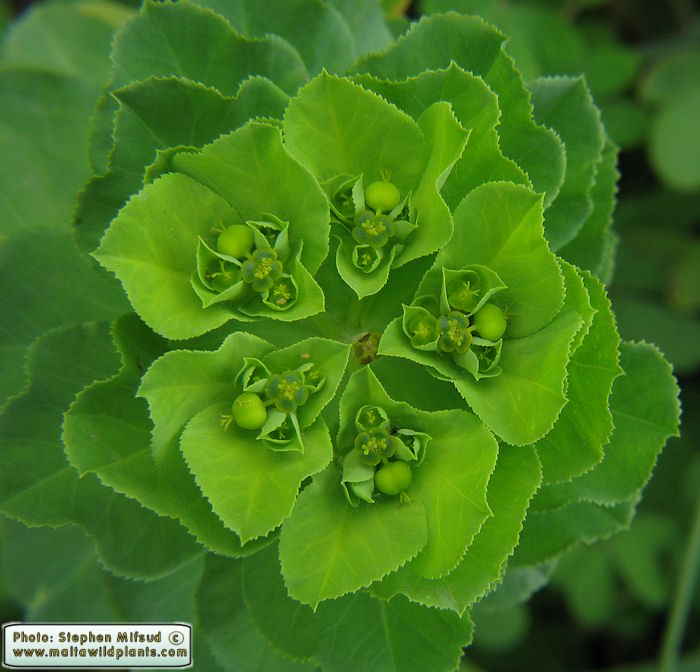
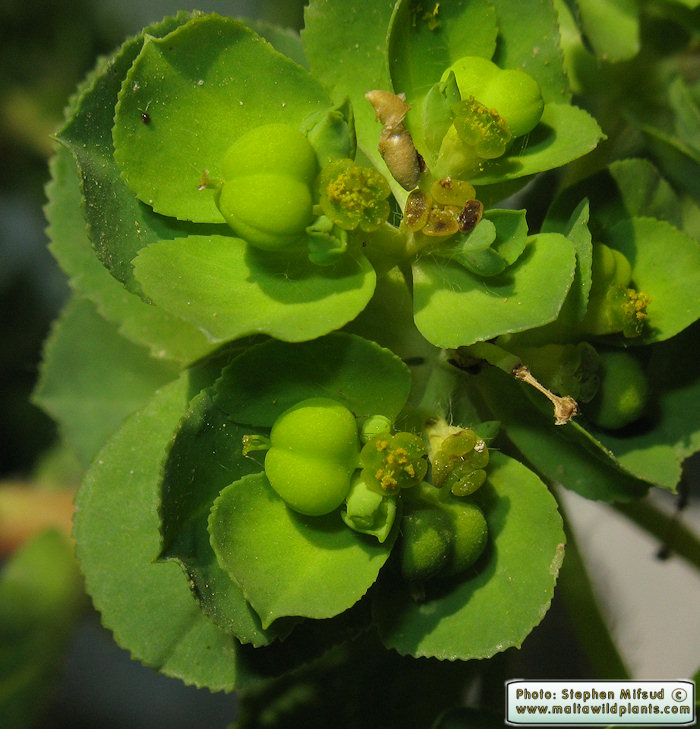
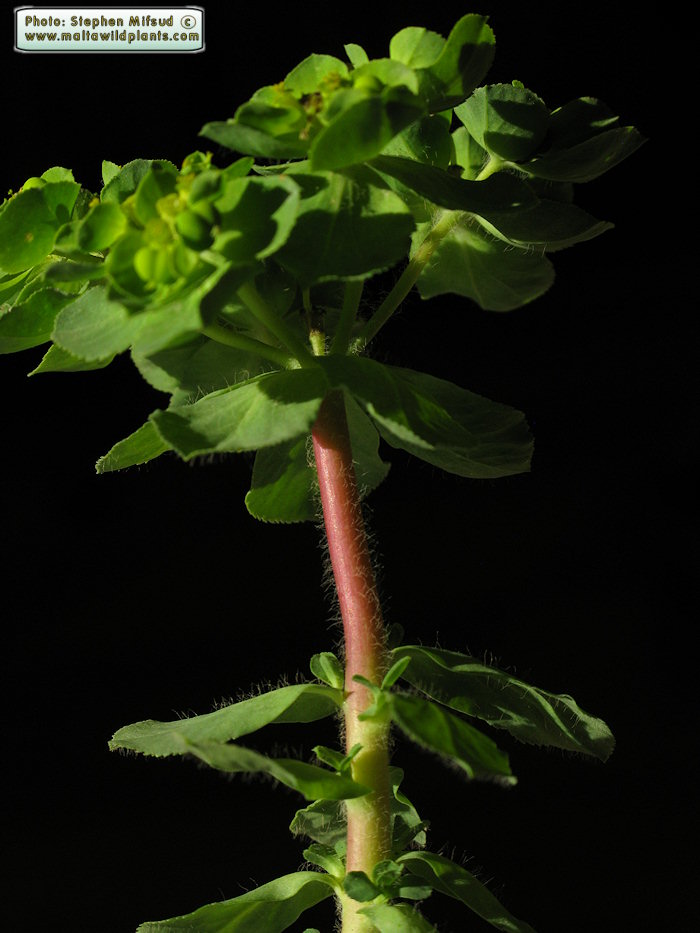
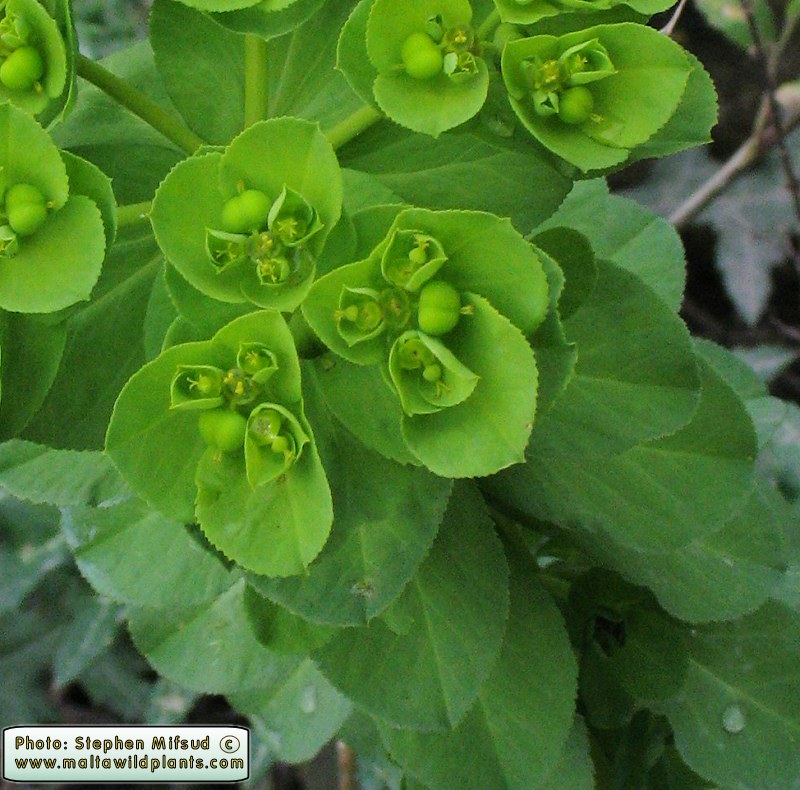
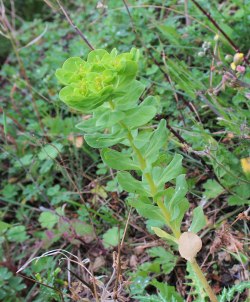
Erect, glabrescent annual, usually with a single stem 10-50 cm. Leaves obovate-spathulate, obtuse, serrate in the upper half. Ray- and raylet-leaves like the cauline but smaller. Rays 5, trichotomous then dichotomous. Capsule 2.5-3.5 mm. Seeds 2 mm, reticulate-rugose. | |
Chromosome number: |
2n=42 | |
Distributional range: |
Almost throughout Europe, but only as a casual in the extreme north. |
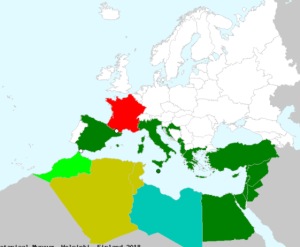
Distributional map in Europe
and the Mediterranean region (2018): |
|
Occurrences in Europe.
(from Flora Europaea pre year 1993): |
All except the Azores, Faroe Islands, Iceland, Svalbard archipelago |
Occurrences in Europe and the Mediterranean region.
(from Euro+Med Checklist, 2019)
Country codes
|
AE(G) Ag Al Au Az Be Bl Br Bt Bu By Ca Co Cr Cy Cz Eg Fe Ga Ge Gr Hb He Ho Hs Hu IJ It Ju Li LS Lu Ma Md No Po Rf(C E NW S) Rm Sa Si Sn Tcs Tn Tu(A) Uk(K U) |
|
| | |







 Atlas Flora Europaea
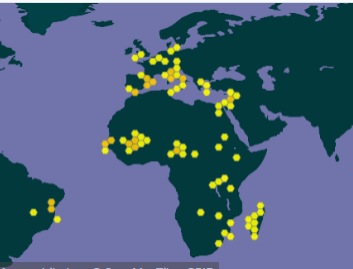 GBIF Distribution map