| |
|
 | |
| MaltaWildPlants.com by Stephen Mifsud |
|
| |
|
|
 |  |  |  |
| External Links: |
|
Andrachne telephioides (Andrachne) |
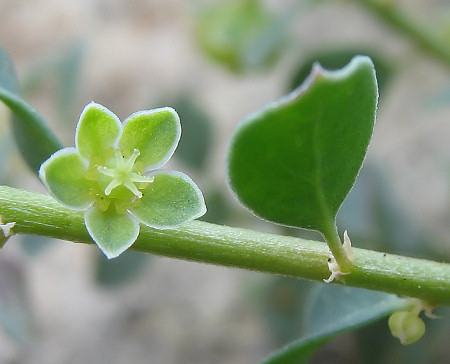
Andrachne telephioides (EUPHORBIACEAE.)
Images for this profile are taken from the Maltese Islands after year 2000. |
|
| Nomenclature and Basic Information |
Species name : |
Andrachne telephioidesL.
Published in Sp. Pl. 1014 (1753) |
Synonyms :
(basionym or principal syn.) |
|
Plant Family : |
Euphorbiaceae
Juss. (The Spurge Family)
30 species from the Euphorbiaceae family are recorded from the Maltese Islands. | English name(s) : | Andrachne, False Orpine, Bastard Orpine |
Maltese name(s) : |
Andrakne |
Status for Malta : |
Indigenous. Present on the Maltese islands before man |
Frequency : |
Very Common Common Frequent Scarce Rare Very rare Extinct |
Growth form : |
Raunkiaer lifeform [info]: CHAMEOPHYTE ( dwarf or small woody shrubs )
Germination [info]: Dicotyledon |
Legal Protection : |
Not legally protected till the last update of this website (2/Mar/2022) |
Red List (1989) : |
Not listed in the Red Data Book of the Maltese Islands |
Flowering Time : |
March – October |
Colour of Flowers: |
Inconspicuous or Green |
Toxicity: |
Not particularly toxic |
Name Derivation : |
Andrachne: An ancient Greek name for Arbutus - the Strawberry tree, though the allusion for this small creeping plant is not understood. (Greek origin )
telephioides: Resembling Telephium - a name given to a genus of succulent plants. ( )
|
Planting in rural areas : |
Can be planted in rural areas according to ERA Guidelines |
|
|
Description, Habitat and Distribution | |
Habitat in Europe: |
Dry places. | |
Preferred habitat in Malta: |
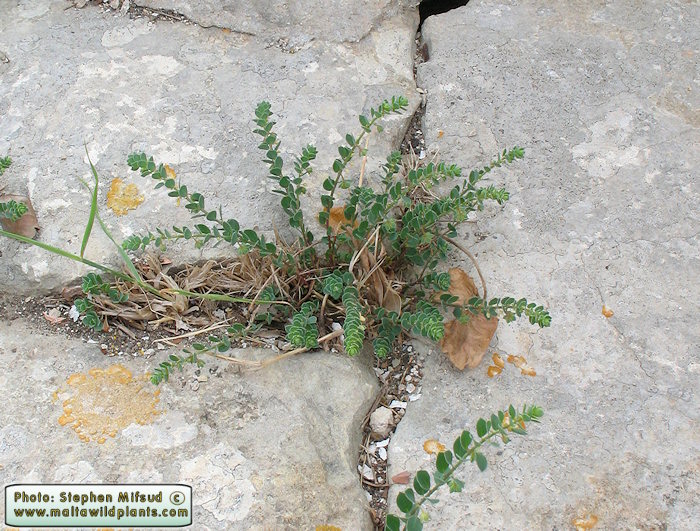
Cultivated and waste places mostly near or at urban places. | |
Botanical Description: |
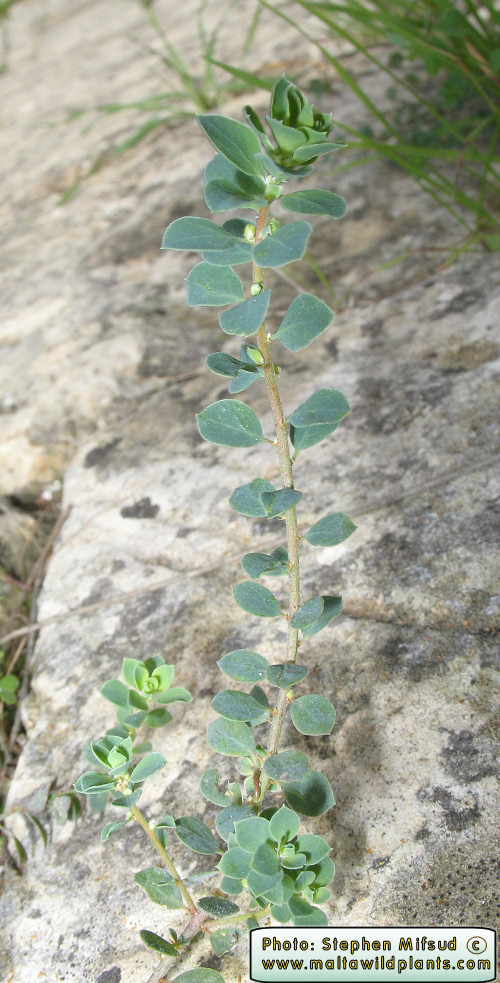
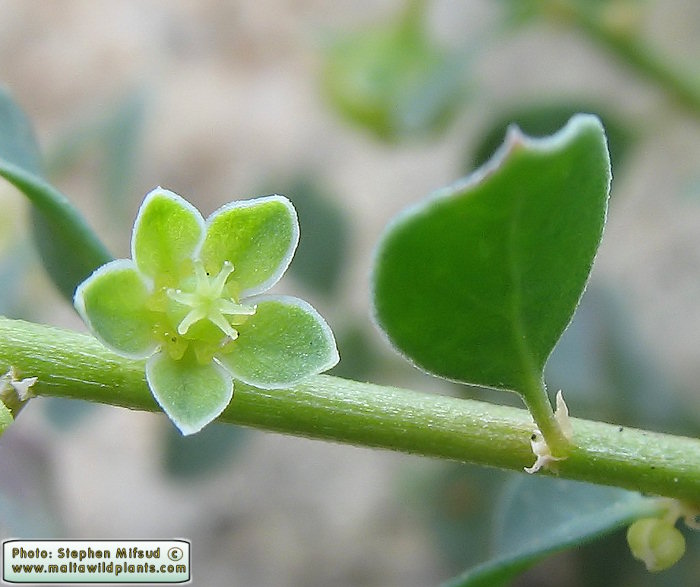
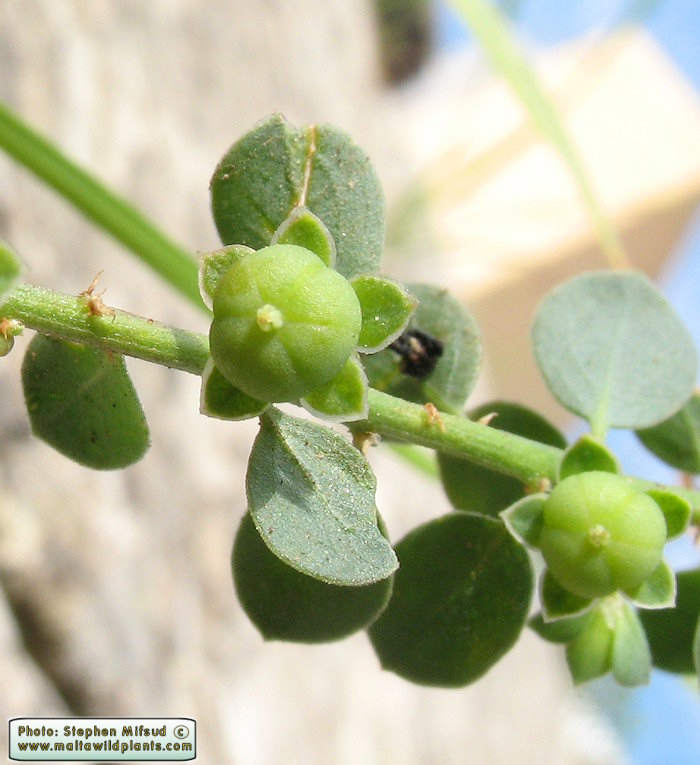
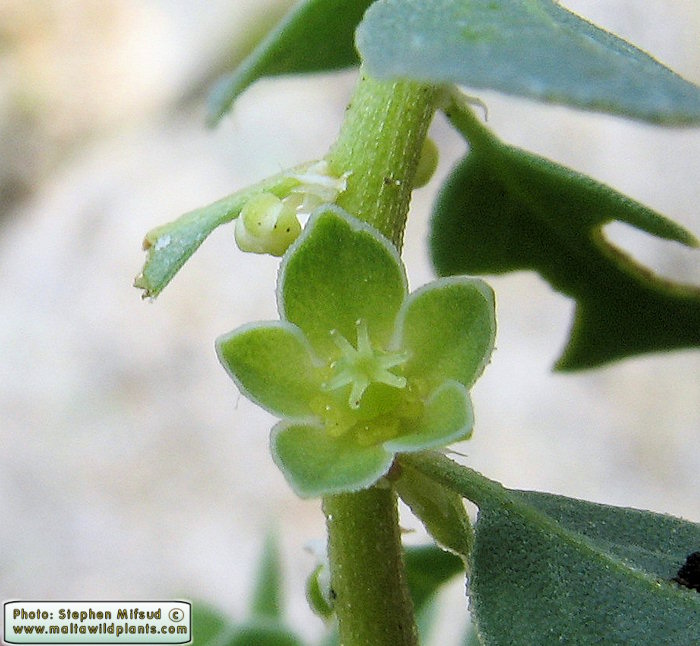
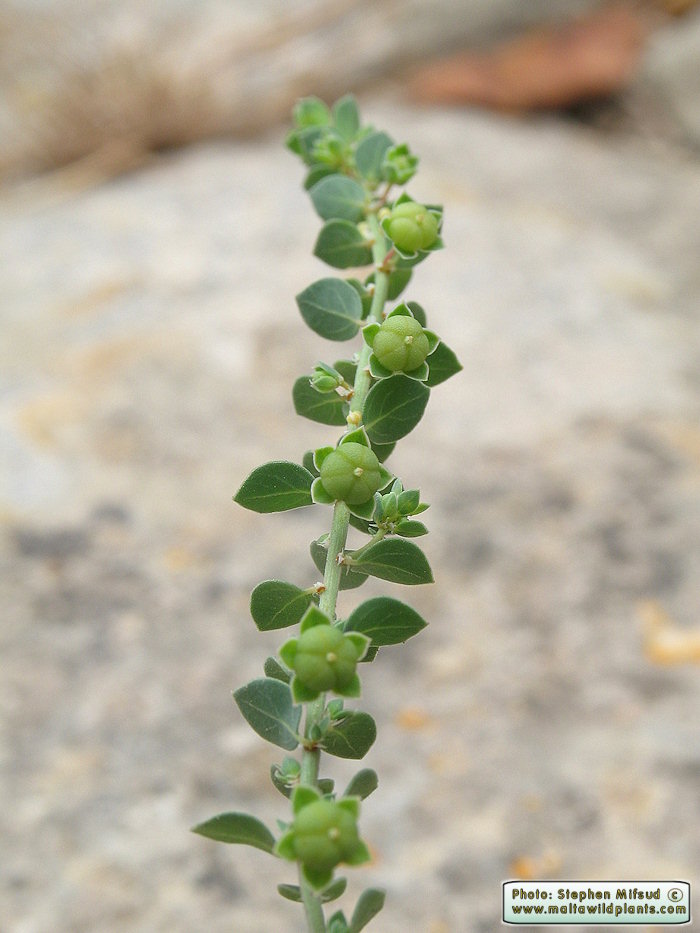
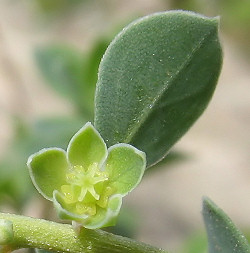
Stems up to 30 cm, green, simple or little-branched, arising from a brown, much branched stock. Leaves up to 10 mm, obovate to elliptical, acute or subacute, entire, glaucous, closely and evenly spaced; petioles 0.5-2 mm; stipules silvery, often red at base. Petals yellowish. Styles deeply 2-fid. Capsule 2-3 mm, subglobose, glabrous; seeds triquetrous, with a convex, punctulate back. | |
Distributional range: |
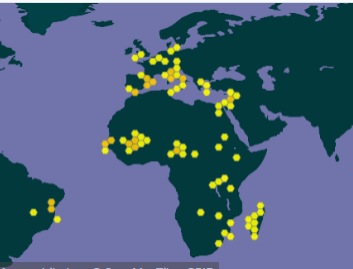
Mediterranean region Krym. |
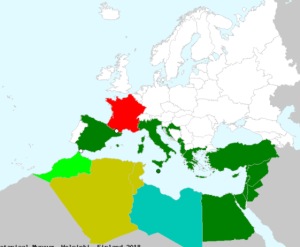
Distributional map in Europe
and the Mediterranean region (2018): |
|
Occurrences in Europe.
(from Flora Europaea pre year 1993): |
Bulgaria, Crete, Greece, Spain (incl. Andorra but excl. the Balaerics), Italy (excl. Sicily and Sardignia), ex-Jugoslavia, Russia and former USSR, Sicily and/or Malta, Introduced in France (incl. Monaco and Channel Islands but excluding Corse) |
Occurrences in Europe and the Mediterranean region.
(from Euro+Med Checklist, 2019)
Country codes
|
Ag Bu Cr Cy Eg Gr Hs IJ It Ju Li LS Ma Si Sn Tcs Tn Tu(A) Uk(K) [Ga] |
|
| | |







 Atlas Flora Europaea
 GBIF Distribution map