Maltese Waterwort

Elatine gussonei / Maltese Waterwort / Elatine
This plant is brought to you by one of the project's sponsors:
HSBC Cares for the Environment Fund
More sponsors are needed for this project [ click here ]

Contents Links


Nomenclature

Botanical Data

Description

General Information

Photo Gallery

Further Info & Links

Buy Seeds and Docs

Submit own info
about this plant

Give a small Donation Online

FORUM

Copyright Info


Main Index

 
Visitor hits (July-2006)

Nomenclature

Species name:

Elatine gussonei   (Sommier) Brullo, Lanfranco, Pavone & Ronsisvalle

Author(s):

Stefano Sommier;
   Italy, 1848-1922

Salvatore Brullo;
   Italy, 1947-

Edwin Lanfranco;
   Malta, 1946-

Pietro Pavone + Giuseppe Ronsisvalle;
   Italy

General names:

Maltese Elatine, Pelagian Elatine

Maltese name:

Elatine

Plant Family:

Elatinaceae   (Elatine Family)

Name Derivation:

Elatine = Elatine = Ancient Greek name for some low creeping plants. (Greek);
gussonei = Named after the botanist - Giovanni Gussone from Naples, Italy. (Latin).

Synonyms:

Elatine hydropiper gussonei, Elatine macropoda (sensu Haslam)

Remarks:

Sub-endemic. (Confined to the Maltese and Pelagian Islands) -


Botanical Data

PLANT STRUCTURE:

Characteristic

Growth Form

Branching

Surface

Description

Erect :

Upright, vertically straight up well clear off the ground.

Few Branches :

Adult plants may form few branches along the main stem.

Glabrous :

Smooth; without any hairs, bristles or other projections.

General
Picture

Wild Plants of the Mediterranean Islands of Malta  - Copyright Stephen Mifsud / Maltawildplants.com / Malta (2002-2007) Wild Plants of the Mediterranean Islands of Malta  - Copyright Stephen Mifsud / Maltawildplants.com / Malta (2002-2007) Wild Plants of the Mediterranean Islands of Malta  - Copyright Stephen Mifsud / Maltawildplants.com / Malta (2002-2007)

LEAVES:

Characteristic

Arrangement

Attachment

Venation

Description

Opposite :

Leaves that are situated in pairs at each node along the stem. Ocassionally found as non-opposite pairs along stem.

Stalked / Petiolate :

Hanging out by a slender leaf-stalk.

Single :

One central main vein (midrib) along leaf axis.

General
Picture

Wild Plants of the Mediterranean Islands of Malta  - Copyright Stephen Mifsud / Maltawildplants.com / Malta (2002-2007) Wild Plants of the Mediterranean Islands of Malta  - Copyright Stephen Mifsud / Maltawildplants.com / Malta (2002-2007) Wild Plants of the Mediterranean Islands of Malta  - Copyright Stephen Mifsud / Maltawildplants.com / Malta (2002-2007)
 

Characteristic

Leaf Shape

Leaf Margin

Remarks

Description

Oblanceolate :

Inverted lance shaped, widest in the upper third part, tapering gradually towards the base of the leaf.

Entire :

Smooth margin without indentations, lobes or any projections.

General
Picture

Wild Plants of the Mediterranean Islands of Malta  - Copyright Stephen Mifsud / Maltawildplants.com / Malta (2002-2007) Wild Plants of the Mediterranean Islands of Malta  - Copyright Stephen Mifsud / Maltawildplants.com / Malta (2002-2007) Wild Plants of the Mediterranean Islands of Malta  - Copyright Stephen Mifsud / Maltawildplants.com / Malta (2002-2007)

FLOWERS:

Characteristic

Colour

Basic Flower Type

No. of Petals

No. of Sepals

Description

Pink to Rose

Polypetalous Actinomorphic:

Having separate, free petals. Radially symmetrical.

4

4

General
Picture

  Wild Plants of the Mediterranean Islands of Malta  - Copyright Stephen Mifsud / Maltawildplants.com / Malta (2002-2007) Wild Plants of the Mediterranean Islands of Malta  - Copyright Stephen Mifsud / Maltawildplants.com / Malta (2002-2007) Wild Plants of the Mediterranean Islands of Malta  - Copyright Stephen Mifsud / Maltawildplants.com / Malta (2002-2007)
 

Characteristic

Inflorescence

Description

Ovary

Stamens

Description

Simple Cyme :

A few-flowered branching inflorescence with a single flower at the end of each branch, where the central or upper flower is the one to blossom first.

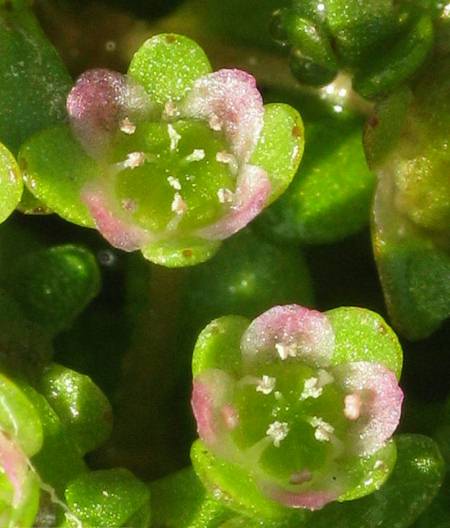
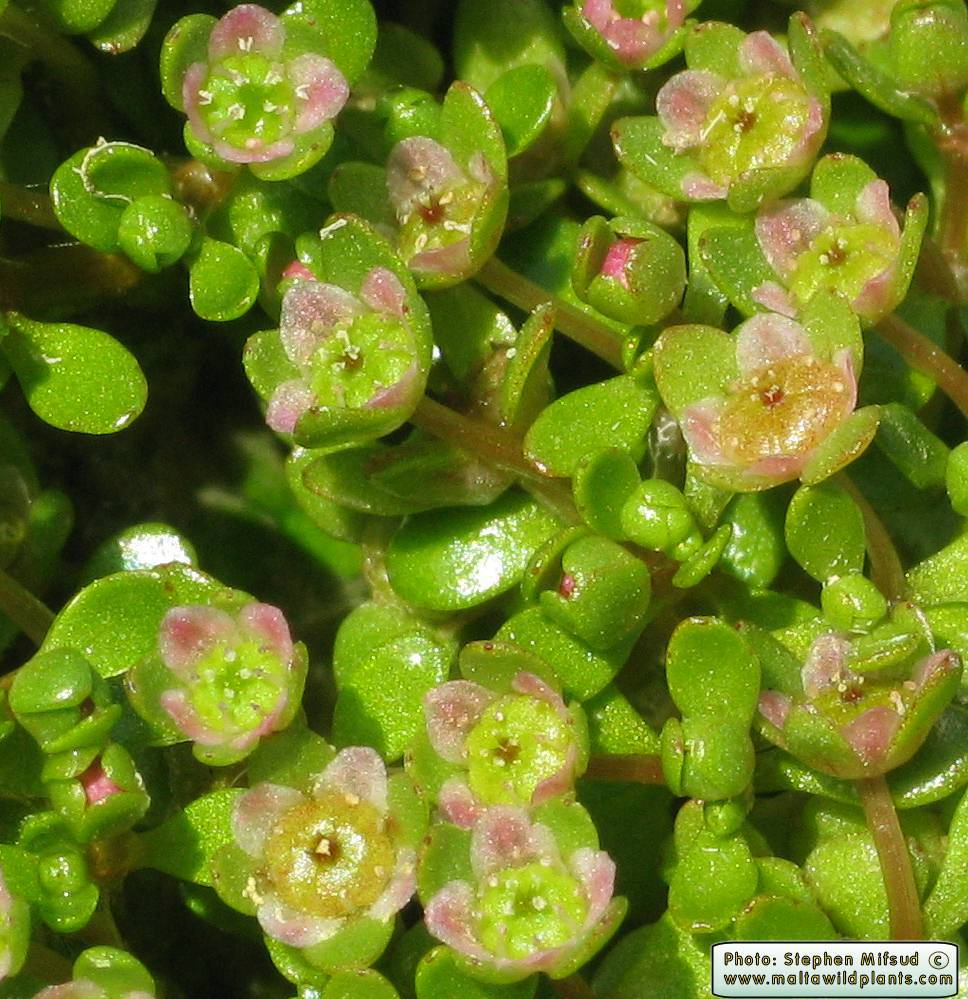
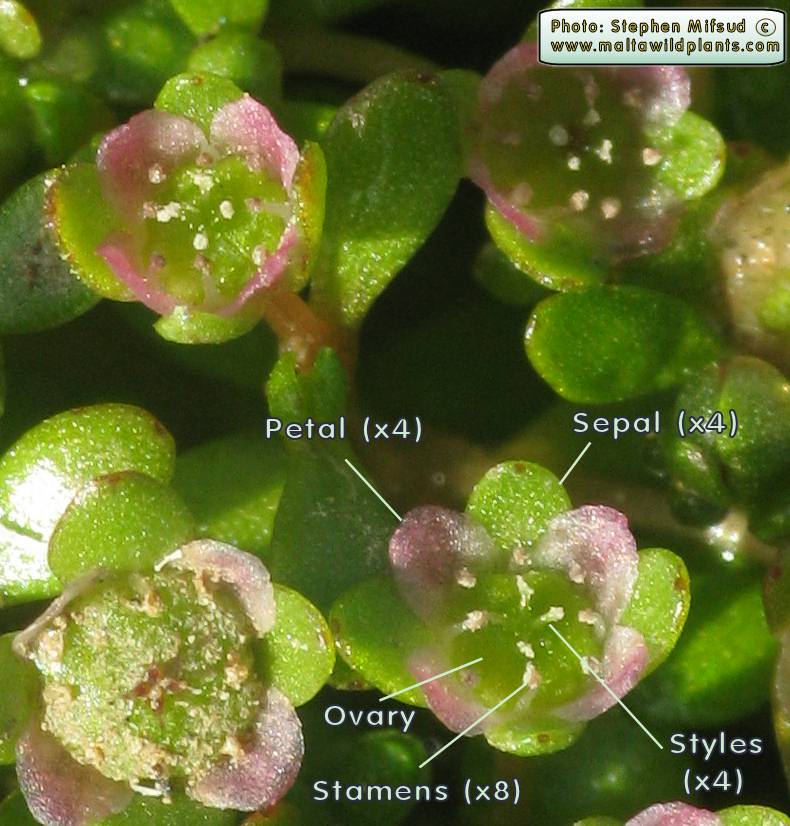
Small, polypetalous and actinomorphic flower composed of 4 rounded (semi-circular) pinkish to pale red petals and 4 alternating green sepals usually of same size or slightly larger.

Superior :

Ovary situated above the flower parts (the calyx, corolla, and androecium). In other words, these are attached below the ovary.

8, Obdiplostemonous (alternisepalous) :

Flowers which has twice as many stamens as petals. Stamens are arranged in two separate whorls; the outer whorl with stamens opposite the petals, the inner one alternatiung between and usually opposite the sepals.

General
Picture

Wild Plants of the Mediterranean Islands of Malta  - Copyright Stephen Mifsud / Maltawildplants.com / Malta (2002-2007) Wild Plants of the Mediterranean Islands of Malta  - Copyright Stephen Mifsud / Maltawildplants.com / Malta (2002-2007) Wild Plants of the Mediterranean Islands of Malta  - Copyright Stephen Mifsud / Maltawildplants.com / Malta (2002-2007) Wild Plants of the Mediterranean Islands of Malta  - Copyright Stephen Mifsud / Maltawildplants.com / Malta (2002-2007)
 

Characteristic

Scent

Average Flower Size

Pollen Colour

Other Notes

Description

None

3-5mm

Pale Yellow

-


SEEDS:

Characteristic

No. Per Fruit

Shape

Size

Colour

Description

<50

Curved

Comma-shaped to horseshoe-shaped.

>1mm

Dark brown to Black

General
Picture

Wild Plants of the Mediterranean Islands of Malta  - Copyright Stephen Mifsud / Maltawildplants.com / Malta (2002-2007) Wild Plants of the Mediterranean Islands of Malta  - Copyright Stephen Mifsud / Maltawildplants.com / Malta (2002-2007) Wild Plants of the Mediterranean Islands of Malta  - Copyright Stephen Mifsud / Maltawildplants.com / Malta (2002-2007) Wild Plants of the Mediterranean Islands of Malta  - Copyright Stephen Mifsud / Maltawildplants.com / Malta (2002-2007)

FRUIT AND OTHER BOTANICAL DATA:

Characteristic

Fruit Type

Colour of Fruit

Subterranean Parts

Other Notes

Description

Dehiscent Circumscissile Capsule :

A fruit capsule (often round-shaped) that splits open along its circumference when the seeds are ripe.

Pale Green

Fibrous roots :

A rooting system where there is a mass of thin, spreading, thread-like roots, without a primary enlarged main root (taproot). No root grows larger than another.

Seed Coat

The surface of the seeds exhibits a uniform (not elongated) hexagonal pitted texture. On contrast, Elatina macropoda have an elongated hexagon reticulation pattern.

General
Picture

Wild Plants of the Mediterranean Islands of Malta  - Copyright Stephen Mifsud / Maltawildplants.com / Malta (2002-2007) Wild Plants of the Mediterranean Islands of Malta  - Copyright Stephen Mifsud / Maltawildplants.com / Malta (2002-2007) Wild Plants of the Mediterranean Islands of Malta  - Copyright Stephen Mifsud / Maltawildplants.com / Malta (2002-2007) Wild Plants of the Mediterranean Islands of Malta  - Copyright Stephen Mifsud / Maltawildplants.com / Malta (2002-2007)

Plant Description

Life Cycle:

Annual

Habitat:

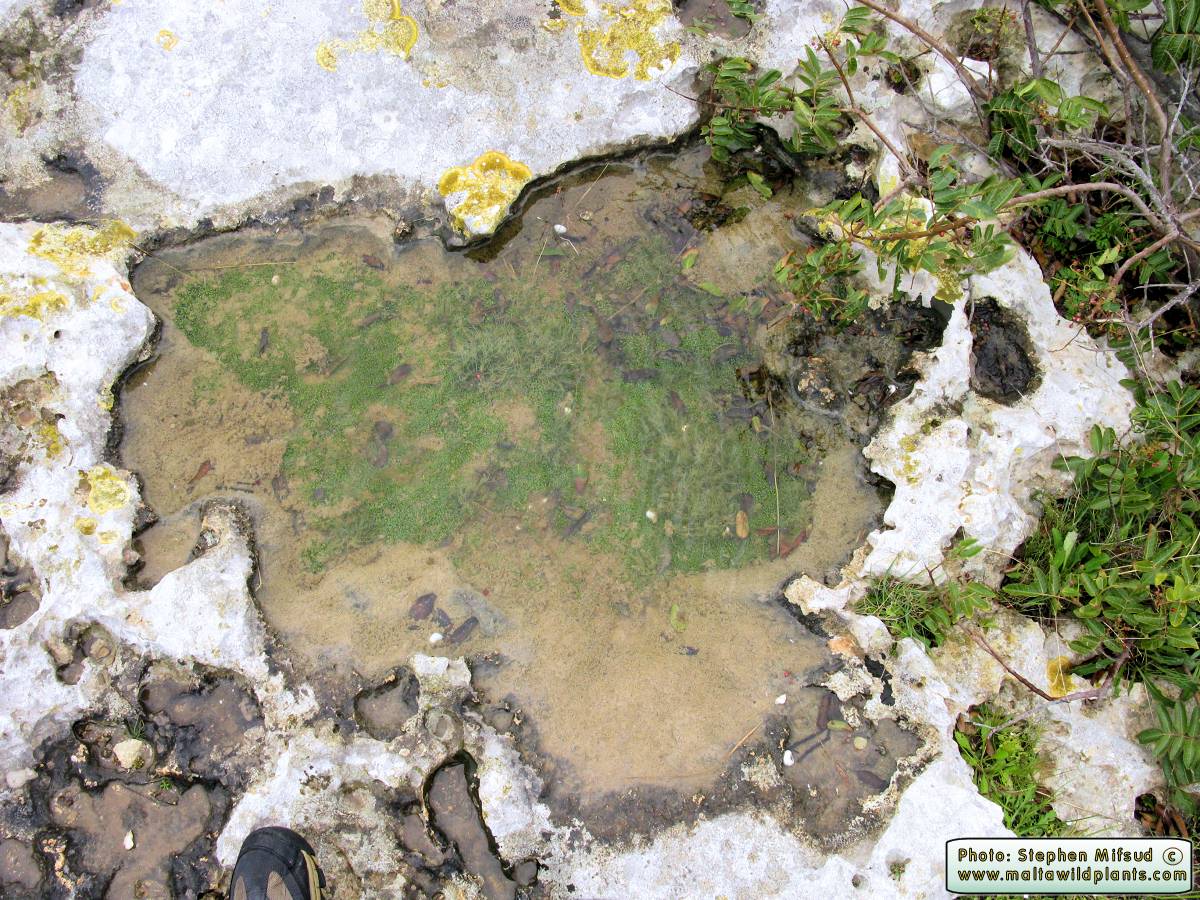
In rock pools in coralline plateaux

Frequency:

Infrequent

Sources in Malta:

Becoming Scarcer - seen at Mgarr ix-Xini (Gozo), Pembroke and Ghallis.

Plant Height:

Up to 10cm

Flowering Time:

Feb - Apr

Poison:

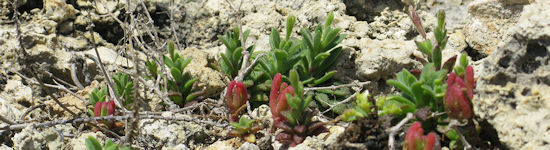
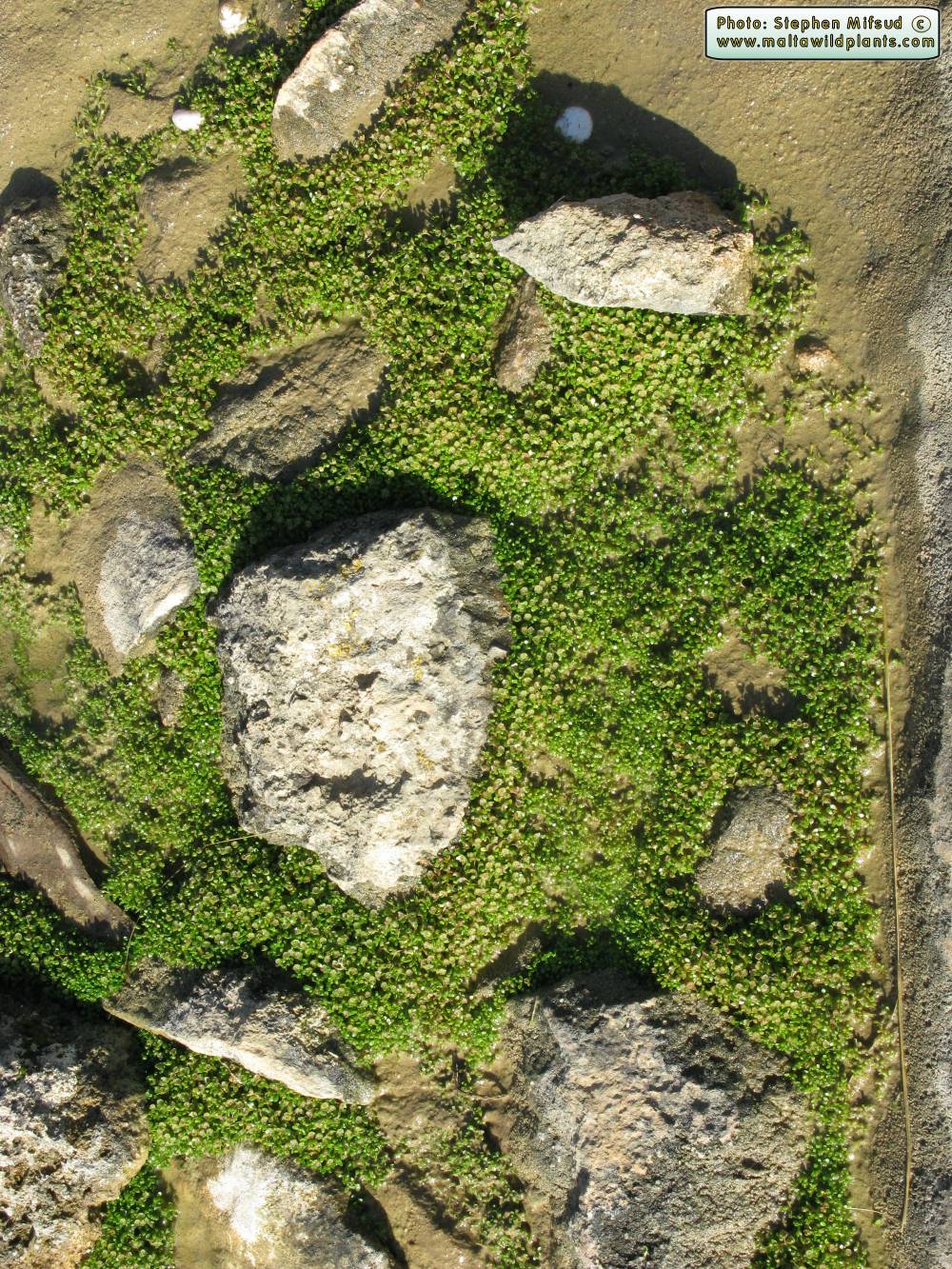
This is a small and delicate annual that grows in rain-water pools collected in natural basins in rock of garigue or steppe. The plant has a short vegetative period, typically 3 months, since it dies off when the water dries in late spring. In around late December to January, Elatine gussonei forms small dense green mats, carpeting the base of the water-filled pools and so totally submerged in water. When the water level decreases the upper part of the growing plant is exposed to air and soon after flowering starts. Flowers are always aerial, and mostly pollinated by terrestrial insects.

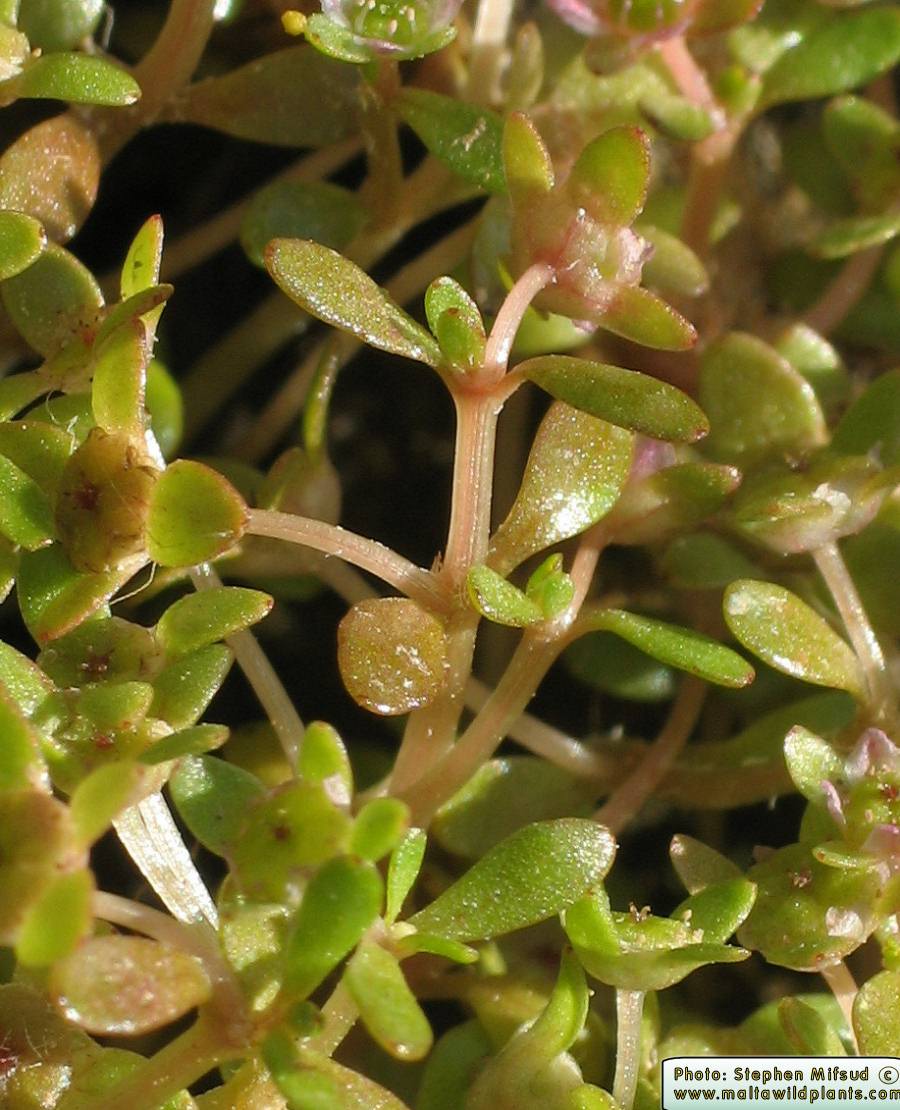
The plant has small, glabrous, oblanceolate leaves with fairly long petioles (as much or slightly longer than the lamina) and entire margins. They are found in opposite directions or in pairs along the fragile stem which can turn red when the plants are mature. The lamina of the leaves rarely grow greater than 6mm in length.

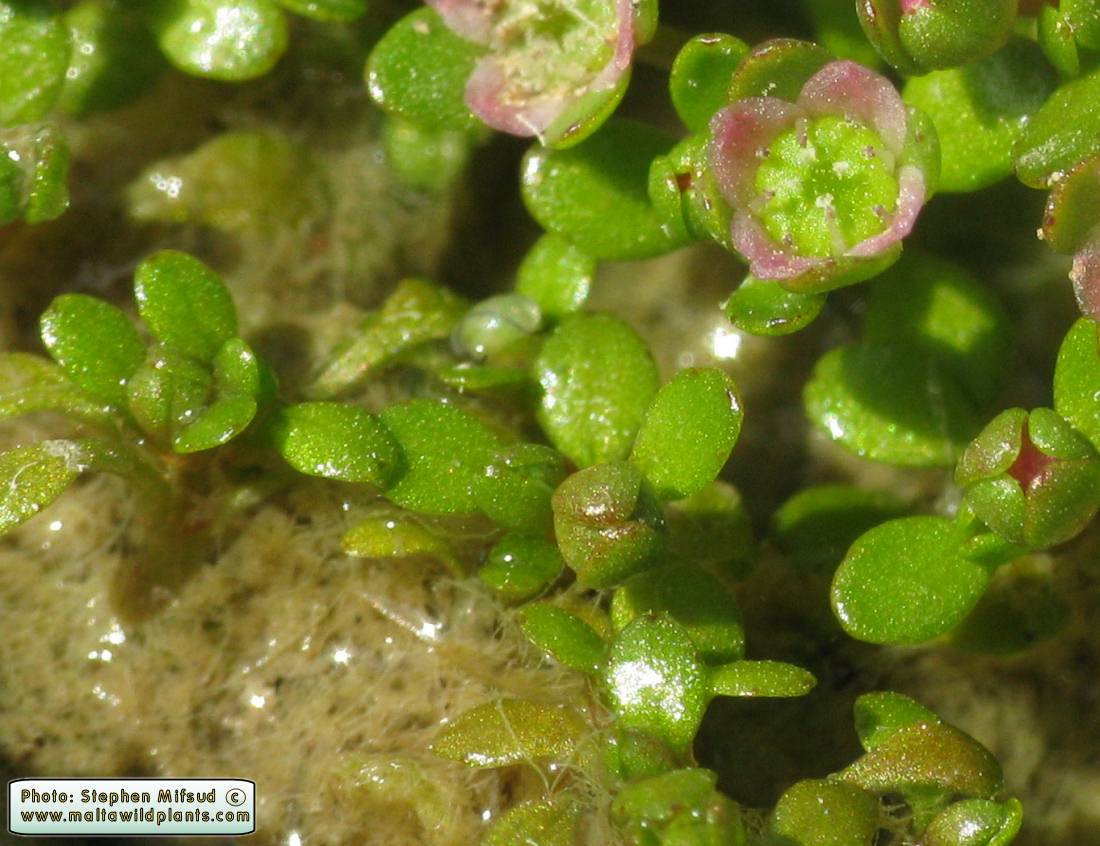
The flowers develop on a distict pedicel (up to 1cm long) and either found solitary or in few-flowerd (2-3) simple cymes. The flowers are are polypetalous, actinomorphic (radially symmetrical) and hermaphrodite. The corolla is composed of 4 green sepals and 4 pink to rose petals with a rounded or semi-circular shape. The sepals are as large as the petals in young flowers and grow slightly larger when the flower becomes older. Sepals grow slightly larger in shaded plants. The flower posses 8 stamens with pale yellow anthers and 4 carpels. The ovary lies superior to the petals and have free styles.

The pale green fruit capsule is globular in shape and splits opens along its circumference when mature. Numerous, tiny (>1mm) seeds are stored inside, and are dark brown in colour and curved in shape. They simply drop in the underlying mud (or shallow water) without any particular seed dispersion.


Additional Information


Nativity and distribution

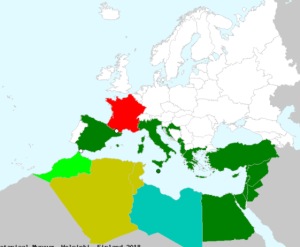
This species of Elatine is native to the Maltese islands and only found in Malta, Gozo and Lampedusa - a small Italian island SouthWest of Sicily. Therefore Elatine gussonei is described a Pelago-Maltese sub-endemic. The distribution in Malta is mildly restricted and appears to decrease because few old records of the Maltese Starwort have not been recently recorded. In Gozo it is restricted to one area at the South.

Botanical and Taxonomical History

There are many different species of the genus Elatine that occur in Europe. In literature there has been a big confusion over the identity of different species especially due to the variability of the size of the pedicels. In our islands only one species occurs although reports of Elatine macropoda have been reported in the past. This plant was first described as a variety of Elatine hydropiper by Sommier in 1908, Lampedusa. It was called Elatine hydropiper L. var. gussonei. During the mid 20th century several varieties of E. hydropiper (E. macropoda, E. hexandra, and E. triandra) were promoted to the species rank. Similarly, in 1988, Brullo S., Lanfranco E., Pavone P., and Ronsisvalle G. raised the Maltese/Lampedusan variety to a species level, that is Elatine gussonei. [SSS]

Other members of Elatine

This species differs from many members of the genus because it has curved seeds and differs from the similar species - E. macropoda from the seed testa since E. gussonei has perfectly-shaped hexagon pits, not elongated ones as in E. macropoda. It differs from Elatine pedunculata because the pedicels are usually smaller than the size of the leaves, whilst in the pedunculata they are larger. It differs from Elatine hydropiper because this has sessile flowers. [FE]

Variations in morphology and growth cycle with environmental conditions

It seems that environment influences to a certain degree some morphological features of Elatine gussonei. For instance, shaded plants often produce pale pink petals and stems remains green, while plants exposed to full-sun develop a darker coloration in petals (=rose colour) and the stems often turn red. [SM, SSS]

[] Also noticed that shaded plants often produce larger petals, which as per original description by Sommier, E. gussonei have sepals of same size of petals. [SSS] The water depth also have significant influence. It effects flowering time, that is when it becomes shallow enough, the plant produce flowering buds. [SM, SSS}. Additionally, plants in deeper waters are longer, become more stretched, with longer distances between neighbouring leaves and slightly longer petioles and flower stalks (pedicels). [SSS]

Life cycle of Elatine gussonei

The seeds of this plant germinate after being continously soaked in water for a long duration. This signals the plant that considerable rain has been poured and so, the natural habitat of this plant - a rain-water filled rock pool with little soil at the bottom - has been formed. Germination is clocked with considerable amount of rainfall, and this usually take place in December when the rock pools are formed. Probably, the lack of air by water flooding does also play part in the germination but this is just a personal speculation. [SM]

When the plants germinate, the leaves are initially submersed in water and gradually they grow higher. When the vertical growth of the plant combined by the decrease of water in the rockpool (by evaporation and reduced rainfall) makes the upper part of the plant reach the surface of the water and so come into contact with air, flowering buds starts to form. The time depends on how deep the pool is, and how much rainfall is produced, but usually, this takes place around mid-Feb to mid-March. In fact, the flowering peak of Elatine gussonei is often seen when the plants are in mud or in a very shallow film of water over soil deposit in the rockpool.[SM]

Eventually, by April, the water is considerably lost away and Elatine is in its fruiting and seed-dropping phase. When most of the water is lost, the plant dies, but if the life cycle was succesful, thousands od seeds per plant would have been dropped in the pool. The seeds survive the arid and hot conditions of late Spring and Summer, and waits the next rainfall at Autumn to germinate. [SM]

Photo Gallery

Elatine gussonei (Maltese Waterwort) - CLICK TO ENLARGE PHOTO Elatine gussonei (Maltese Waterwort) - CLICK TO ENLARGE PHOTO Elatine gussonei (Maltese Waterwort) - CLICK TO ENLARGE PHOTO Elatine gussonei (Maltese Waterwort) - CLICK TO ENLARGE PHOTO
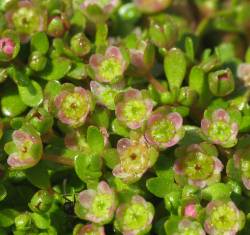
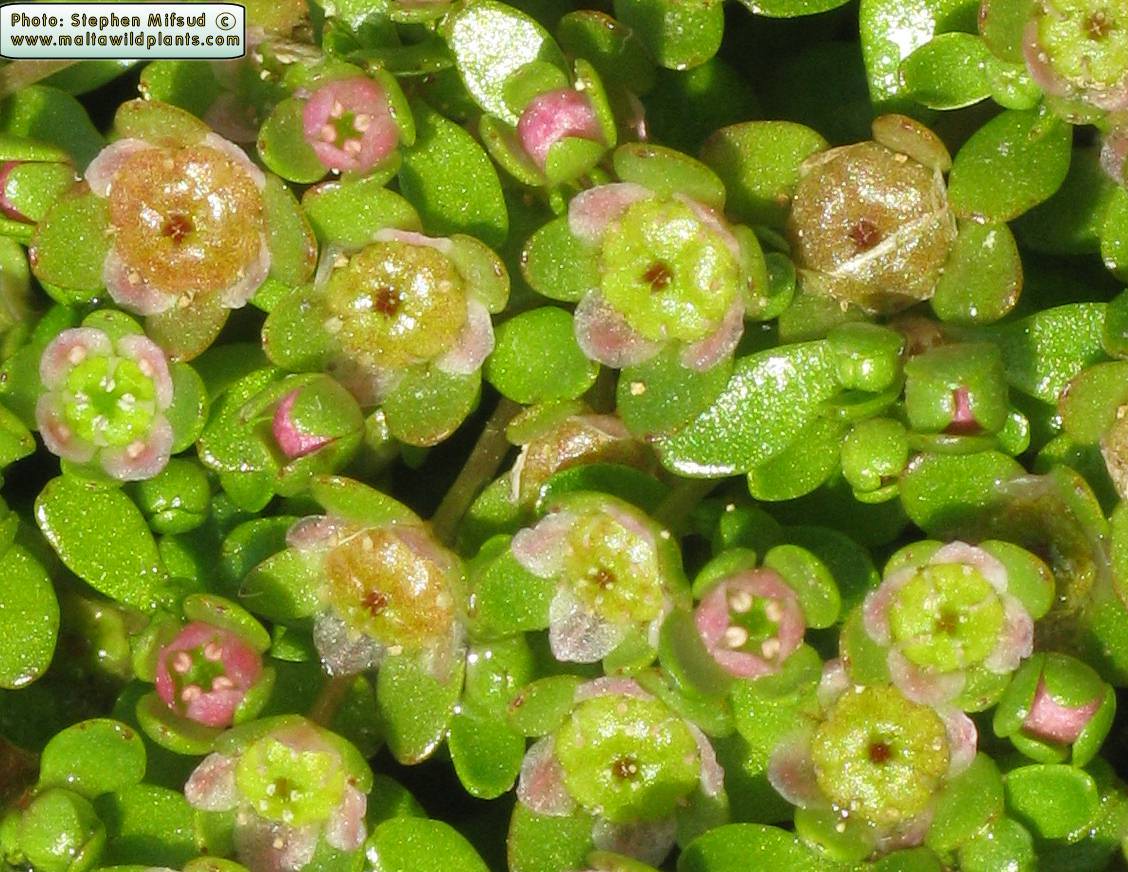
Photo of the pretty, pink to rose coloured flowers of Elatine gussonei , an endemic of the Maltese and Pelagian islands.
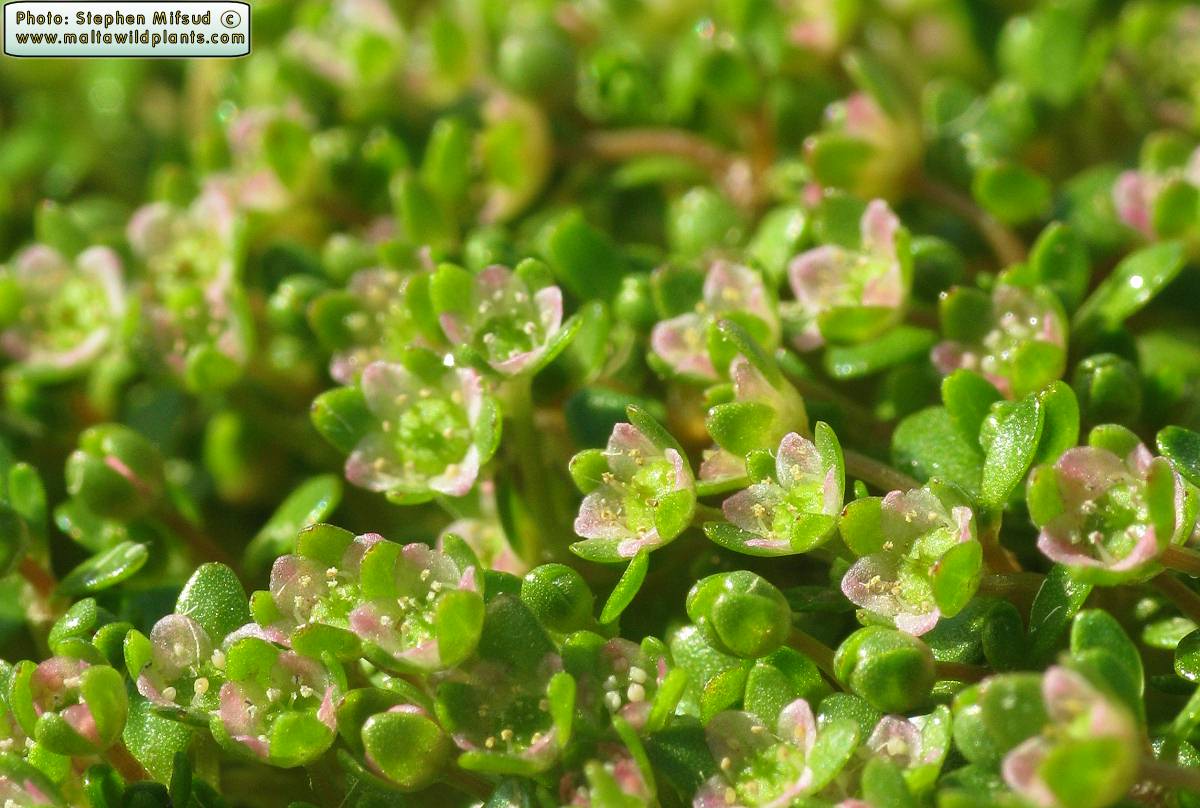
Photo of a group of flowers with light pink petals.
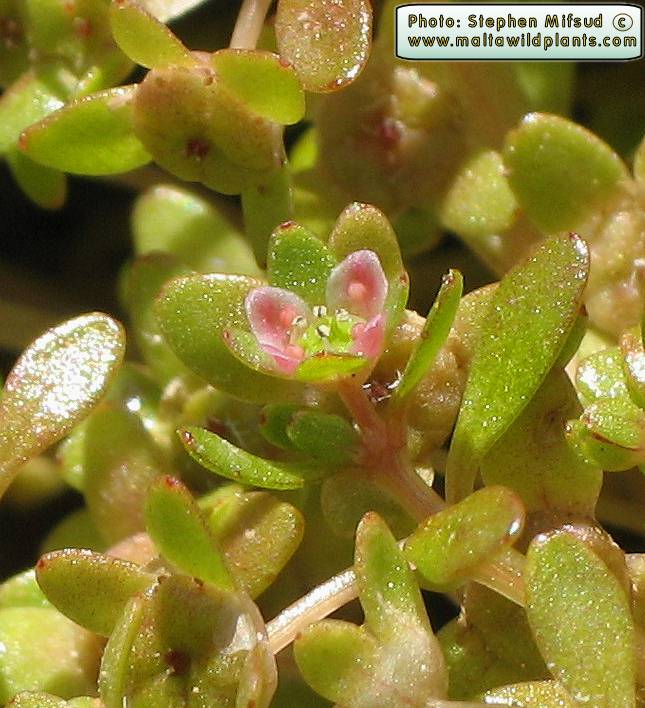
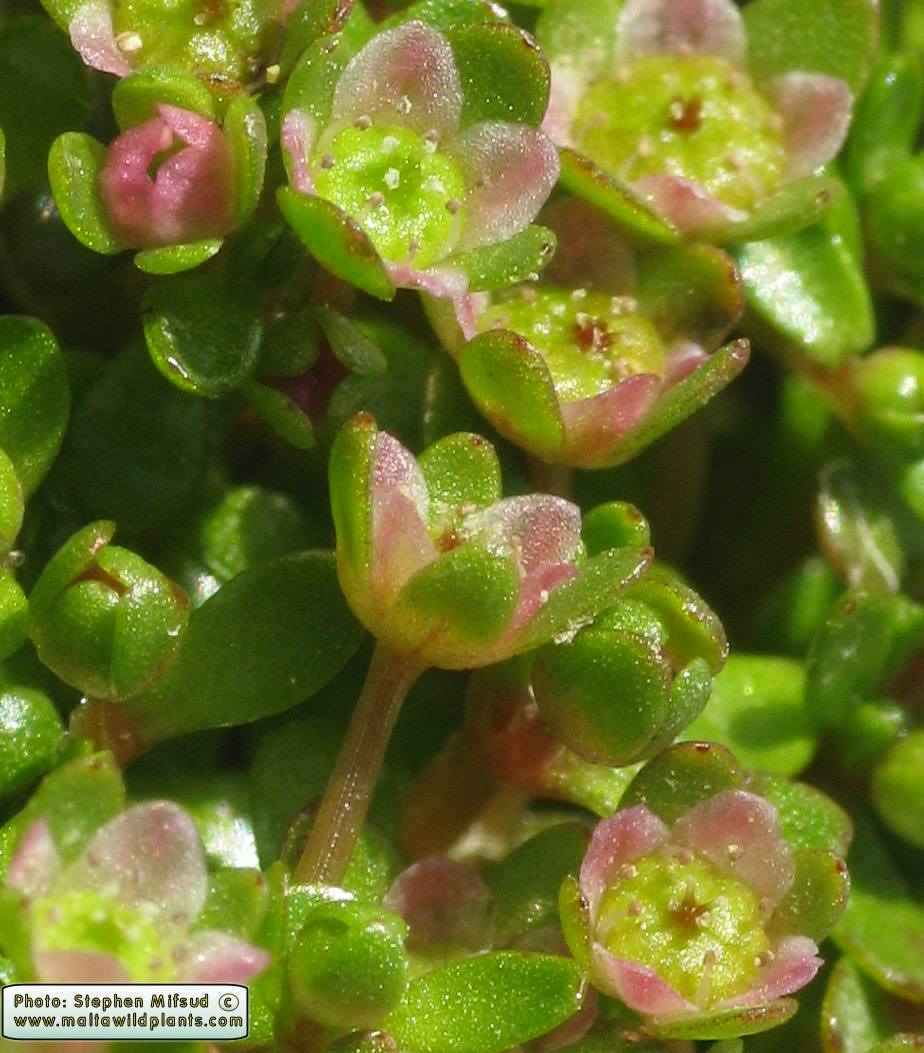
Close up of single, rose-coloured Elatine gussonei flower, attached to the plant by a relatively short pedicel.
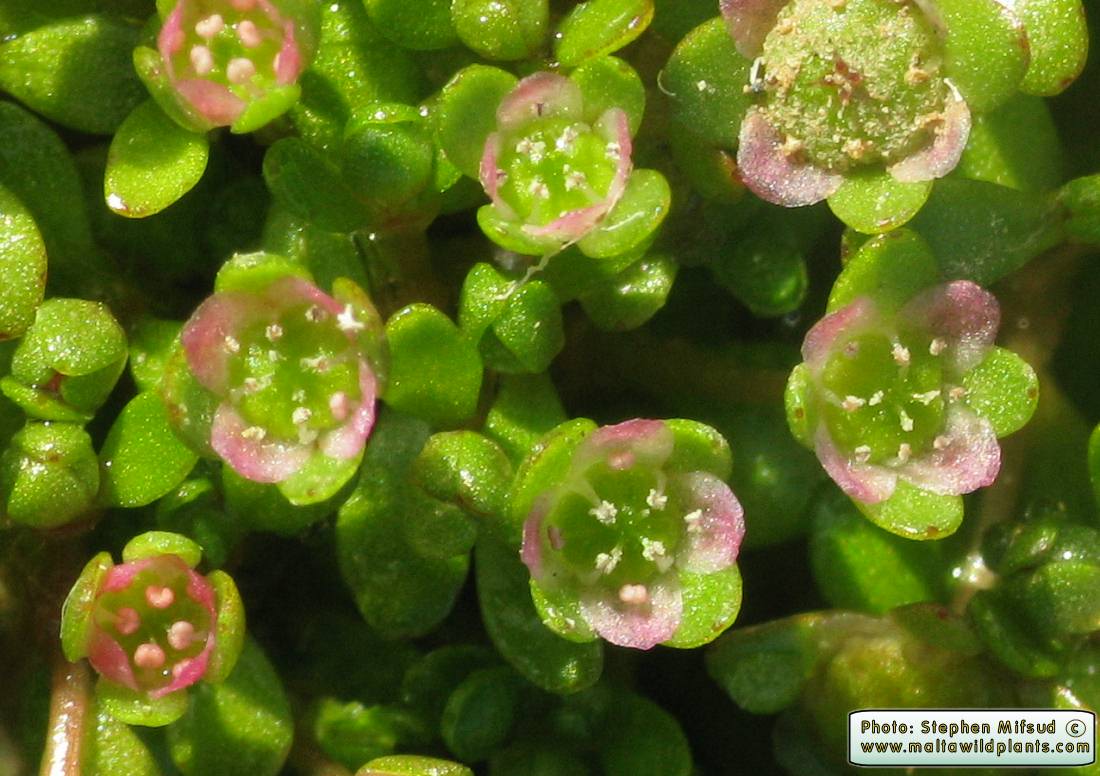
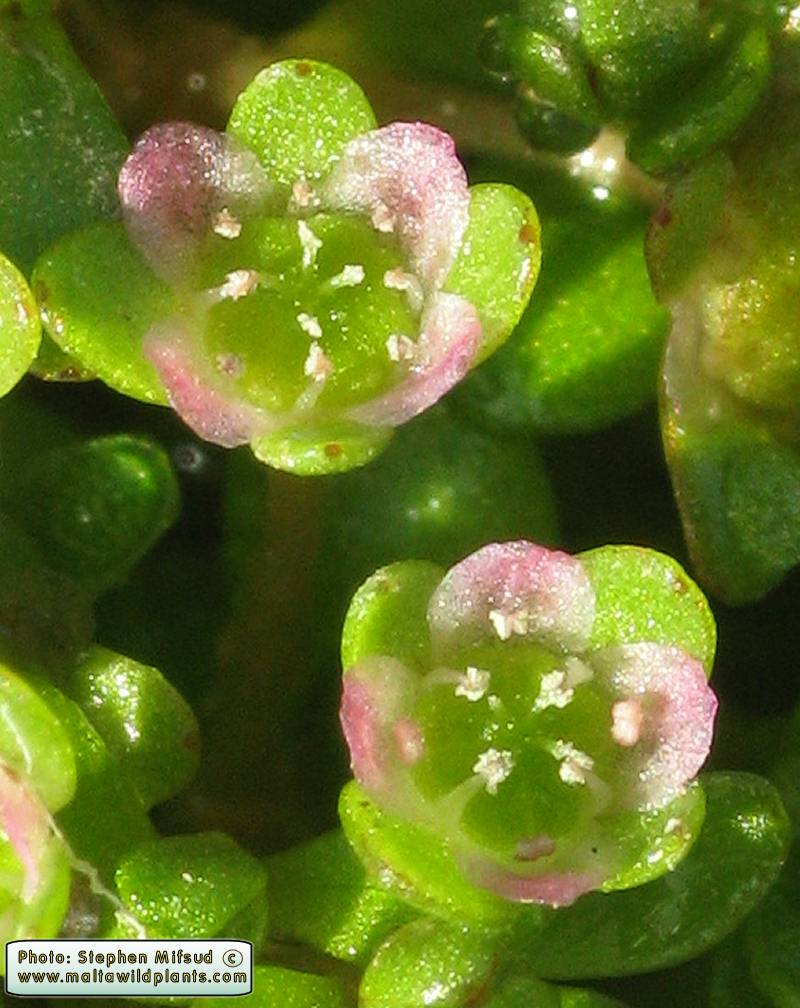
Close-up image of the flowers. Corolla composed of 4 free, green sepals and 4 pink, free petals.
  Elatine gussonei (Maltese Waterwort) - CLICK TO ENLARGE PHOTO Elatine gussonei (Maltese Waterwort) - CLICK TO ENLARGE PHOTO Elatine gussonei (Maltese Waterwort) - CLICK TO ENLARGE PHOTO
-
Photo of several flowers. Note the eight stamens around the ovary.
Another photo of the flowers showing one from its lateral side.
Annotated image of the polypetalous and polysepalous flower of the Maltese Starwort.
Elatine gussonei (Maltese Waterwort) - CLICK TO ENLARGE PHOTO Elatine gussonei (Maltese Waterwort) - CLICK TO ENLARGE PHOTO Elatine gussonei (Maltese Waterwort) - CLICK TO ENLARGE PHOTO  
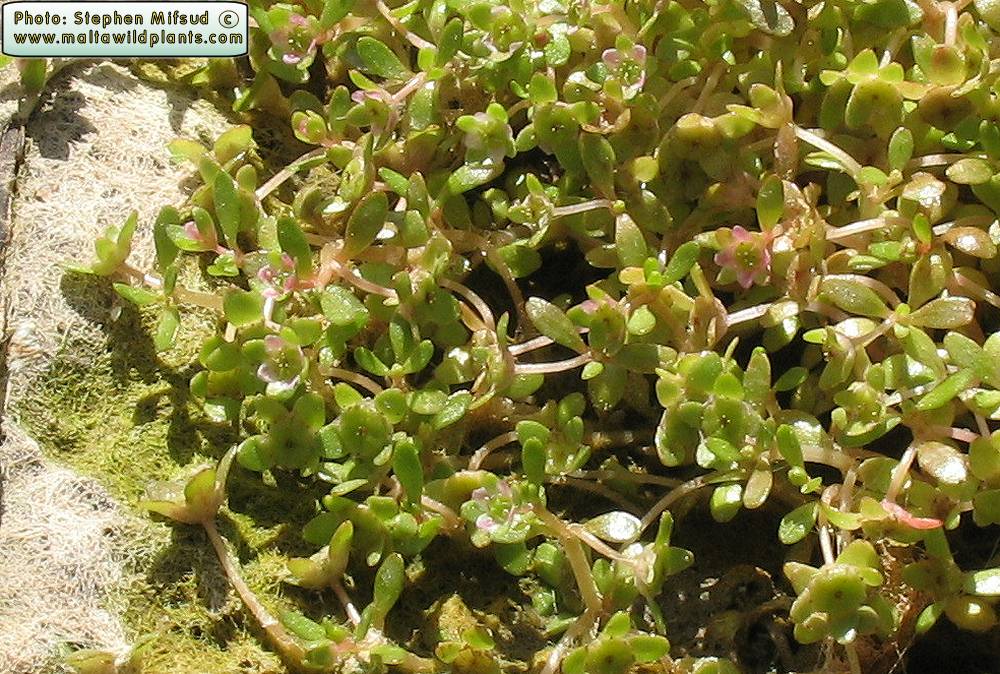
Closeup photos of the flowers. Often the green sepals and pink petals are of same size, but mature flowers entering the fruiting phase will have slightly larger sepals. Note the 4 stigma each derived from one of the 4 carpels (pistils).
Photo of a group of flowers at various maturities and fruits. A mature fruit is seen at the top right corner where the petals drop but the sepals persists and keep growing slightly.
Close up image of the small flowers (6-8mm accross) of Elatine gussonei . On examining the flowers closely, one can enjoy the beauty f yjiolam.
-
Elatine gussonei (Maltese Waterwort) - CLICK TO ENLARGE PHOTO Elatine gussonei (Maltese Waterwort) - CLICK TO ENLARGE PHOTO Elatine gussonei (Maltese Waterwort) - CLICK TO ENLARGE PHOTO  
Photo of fruit capsule. The fruit of Elatine gussonei is a circumcissile dehiscent capsule.
Photo of 2 fruit capsules. Initially the fruit (=ovary) is green but reddens when reaching full maturation.
Photo of young plants with dark green oblanceolate, petiolated leaves. They have a small lamina (6mm) which is glabrous and with an entire margin.
-
Elatine gussonei (Maltese Waterwort) - CLICK TO ENLARGE PHOTO Elatine gussonei (Maltese Waterwort) - CLICK TO ENLARGE PHOTO Elatine gussonei (Maltese Waterwort) - CLICK TO ENLARGE PHOTO  
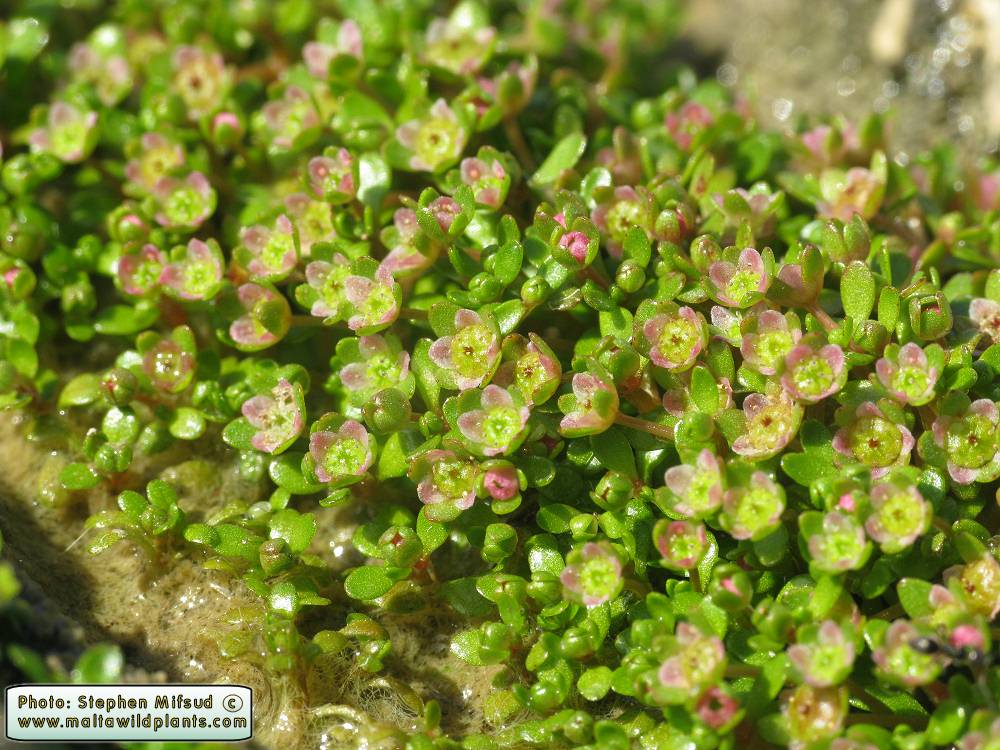
Photo of a population of Elatine. It is normal that they are found in dense populations as shown in the photo.
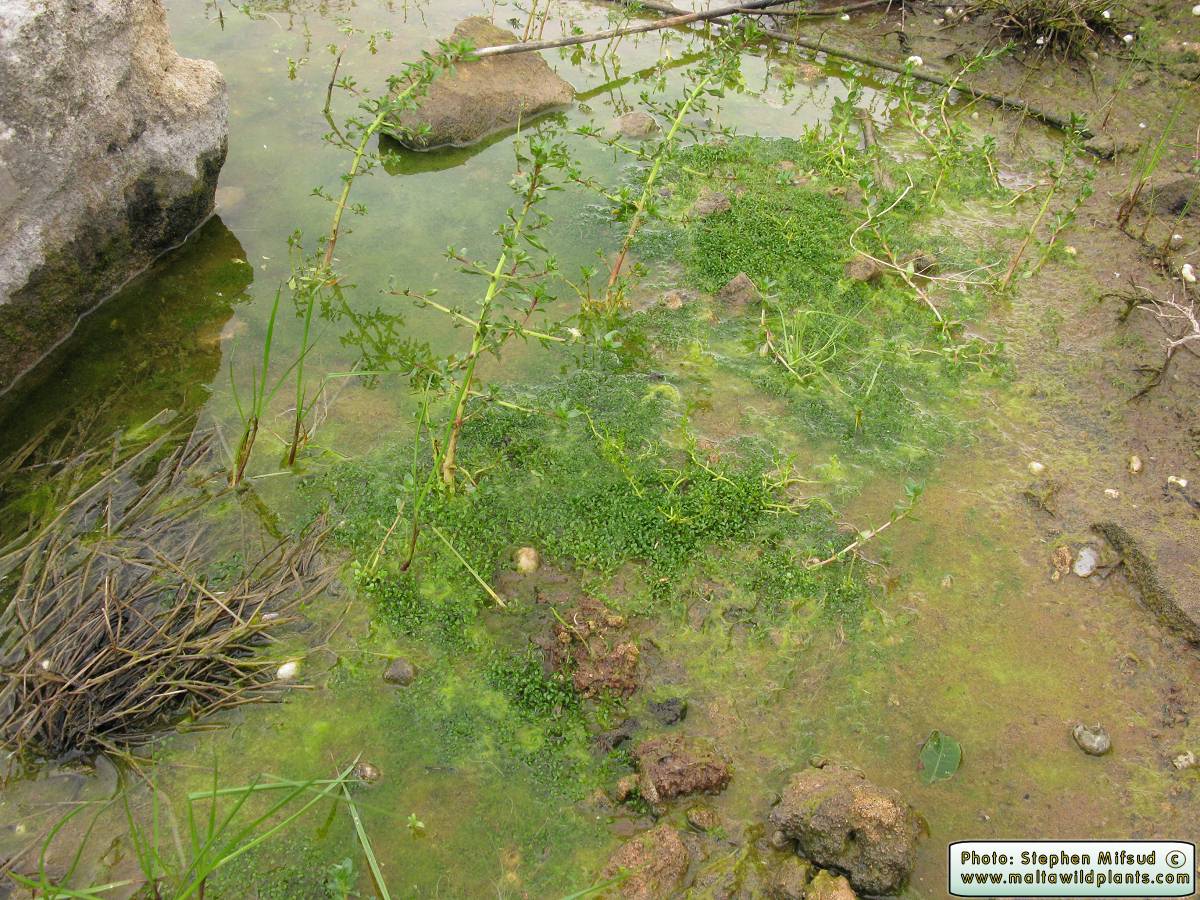
Photo of plants with reddish stems and opposite small leaves. Plants not exposed to full sun, will usually havea green stem.
Photo of small mature Elatine plants in a very shallow rockpool taken in January. Being a shallow rockpool, the plants came into contact with air early in the year and so they flowered early and remaind small. In deeper rockpools, the plant grows larger and flowers around beg. of March.
-
Elatine gussonei (Maltese Waterwort) - CLICK TO ENLARGE PHOTO Elatine gussonei (Maltese Waterwort) - CLICK TO ENLARGE PHOTO Elatine gussonei (Maltese Waterwort) - CLICK TO ENLARGE PHOTO  
Habitat of Elatine gussonei . A rain-water filled pool in rock pits and basins. These young plants are totally submerged in water.
When the water of the rockppol decreases, the exposed plants flowers, irrispective of the time of the year or temperature. For instance this flowering population was found in January. However under normal conditions, flowering takes place in late Feb to March in Malta.
A rockpool with a dense population of young Elatine gussonei taken in January.
-

Further Information and Links

A Comparitive Study between Elatine gussonei (from Malta) and Elatine macropoda (from Majorca) by Stephan Mifsud Notes on Elatine gussonei
Search for Elatine gussonei on the FORUM of MaltaWildPlants.com


Buy from and support MaltaWildPlants.com

Buy Seeds from Maltawildplants.com Buy samples of seeds of certain wild plants for your studies, trials, research, etc. Not all species' seeds can be exported (depending on Maltese regulations), and availability depends on season of species. So, before any payment, you are kindly asked to fill in the online quotation/order form by which I can contact you back for availability and charges. Buy Seeds from Maltawildplants.com   Online Quotation

Buy Seeds from Maltawildplants.com   Online Payment
Buy Documents from Maltawildplants.com Buy documents related to Maltese Wild Plants such as the list of references, full profile, or other docs you request. Buy Documents from Maltawildplants.com   Online Payment
Buy Images  from Maltawildplants.com Buy any of my own copyright images found in this large collection of Maltese flora. You should first select the image you want to buy and input its corresponding code (found beneath each individual photo) in the online ordering form. Buy Seeds from Maltawildplants.com   Online Payment
Buy Seeds from Maltawildplants.com Kindly donate any sum of money (from 2USD / 2Euro) to help us covering some expenses needed to maintain Maltawildplants.com. Please bear in mind how much hard work such a large and up-to-date website needs to arrive directly to you home, office or library. Your kind donations are both greatly appreciated and recorded for future reference. Donors asking help will have first que preference for assistance and special attention. Buy Seeds from Maltawildplants.com   Online Donation


Submit More Information

Use the form below to submit more information about this plant or a related species. If the data is taken from a book, journal, website, etc, please provide the corresponding reference / website address as indicated in the form. If it is your own observation, then your name will be cited. Your Email address will never be displayed online, it is just for internal communication.


For plant species that are marked as rare, you can also report other locations in Malta where you have seen this species.

Finally you can report any mistakes or errors found on the plant profile for necessary corrections. This will help to improve the website's acuracy.


To have more details about each particular field, just move your mouse on it and wait for the help message to pop up

* = required fields.
Plant Species:  *
Your name:   *
Your Email:   *
Fill any of the following 3 sections below (A, B or/and C) and send the form. - Thank you.
 
A:  Additional Information about this plant species
Own observations:
Info from published material (books, jounals, website):

Reference of published material:

 
B:   Where have you seen this plant on the Maltese Islands?
Locations in Malta or Gozo where you have encountered this plant.
Mostly applies for rare plants.


1:        2:   
3:       4:   
5:       6:   

Try to be as concise as possible. Examples: Dingli Cliffs (near chapel), Wied Incita (Zebbug side), Triq il-Kbira (Qormi), Barriera ta\' Abdul (Xlendi), Fields near Salib tal-gholja (Siggiewi). GPS bearings are also welcomed!
 
C:  Corrections for mistakes and errors in this plant profile.
Section of this plant Profile page where you found an error (select one)

What is the error/mistake
What should be its correction


All material and data on this webpage is under the copyright of the author of this site - Stephen Mifsud / www.MaltaWildPlants.com / Malta. (2002-2008)
This research project about the flora of Malta is sponsored by:
Middlesea Insurance p.l.c. A Fund established to help in the amelioration and enhancement of the environment in Malta and to take initiatives that enhance awareness on environmental issues amongst the public Empty space for sponsor Empty space for sponsor Benefit companies get by sponsoring this project