Wild Plants of Malta & Gozo - Plant: Narcissus serotinus (Late Narcissus)

Late Narcissus

Narcissus serotinus / Late Narcissus / Narċis imwaħħar
This plant is brought to you by one of the project's sponsors:
HSBC Cares for the Environment Fund
More sponsors are needed for this project [ click here ]

Contents Links


Nomenclature

Botanical Data

Description

General Information

Photo Gallery

Further Info & Links

Buy Seeds and Docs

Submit own info
about this plant

Give a small Donation Online

FORUM

Copyright Info


Main Index

 
Visitor hits (Oct-2004)

Nomenclature

Species name:

Narcissus serotinus   L.

Author(s):

Carl von Linné;
   Sweden, 1707-1778

General names:

Late Narcissus, Late-flowering Narcissus

Maltese name:

Narċis imwaħħar

Plant Family:

Amaryllidaceae   (Daffodil (Amaryllis) Family)

Name Derivation:

Narcissus = To numb, stun or paralyze, referring to the narcotic properties of the plant. (Greek); In Greek mythology Narcissus was an attractive youth who fell in love with his own image in water and pined away for it until he died and changed into the narcissus flower. (from Funk and Wagnall)
serotinus = Late in developing. (Latin)

Synonyms:

None

Remarks:

-


Botanical Data

PLANT STRUCTURE:

Characteristic

Growth Form

Branching

Surface

Description

Erect but without a true aerial stem :

Erect flower stalk(s) and leaves grow directly from the true underground stem such as rhizomes, tubers, corms or bulbs.

Single, unbranched scape :

Plant forms a single, leafless, robust, unbranched flowering stalk (=scape) which is often found growing from underground tubers, rhizomes, bulbs or corms.

Glabrous :

Smooth; without any hairs, bristles or other projections.

General
Picture

Wild Plants of the Mediterranean Islands of Malta  - Copyright Stephen Mifsud / Maltawildplants.com / Malta (2002-2007) Wild Plants of the Mediterranean Islands of Malta  - Copyright Stephen Mifsud / Maltawildplants.com / Malta (2002-2007) Wild Plants of the Mediterranean Islands of Malta  - Copyright Stephen Mifsud / Maltawildplants.com / Malta (2002-2007)

LEAVES:

Characteristic

Arrangement

Attachment

Venation

Description

No arrangement :

Leaves grow randomly from bulbs, rhizomes or other underground stems at no particular arrangement.

Sessile from an underground stem :

Growing directly from an underground stem (bulb, rhizome, tuber, etc.) without a stalk.

None :

No prominent venation visible.

General
Picture

Wild Plants of the Mediterranean Islands of Malta  - Copyright Stephen Mifsud / Maltawildplants.com / Malta (2002-2007) Wild Plants of the Mediterranean Islands of Malta  - Copyright Stephen Mifsud / Maltawildplants.com / Malta (2002-2007) Wild Plants of the Mediterranean Islands of Malta  - Copyright Stephen Mifsud / Maltawildplants.com / Malta (2002-2007)
 

Characteristic

Leaf Shape

Leaf Margin

Remarks

Description

Ensiform :

Sword-shaped, long, flat and gradually tapering to a pointed tip.

Entire :

Smooth margin without indentations, lobes or any projections.

After Flowering:

Leaves grow after the flowering period and so they are not seen together with flowers.

General
Picture

Wild Plants of the Mediterranean Islands of Malta  - Copyright Stephen Mifsud / Maltawildplants.com / Malta (2002-2007) Wild Plants of the Mediterranean Islands of Malta  - Copyright Stephen Mifsud / Maltawildplants.com / Malta (2002-2007) Wild Plants of the Mediterranean Islands of Malta  - Copyright Stephen Mifsud / Maltawildplants.com / Malta (2002-2007)

FLOWERS:

Characteristic

Colour

Basic Flower Type

No. of Petals

No. of Sepals

Description

White

(with yellow centre).

Salverform with Corona :

Tubular flowers with spreading out tepals and a projecting, crown-shaped structure at the centre.

6

To be botanically precise, the flower has 3 sepals (outer whorl) and 3 petals (inner whorl) which are identical, and so they are collectively referred to as 6 tepals or perianth segments.

0

General
Picture

  Wild Plants of the Mediterranean Islands of Malta  - Copyright Stephen Mifsud / Maltawildplants.com / Malta (2002-2007) Wild Plants of the Mediterranean Islands of Malta  - Copyright Stephen Mifsud / Maltawildplants.com / Malta (2002-2007) Wild Plants of the Mediterranean Islands of Malta  - Copyright Stephen Mifsud / Maltawildplants.com / Malta (2002-2007)
 

Characteristic

Inflorescence

Description

Ovary

Stamens

Description

Single and Terminal :

Single, solitary flower at the apex of the stem or flower branch.

The flowers have a fairly long green tube which opens into 6 radially symmetrical white petals. The centre has a small yellow circular crown formed by 6 tiny flaps and inside are visible the 3 upper yellow anthers.

Inferior :

Ovary situated below the flower parts (the calyx, corolla, and androecium). In other words, these are attached above the ovary.

6, Various Lengths :

Stamens have filaments of various lengths. 3 are found just above at the crown, 3 are further below, inside the tube.

General
Picture

Wild Plants of the Mediterranean Islands of Malta  - Copyright Stephen Mifsud / Maltawildplants.com / Malta (2002-2007) Wild Plants of the Mediterranean Islands of Malta  - Copyright Stephen Mifsud / Maltawildplants.com / Malta (2002-2007) Wild Plants of the Mediterranean Islands of Malta  - Copyright Stephen Mifsud / Maltawildplants.com / Malta (2002-2007) Wild Plants of the Mediterranean Islands of Malta  - Copyright Stephen Mifsud / Maltawildplants.com / Malta (2002-2007)
 

Characteristic

Scent

Average Flower Size

Pollen Colour

Other Notes

Description

YES

Sweet fragrant scent.

20-28 mm

Yellow

-


SEEDS:

Characteristic

No. Per Fruit

Shape

Size

Colour

Description

24-36

Irregular:

More or less conical or tooth-like shape.

2mm

Black

General
Picture

Wild Plants of the Mediterranean Islands of Malta  - Copyright Stephen Mifsud / Maltawildplants.com / Malta (2002-2007) Wild Plants of the Mediterranean Islands of Malta  - Copyright Stephen Mifsud / Maltawildplants.com / Malta (2002-2007) Wild Plants of the Mediterranean Islands of Malta  - Copyright Stephen Mifsud / Maltawildplants.com / Malta (2002-2007) Wild Plants of the Mediterranean Islands of Malta  - Copyright Stephen Mifsud / Maltawildplants.com / Malta (2002-2007)

FRUIT AND OTHER BOTANICAL DATA:

Characteristic

Fruit Type

Colour of Fruit

Subterranean Parts

Other Notes

Description

Dehiscent Loculicidal Capsule :

A fruit capsule that splits open longitudinally into the cavity of the locule when the seeds are ripe.

Green

Turns to straw colour when ripe.

Bulb :

A short underground stem with fleshy scales or coats.

-

General
Picture

Wild Plants of the Mediterranean Islands of Malta  - Copyright Stephen Mifsud / Maltawildplants.com / Malta (2002-2007) Wild Plants of the Mediterranean Islands of Malta  - Copyright Stephen Mifsud / Maltawildplants.com / Malta (2002-2007) Wild Plants of the Mediterranean Islands of Malta  - Copyright Stephen Mifsud / Maltawildplants.com / Malta (2002-2007) Wild Plants of the Mediterranean Islands of Malta  - Copyright Stephen Mifsud / Maltawildplants.com / Malta (2002-2007)

Plant Description

Life Cycle:

Perennial

Habitat:

Garigue, Steppe, Rocky wasteland.

Frequency:

Frequent

Sources in Malta:

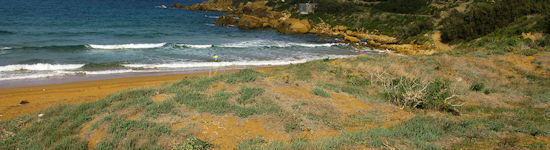
Frequent in several garigues during the autumn months. Examples include Dingli Cliffs, Siggiewi, Mtahleb, Burmarrad, Ta' Xbiex, Wied il-Ghasel, Bahar ic-caghaq, Mellieha (Red Tower Area)

Plant Height:

Up to 20cm.

Flowering Time:

Oct - Nov

Poison:

Yes (like most Daffodils)

This perennial monocot appears in a very short period in Malta, where the flowers form during the month of October only and the leaves develop later after the flowering phase and remain for several weeks more. The plant is formed from a small black or dark brown bulb that is found few cm under ground level. The bulb measures 15-20mm across and has several thickened white roots. It forms one slender glabrous flowering stalk (average 10-15cm long) with a solitary terminal flower (rarely 2).Photo There is a sheath around the stalk where the flower is located.

The flower starts as a narrow green tube about 12-17mm long which opens up into an actinomorphic flat-faced flower consisting of 6 more or less identical, lance-shaped, pointed, white tepals. It can be noted that tepals are developed from 2 whorls of 3 each, where the lower whorl (= 'sepals') produces tepals thate are slightly more broad than the whorl above (= 'petals'). The centre of the flower contains a small (about 2mm across) yellow crown made up of 6 tiny flaps. The flaps of the crown are very shallow in comparison to other narcissus species which have a prominent large crown. Inside the crown there are visible 3 yellow anthers and sometimes the green stigma. The flower has a total of 6 stamens, of which 3 are upper at the crown region, and 3 are lower in the neck of the tube and hence not visible. There is a single style+stigma which runs down and meets the inferior ovary at the base of the flower tube.

The flower produces one fruit capsule which has an oval shape and is about 1cm long. When ripe, the capsule splits into 3 parts longitudinally and bears the small black seeds which have no obvious means of dispersion. The seeds are tooth-like in shape and are about 2mm in size.

After the flowering and fruiting phase, the leaves emerge from the bulb. These are very narrow (1-2mm) and long ensiform shaped leaves which remain more or less at ground level. Often the leaves are twisted. The bulb gives rise to few leaves and often they are not observed due to of the surrounding vegetation during late Autumn and early Winter.


Additional Information


Nativity and Distribution

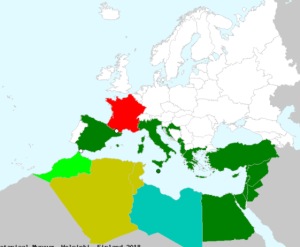
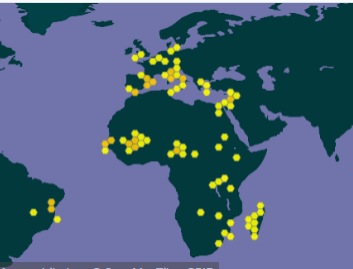
According to [WWW-66] , this plant is native to Africa and most of the Mediterranean coasts which include :
  • Northern Africa: Algeria
  • Western Asia: Cyprus; Israel; Lebanon; Syria; Turkey
  • Southeastern Europe: Greece (incl. Crete); Italy (incl. Sardinia, Sicily); former Yugoslavia
  • Southwestern Europe: France (incl. Corsica); Portugal; Spain (incl. Baleares}

Medicinal Uses

Not much medicinal information has been found about this Mediterranean Narcissus. However Duke's ARS website states that the plant has the following medicinal properties [WWW-66] :

Sclerotic Acts against sclerosis that is any pathological condition which hardens or thickens tissue, with particular reference to the sclera of the eyeball    [WWW-32]
Anti Tumor Used to control tumor growth and reduce its development    [WWW-32]


Additionally ARS website states that all Narcissus species have the following medicinal properties [WWW-66]

Head-ache acts to relieve headache - a dull persistent (usually moderately intense) pain in the head    [WWW-32]
Asthma A respiratory disorder characterized by wheezing; usually of allergic origin    [WWW-32]
Anti-Flu (Cold) Acts against flu type of disease like the common cold    [SM]
Anti-Diarrhoea Frequent and watery bowel movements; can be a symptom of infection or food poisoning or colitis   [WWW-32]
Emetic a medicine that induces nausea and vomiting    [WWW-32]
Against Epilepsy A disorder of the central nervous system characterized by loss of consciousness and convulsions    [WWW-32]
Against Malaria An infective disease caused by sporozoan parasites that are transmitted through the bite of an infected Anopheles mosquito; marked by paroxysms of chills and fever    [WWW-32]
Against Spasm A painful and involuntary muscular contraction    [WWW-32]
Against Ulcer Sore on the skin surface or on the stomach lining.    [WWW-32]
Treat Warts Treating warts which are described as firm abnormal elevated blemish on the skin; caused by a virus    [WWW-32]
Against Whooping Cough An infectious disease characterized by catarrh of the respiratory tract and peculiar paroxysms of coughing, ending in a prolonged crowing or whooping respiration. It is caused by the bacterium Bordetella pertussis.    [WWW-32]


Personal Observations


The flaps forming the crown
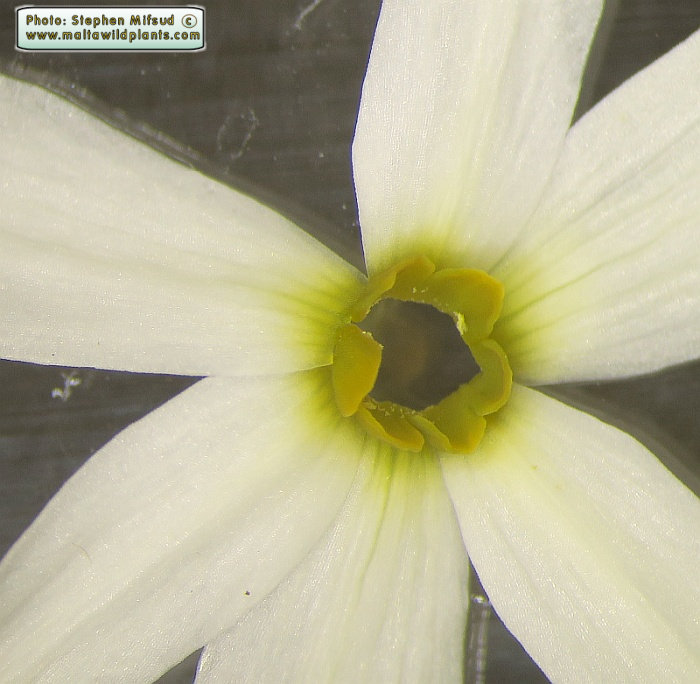
Several reports and photos describe the flower that its central yellow crown consists of 3 flaps. This can be seen in the photographs found at the website www.bulbsociety.com (Click here to view photos). However the flowers of the species in Malta have 6 flaps (click here to see photo) It is difficult to establish why there is this difference, but there is a slight possibility that each species belongs to a different variety. There are at least 3 varieties of this species hence N. serotinus var serotinus, N.serotinus var deficiens, N.serotinus var emarginatus as indicated in this document which lists all the species names of the Narcissus Genus. It is good to state that this 6-flap crowned flower is not endemic to Malta, but it is found in other Mediterranean places (For example in Spain) [SM]
Life Cycle of the Plant
Around the end of September the small dark-brown bulb starts forming the aerial part of the plant. The first end-of-Summer rainfall and temperature drop triggers the bulb for growth. A single (or rarely two) leafless, flowering stalk is produced which normally holds a solitary terminal flower that opens up in early October. In rare cases, 2 or 3 flowers are produced. No leaves are produced at this stage. The flower has a green long tube about 15mm long. It is assumed that nutrients in the bulb aided by photosynthesis in the green stalk and flower tube is sufficient for growth and development of the flower and fruit. The flowers are short termed and they soon develop into a fruit capsule which ripens and produces seeds around the beginning of November. Flowering season of the plant is only for 3-4 weeks during the month of October. After fruiting, the stalk withers and soon after the leaves are produced. The plant produces few thread-like leaves lying on the ground, which often are covered by neighbouring vegetation. The leaves provide energy for the production of new underground bulbs. [SM]

Emanuel Caruana has submitted his own observation regarding the life cycle of this plant. He wrote that this flower appears shortly after the first heavy rain at the end of summer. (Usually October) It produces only one long, tubular leaf which comes out after the flower has withered. This flower is out of season in a very short time although the leaf remains for several months during the winter. Although it normally produces only one flower on the stem, it is sometimes found some with 2 flowers. In 2007 he found a clump of Narcissus serotinus with 5 or 6 flowers on each stem! Unfortunately Mr. Caruana had no camera with him and when went back a week later, they had all withered away.
Maltese name derivation
The name 'imwahhar' must not be confused with that of 'imhawwar' which means spicy or herbal. This plant has no edible use, more less as a spice or a herb. 'Imwahhar' simply means lately out of season, similar to the English and Latin meanings for this plant.

Photo Gallery

Narcissus serotinus (Late Narcissus) - CLICK TO ENLARGE PHOTO Narcissus serotinus (Late Narcissus) - CLICK TO ENLARGE PHOTO Narcissus serotinus (Late Narcissus) - CLICK TO ENLARGE PHOTO Narcissus serotinus (Late Narcissus) - CLICK TO ENLARGE PHOTO
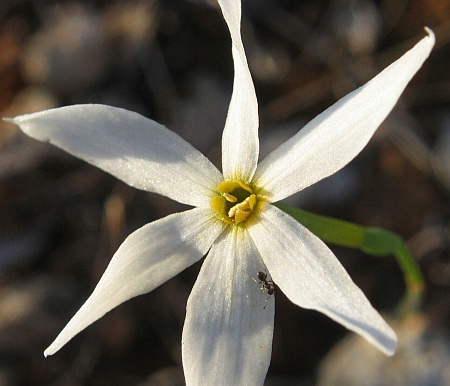
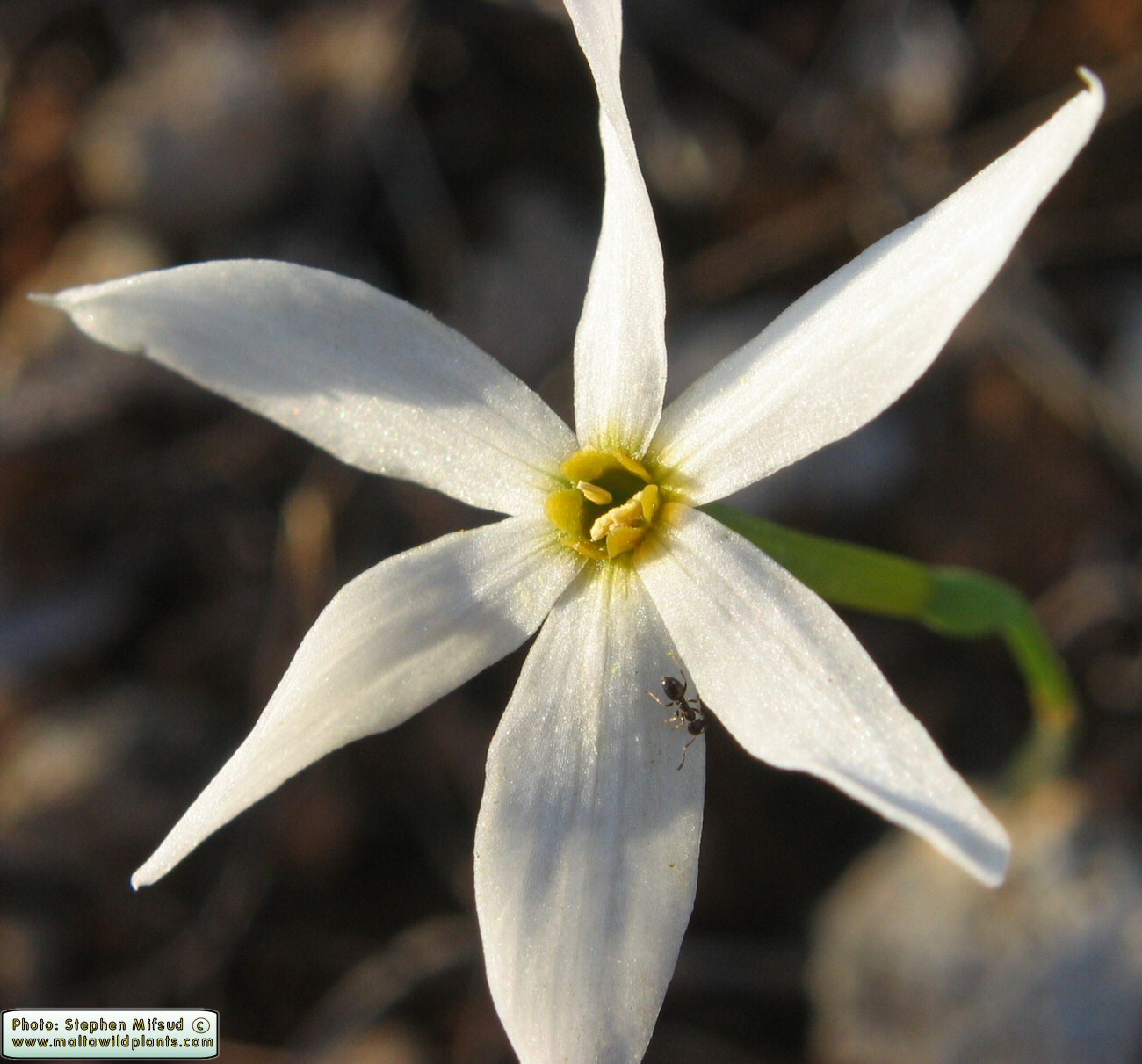
Photo of the star-shaped white flower with a small yellow centre.
Photo of flower showing 3 anthers protruding partially from the yellow centre. The flower has a total of 6 stamens of which 3 are hidden inside the flower neck and so not visible from the exterior.
Narcissus flowers are famous for their central crown, of which several species have a prominent and conspicuous one. As shown in this photo, the central golden crown of the Narcissus serotinus is shallow and small.
Photo (lateral view) of flower showing the shallow crown.
Narcissus serotinus (Late Narcissus) - CLICK TO ENLARGE PHOTO Narcissus serotinus (Late Narcissus) - CLICK TO ENLARGE PHOTO Narcissus serotinus (Late Narcissus) - CLICK TO ENLARGE PHOTO Narcissus serotinus (Late Narcissus) - CLICK TO ENLARGE PHOTO
Photo of flower in situ showing that the central crown is made of 6 tiny flaps.
Photo of flower in situ. In this particular flower, the green stigma can be seen inside the crown. Often this is covered by the large anthers.
Photo of flower. Note the pointed tips of the petals and the yellow colour that diffuses slightly from the crown to the petals' base.
Close up photo of the central part of a young flower. Sometimes the crown is greenish in colour.
Narcissus serotinus (Late Narcissus) - CLICK TO ENLARGE PHOTO Narcissus serotinus (Late Narcissus) - CLICK TO ENLARGE PHOTO Narcissus serotinus (Late Narcissus) - CLICK TO ENLARGE PHOTO Narcissus serotinus (Late Narcissus) - CLICK TO ENLARGE PHOTO
Scanned image of 2 typical flowers. They measure about 24mm and have a central crown of just 2mm across.
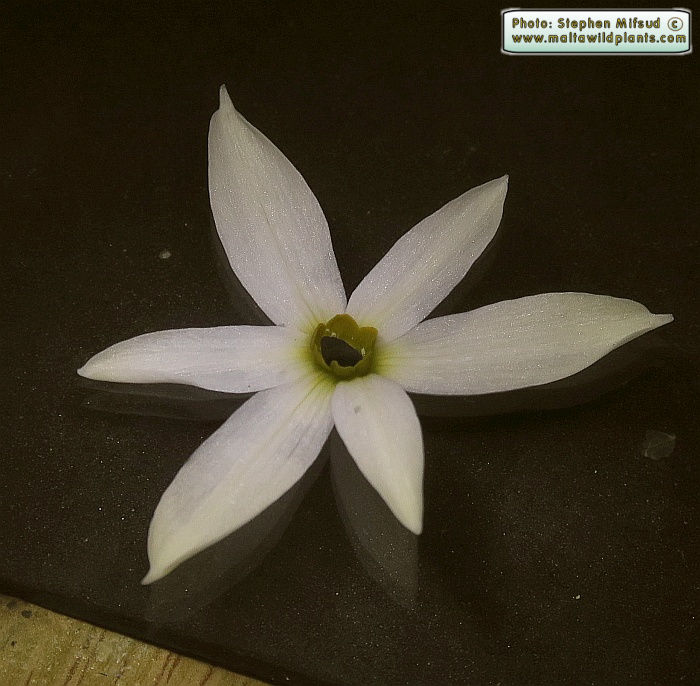
Scanned image of flower against a dark background. Further observation reveals that the flower consists of 2 whorls of 3 petals each. The lower whorl have more broad petals with a more developed pointed tip in comparison with the petals of the upper whorl. Some consider the upper whorl as the true petals and the lower whorl as the sepals and give the name 'tepals' to all 6 petalloid bodies.
Scanned image of flower (lateral view) showing the green tube that runs under the flower to meet the inferior ovary. The tube measures about 12-17mm in length.
Scanned image of entire flower and stalk. The stalk is glabrous and forms a small sheath at the flowering locus. The stalk gives rise to one solitary terminal flower although 2 flowers have been reported to have been found in rare occasions. The length of the stalk varies from 5 to 20 cm.
Narcissus serotinus (Late Narcissus) - CLICK TO ENLARGE PHOTO Narcissus serotinus (Late Narcissus) - CLICK TO ENLARGE PHOTO Narcissus serotinus (Late Narcissus) - CLICK TO ENLARGE PHOTO Narcissus serotinus (Late Narcissus) - CLICK TO ENLARGE PHOTO
Scanned image of a longitudinally dissected flower. It contains a set of 3 stamens at the upper part of the flower (at the crown zone) and another set of 3 stamens inside the neck of the tube. The former have very short filaments, while the latter set have long filaments emerging from the base of the flower. The swollen inferior ovary lies at the base of the flower.
Scanned image of longitudinally dissected flowers.
Photo of plant during the flowering period in October. It not common to encounter a plant with 2 flowers from the same scape. Leaves are formed after the flowering period, and they are filiform to linear (looking like a thick string).
Photo of the flowering stalk and flower. Note the single sheath formed at the base of the flower.
Narcissus serotinus (Late Narcissus) - CLICK TO ENLARGE PHOTO Narcissus serotinus (Late Narcissus) - CLICK TO ENLARGE PHOTO Narcissus serotinus (Late Narcissus) - CLICK TO ENLARGE PHOTO Narcissus serotinus (Late Narcissus) - CLICK TO ENLARGE PHOTO
Photo of the underground bulb. It is black or dark brown, measures about 18mm and produce few thickened white roots. This bulb was about 4cm below soil level.
Photo of fruit capsules in situ. They are dehiscent type of capsules which are ripe at the end of October / beginning of November.
Scanned image of a ripe capsule which is divided into 3 compartments in which the black seeds are stored. The fruit splits open longitudinally along these compartments.
Scanned image of the black seeds. They are tooth shaped and about 2mm in size. All these seeds (29 in number) came from a single capsule.
Narcissus serotinus (Late Narcissus) - CLICK TO ENLARGE PHOTO Narcissus serotinus (Late Narcissus) - CLICK TO ENLARGE PHOTO    
Black and white illustration of the plant taken from © 1995-2005 Missouri Botanical Garden.
Photo of an unusual occurence of a plant with 3 flowers arising from a common flowering stalk (scape). Almost all plants produce one flower each, but 3 flowers from the same plant is extremely rare in Malta.
-
-

Further Information and Links

Notes on the Narcissus Genus (1) Notes on the Narcissus Genus (2)
List of all the species of Narcissus Genus General Notes about Cultivation and Propagation of Narcissus
Search for Narcissus serotinus on the FORUM of MaltaWildPlants.com


Buy from and support MaltaWildPlants.com

Buy Seeds from Maltawildplants.com Buy samples of seeds of certain wild plants for your studies, trials, research, etc. Not all species' seeds can be exported (depending on Maltese regulations), and availability depends on season of species. So, before any payment, you are kindly asked to fill in the online quotation/order form by which I can contact you back for availability and charges. Buy Seeds from Maltawildplants.com   Online Quotation

Buy Seeds from Maltawildplants.com   Online Payment
Buy Documents from Maltawildplants.com Buy documents related to Maltese Wild Plants such as the list of references, full profile, or other docs you request. Buy Documents from Maltawildplants.com   Online Payment
Buy Images  from Maltawildplants.com Buy any of my own copyright images found in this large collection of Maltese flora. You should first select the image you want to buy and input its corresponding code (found beneath each individual photo) in the online ordering form. Buy Seeds from Maltawildplants.com   Online Payment
Buy Seeds from Maltawildplants.com Kindly donate any sum of money (from 2USD / 2Euro) to help us covering some expenses needed to maintain Maltawildplants.com. Please bear in mind how much hard work such a large and up-to-date website needs to arrive directly to you home, office or library. Your kind donations are both greatly appreciated and recorded for future reference. Donors asking help will have first que preference for assistance and special attention. Buy Seeds from Maltawildplants.com   Online Donation


Submit More Information

Use the form below to submit more information about this plant or a related species. If the data is taken from a book, journal, website, etc, please provide the corresponding reference / website address as indicated in the form. If it is your own observation, then your name will be cited. Your Email address will never be displayed online, it is just for internal communication.


For plant species that are marked as rare, you can also report other locations in Malta where you have seen this species.

Finally you can report any mistakes or errors found on the plant profile for necessary corrections. This will help to improve the website's acuracy.


To have more details about each particular field, just move your mouse on it and wait for the help message to pop up

* = required fields.
Plant Species:  *
Your name:   *
Your Email:   *
Fill any of the following 3 sections below (A, B or/and C) and send the form. - Thank you.
 
A:  Additional Information about this plant species
Own observations:
Info from published material (books, jounals, website):

Reference of published material:

 
B:   Where have you seen this plant on the Maltese Islands?
Locations in Malta or Gozo where you have encountered this plant.
Mostly applies for rare plants.


1:        2:   
3:       4:   
5:       6:   

Try to be as concise as possible. Examples: Dingli Cliffs (near chapel), Wied Incita (Zebbug side), Triq il-Kbira (Qormi), Barriera ta\' Abdul (Xlendi), Fields near Salib tal-gholja (Siggiewi). GPS bearings are also welcomed!
 
C:  Corrections for mistakes and errors in this plant profile.
Section of this plant Profile page where you found an error (select one)

What is the error/mistake
What should be its correction


All material and data on this webpage is under the copyright of the author of this site - Stephen Mifsud / www.MaltaWildPlants.com / Malta. (2002-2008)
This research project about the flora of Malta is sponsored by:
Middlesea Insurance p.l.c. A Fund established to help in the amelioration and enhancement of the environment in Malta and to take initiatives that enhance awareness on environmental issues amongst the public Empty space for sponsor Empty space for sponsor Benefit companies get by sponsoring this project